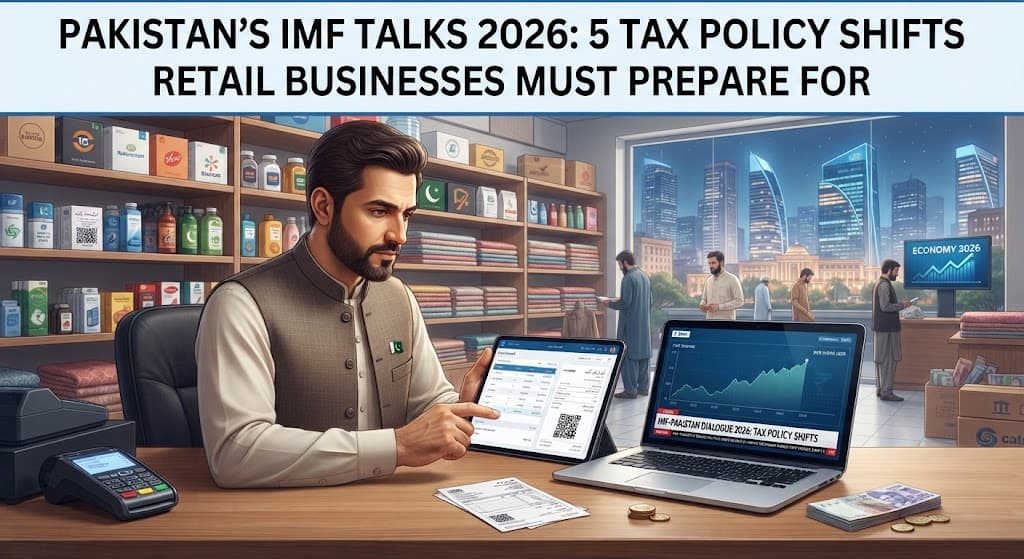

Pakistan’s ongoing discussions with the International Monetary Fund (IMF) in 2026 continue to keep tax policy, revenue collection, and economic reforms in the spotlight. For retail businesses, these developments matter because changes in taxation can directly affect pricing, cash flow, record-keeping, and day-to-day operations.
Retailers are already dealing with changing consumer demand, higher operating costs, digital payments, and increased competition. If tax rules become stricter or reporting requirements expand, businesses that rely heavily on informal records could face greater challenges.
The good news is that preparation does not necessarily mean higher costs. Better bookkeeping, proper invoices, digital records, and a clear understanding of tax obligations can help retailers adapt more smoothly.
Here are five tax policy areas Pakistani retail businesses should watch closely in 2026.
1. Greater Focus on Documented Sales
One of the biggest themes surrounding Pakistan’s tax reforms is the effort to bring more economic activity into the documented sector.
Retail businesses may increasingly be expected to maintain accurate sales records and provide verifiable transaction information. This could particularly affect businesses that have traditionally operated with handwritten records or limited accounting systems.
For retailers, documenting sales can help establish a reliable picture of revenue and expenses.
What retailers should do
Businesses can start by:
Maintaining daily sales records
Keeping purchase invoices
Recording business expenses
Separating personal and business transactions
Using accounting software where practical
Retaining tax-related documents properly
Good records can also make it easier to respond to questions from tax authorities.
2. More Attention to Digital Payments and Transactions
Pakistan’s economy is becoming increasingly digital. Banks, mobile wallets, point-of-sale systems, and online payment platforms are playing a larger role in retail transactions.
As digital payments expand, businesses may face greater expectations around transaction reporting and reconciliation.
This does not mean every digital transaction automatically creates a new tax. Instead, retailers should understand how their sales, bank deposits, invoices, and tax records relate to one another.
Why reconciliation matters
Suppose a retailer reports a certain amount of sales but deposits a significantly different amount into a business bank account. Without proper records explaining discounts, expenses, returns, or cash sales, discrepancies can become difficult to explain.
Retailers should therefore regularly compare:
Sales records + invoices + digital payments + bank statements
Keeping these records consistent can reduce unnecessary complications.
3. Stronger Tax Compliance for Businesses
Pakistan’s efforts to increase tax revenue could result in greater emphasis on compliance across different business sectors.
For retailers, compliance may involve registration, filing returns, maintaining records, paying applicable taxes, and responding to official notices when required.
The exact obligations depend on the nature, size, location, and legal structure of the business. A small neighborhood shop and a large retail chain may not face identical requirements.
Retailers should review their tax position
Business owners should check:
Whether their business registration is up to date
Which taxes apply to their business
Whether required returns are being filed
Whether sales and purchases are properly documented
Whether invoices contain the necessary information
Whether business and personal finances are properly separated
Professional tax advice can be particularly useful when a business is growing or its structure is changing.
4. Possible Changes Affecting Business Costs and Prices
Tax policy can influence the cost structure of retail businesses. Changes in duties, sales taxes, withholding requirements, or other fiscal measures can affect the final cost of products.
Retailers may therefore need to pay closer attention to their margins.
For example, if the cost of purchasing inventory increases while customers remain sensitive to prices, simply passing the entire increase to consumers may reduce sales.
How retailers can prepare
Retailers can improve resilience by:
Monitoring supplier prices regularly.
Reviewing profit margins by product.
Reducing unnecessary operating expenses.
Improving inventory management.
Avoiding excessive stock of slow-moving products.
Comparing suppliers before major purchases.
Better cost management can help businesses absorb moderate policy changes without immediately losing customers.
5. Increased Importance of Technology and Electronic Record-Keeping
Technology is becoming an increasingly important part of tax compliance.
Retailers using point-of-sale systems, accounting software, inventory-management tools, and digital invoicing can often maintain more organized records than businesses relying entirely on paper.
Technology can also provide useful business information beyond taxation.
A retailer can use digital records to identify:
Best-selling products
Slow-moving inventory
Monthly revenue trends
Customer purchasing patterns
Outstanding payments
Operating expenses
Profit margins
For small businesses, even a simple spreadsheet or basic accounting application can be a significant improvement over inconsistent manual records.
What IMF-Linked Tax Reforms Could Mean for Small Retailers
IMF-supported economic programs generally focus on improving fiscal sustainability and strengthening public finances. Tax reforms can therefore become an important part of broader economic policy.
However, retailers should avoid assuming that every IMF discussion will automatically result in a specific new tax or immediate change to their business.
Actual tax requirements depend on legislation, regulations, official notifications, and implementation decisions by Pakistani authorities.
The practical approach for a retailer is to monitor official announcements rather than relying on social media rumors.
A Simple Preparation Checklist for Retail Businesses
Retailers can take several steps now without waiting for a new policy announcement.
Keep Complete Records
Maintain organized records of sales, purchases, expenses, inventory, and payments.
Review Your Tax Registration
Make sure your business is properly registered where required and understand the taxes applicable to your business.
Separate Personal and Business Money
Using separate accounts and keeping business finances organized makes accounting easier and can improve financial visibility.
Adopt Digital Tools
Consider accounting, inventory, invoicing, and payment tools appropriate for the size of your business.
Monitor Official Announcements
Tax rules can change through legislation, notifications, and regulatory decisions. Always verify important changes through official government sources or a qualified tax professional.
Will Every Retailer Be Affected in the Same Way?
No. The impact of tax policy changes can vary significantly.
Factors such as annual turnover, business structure, product category, location, registration status, import activity, and payment methods can influence a retailer’s tax obligations.
A large registered retailer may already have sophisticated accounting and reporting systems, while a small informal shop may need to make much bigger operational changes.
This is why retailers should focus on understanding the rules that specifically apply to their businesses rather than assuming that a single policy affects everyone equally.
Why Preparation Is Better Than Waiting
Many businesses only start organizing their records after receiving a tax notice or facing an unexpected compliance requirement.
That approach can create unnecessary stress.
Preparing early gives retailers time to identify missing invoices, organize financial records, improve accounting systems, and seek professional advice if necessary.
It can also reveal useful information about the business itself. A retailer who tracks sales and expenses carefully may discover that certain products generate very little profit or that inventory is consuming too much working capital.
Final Thoughts
Pakistan’s IMF-related economic reforms in 2026 could keep tax collection and documentation high on the policy agenda. For retail businesses, the most practical response is not to speculate about every possible tax change but to build stronger financial and compliance systems.
Better documentation, digital records, accurate reporting, effective cost management, and regular monitoring of official announcements can help retailers adapt to a changing tax environment.
Businesses should also remember that specific tax obligations can differ from one retailer to another. Before making major financial decisions based on a reported policy change, retailers should verify the latest official rules or consult a qualified Pakistani tax professional.
FAQs
1. Why are Pakistan’s IMF talks important for retail businesses?
IMF-supported economic programs can involve fiscal and tax reforms. Changes in revenue policies may influence how businesses document transactions, manage costs, and meet tax obligations.
2. Will IMF talks automatically create new taxes for retailers?
No. IMF discussions and program requirements do not by themselves create a new tax. Specific tax measures must come through Pakistan’s legal and regulatory processes.
3. Should small retailers improve their record-keeping in 2026?
Yes. Accurate sales, purchase, expense, and payment records can help businesses manage finances and meet applicable compliance requirements.
4. Can digital payments affect tax compliance?
Digital transactions create clearer financial records, making reconciliation and reporting more important for businesses that use banks, mobile wallets, or electronic payment systems.
5. Do all Pakistani retailers have the same tax obligations?
No. Tax obligations can depend on factors such as turnover, business structure, location, products, registration status, and other circumstances.
6. Why are digital records becoming more important?
Digital records can make it easier to track sales, expenses, inventory, payments, and tax-related information while reducing reliance on incomplete paper records.
7. Should retailers separate personal and business accounts?
Where practical, yes. Separating finances can make bookkeeping, cash-flow management, and financial reporting much easier.
8. How can retailers prepare for possible tax changes?
They can organize records, review their registration and filing status, adopt suitable accounting tools, monitor official announcements, and seek professional advice when necessary.
9. Can tax reforms affect retail prices?
They can potentially influence business costs through changes in taxes, duties, compliance costs, or other fiscal measures. The actual effect depends on the specific policy.
10. Should retailers increase prices because of IMF talks?
Not automatically. Retailers should first determine whether a confirmed policy change actually affects their costs before changing prices.
11. What records should a retail business maintain?
Important records may include sales invoices, purchase invoices, expense receipts, inventory information, bank statements, payment records, and relevant tax documents.
12. Can better bookkeeping improve business profitability?
Yes. Good bookkeeping can help owners identify unnecessary expenses, understand margins, control inventory, and make better purchasing decisions.
13. What happens if a retailer ignores tax compliance?
Depending on the applicable law and circumstances, non-compliance can result in notices, penalties, additional liabilities, or other legal consequences.
14. Are cash-based retailers affected by tax reforms?
Potentially. Businesses that primarily operate in cash should still maintain accurate records and understand the tax requirements applicable to their business.
15. Is using accounting software necessary for every small retailer?
Not necessarily. The appropriate system depends on the business. Even a simple, consistent record-keeping method can be useful for a very small operation.
16. How can retailers verify a tax policy change?
Retailers should check official government and tax authority announcements, relevant legislation or notifications, and advice from qualified tax professionals.
17. Can tax policy affect inventory management?
Yes. Changes affecting costs or cash flow can influence how much inventory a retailer can afford to hold. Better inventory planning can reduce financial pressure.
18. Should retailers hire a tax consultant?
A tax professional can be helpful when a business has complicated transactions, significant turnover, changing registration requirements, or uncertainty about its obligations.
19. What is the biggest lesson for retailers in 2026?
Businesses should become more organized, transparent, and financially disciplined. Strong records can make it easier to adapt when policies change.
20. Are IMF-related tax changes permanent?
Not necessarily. Economic policies can evolve based on legislation, government decisions, economic conditions, and future program reviews.
Disclaimer: This article provides general information and should not be treated as legal or tax advice. Pakistani tax rules can change, so businesses should verify current requirements through official sources or consult a qualified tax professional before making compliance or financial decisions.