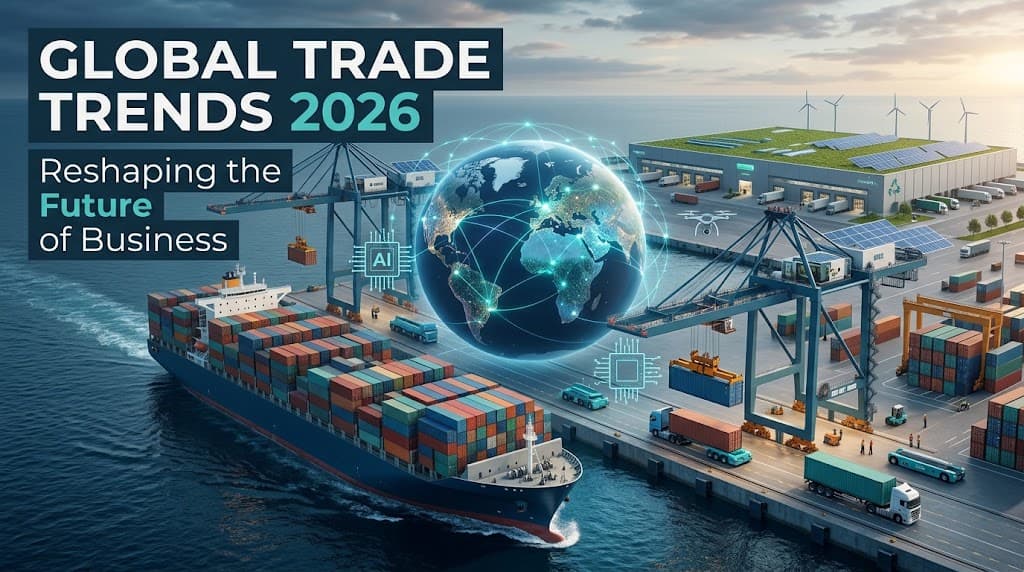
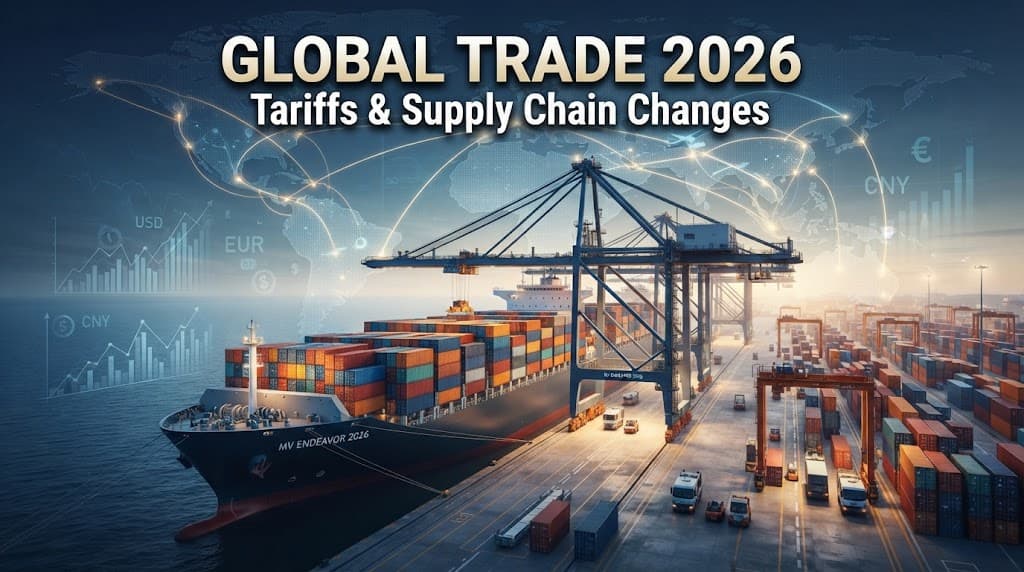

Global trade is undergoing significant changes as businesses adapt to shifting economic conditions, evolving trade policies, tariffs, and supply chain challenges. Companies that once relied on established international trading routes are increasingly reviewing where they source materials, manufacture products, and sell goods.
In 2026, businesses are balancing the need to control costs with the need for reliable suppliers, efficient logistics, and access to international markets. Tariffs, geopolitical uncertainty, technological advancements, and changing consumer demand are all influencing how global trade operates.
How Tariffs Are Affecting Global Trade
Tariffs are taxes imposed on imported goods. Governments may use them to protect domestic industries, generate revenue, or influence international trade relationships. However, tariffs can also increase costs for companies that depend on imported materials and finished products.
When tariffs increase, businesses may face higher expenses for raw materials, machinery, electronics, and consumer goods. Companies must then decide whether to absorb these additional costs, negotiate with suppliers, change sourcing locations, or pass some of the costs on to customers.
For small and medium-sized businesses, these decisions can be particularly challenging because they often have fewer suppliers and less financial flexibility than large multinational corporations.
Tariff-related uncertainty can also affect investment decisions. Companies may delay expansion or reconsider manufacturing locations if they are unsure how future trade costs will affect profitability.
Supply Chain Diversification Is Becoming a Priority
For many years, businesses optimized supply chains primarily around low production costs and efficiency. However, disruptions to shipping, transportation, and international trade have highlighted the risks of relying heavily on a limited number of suppliers or regions.
Many companies are now exploring supply chain diversification. This means sourcing materials from multiple countries, working with alternative manufacturers, and developing backup logistics arrangements.
Diversification can help businesses reduce exposure to regional disruptions and unexpected trade restrictions. It may also improve their ability to respond to changing customer demand.
However, maintaining multiple suppliers can increase administrative expenses, require additional quality checks, and make inventory management more complex. Businesses must therefore balance resilience with affordability.
Nearshoring and Regional Manufacturing
Nearshoring involves moving production or sourcing closer to the markets where products are sold. Instead of relying entirely on distant manufacturing locations, companies may consider suppliers in neighboring or nearby countries.
This approach can reduce transportation times, simplify communication, and potentially lower shipping-related risks. It can also make it easier for businesses to monitor production and maintain quality standards.
Regional manufacturing may create opportunities for countries that can offer competitive labor costs, reliable infrastructure, and favorable trade arrangements.
Nevertheless, nearshoring does not automatically result in lower costs. Labor, energy, land, regulatory requirements, and access to skilled workers all influence whether a location is commercially viable.
Technology Is Transforming International Trade
Technology is becoming an important part of modern global trade. Artificial intelligence, automation, cloud-based logistics platforms, and data analytics can help companies improve visibility across their supply chains.
AI-powered forecasting tools can analyze sales patterns, inventory levels, and market conditions to help businesses anticipate demand. Automated systems can also assist with warehouse management, shipment tracking, and procurement.
Digital documentation and electronic customs systems can reduce paperwork and help businesses manage cross-border transactions more efficiently, where supported by local regulations and infrastructure.
However, technology adoption requires investment, staff training, and cybersecurity measures. Businesses must also ensure that digital systems can exchange information with suppliers, logistics providers, and customs authorities.
The Impact on Small and Medium-Sized Businesses
Small and medium-sized enterprises (SMEs) are an important part of international trade, but they may face greater difficulties adapting to changes in tariffs and supply chains.
Higher import costs can reduce profit margins, while shipping delays and currency fluctuations can make business planning more complicated.
To manage these challenges, SMEs can consider:
Building relationships with more than one supplier.
Reviewing contracts and shipping arrangements regularly.
Monitoring changes in import duties and customs requirements.
Using digital tools to track inventory and shipments.
Maintaining contingency plans for supply disruptions.
Exploring regional markets and alternative sourcing options.
Small businesses may also benefit from trade associations, export-support programs, and professional advice on customs procedures and international regulations.
Emerging Markets and New Trade Opportunities
Changes in global supply chains can create opportunities for emerging economies. Countries with competitive production costs, improving infrastructure, skilled workers, and access to major markets may attract new manufacturing and logistics investment.
For countries such as Pakistan, export development can involve sectors including textiles, agriculture, sports goods, surgical instruments, and information technology services. Improving logistics, product quality, energy reliability, and customs processes can help exporters participate more effectively in international markets.
However, attracting investment and increasing exports depend on multiple factors, including economic stability, access to finance, infrastructure, workforce skills, and predictable trade rules.
Emerging markets may also face challenges such as limited transport capacity, changing regulations, and dependence on imported energy or raw materials.
The Role of Trade Agreements
Trade agreements establish rules for commerce between participating countries. They may reduce or eliminate certain tariffs, simplify customs procedures, and create more predictable conditions for businesses.
For exporters, access to trade agreements can influence decisions about pricing, production locations, and market entry. Businesses must still comply with relevant rules of origin, product standards, documentation requirements, and other applicable regulations.
As supply chains become more geographically diverse, companies need to understand how different trade arrangements affect the movement of goods across borders.
Sustainability and Green Supply Chains
Environmental considerations are becoming increasingly relevant to international trade. Businesses face growing expectations from customers, investors, and regulators to understand the environmental impact of manufacturing and transportation.
Companies may respond by improving energy efficiency, reducing packaging waste, optimizing shipping routes, and evaluating suppliers' environmental practices.
Sustainable supply chain initiatives can sometimes reduce long-term operating costs, although they may require upfront investment in equipment, technology, or supplier development.
Businesses operating internationally also need to monitor the environmental reporting and product requirements that apply in their destination markets.
Challenges Facing Global Trade in 2026
Despite opportunities for growth, international trade continues to face a range of risks. These include tariff uncertainty, geopolitical tensions, transportation disruptions, currency volatility, regulatory differences, and rising operating costs.
Businesses must also manage cybersecurity risks as more trade operations rely on digital platforms and connected logistics systems.
The impact of these challenges varies by industry, country, company size, and product type. A manufacturer importing specialized components, for example, may face different risks from a service-based business operating across borders.
Rather than relying on a single response, businesses can use regular risk assessments, supplier reviews, and flexible planning to prepare for changing conditions.
The Future of Global Trade
The future of global trade will likely involve a combination of international sourcing, regional production, digital logistics, and stronger supply chain risk management. Companies will continue to evaluate the trade-offs between cost, speed, reliability, and access to customers.
Tariffs and other trade policies may influence where businesses manufacture and source products, but decisions will also depend on workforce availability, infrastructure, energy costs, technology, and market demand.
Companies that regularly review their supply chains and understand the requirements of their target markets will be better prepared to respond to change. For governments, reliable infrastructure, transparent regulations, and efficient trade procedures can support businesses seeking to participate in international commerce.
Conclusion
Global trade in 2026 is being shaped by tariffs, supply chain diversification, technology, regional manufacturing, and changing business priorities. These developments are encouraging companies to look beyond low-cost sourcing and consider resilience, flexibility, and long-term operational stability.
Although trade disruptions and policy uncertainty create challenges, they can also open opportunities for businesses and economies that are prepared to adapt. By investing in technology, developing supplier networks, and improving trade capabilities, businesses can position themselves to navigate an evolving global marketplace.
Frequently Asked Questions
1. What is changing in global trade in 2026?
Global trade is adapting to tariff uncertainty, supply chain diversification, digital technology, regional manufacturing, and changing business costs.
2. How do tariffs affect international businesses?
Tariffs increase the cost of certain imported goods, which can affect profit margins, product prices, sourcing decisions, and investment plans.
3. What is supply chain diversification?
Supply chain diversification means using multiple suppliers, manufacturing locations, or transport routes to reduce dependence on a single source.
4. What is nearshoring?
Nearshoring is the practice of moving manufacturing or sourcing closer to the market where products are sold.
5. How can small businesses manage trade disruptions?
Small businesses can develop alternative suppliers, monitor customs requirements, use inventory-management technology, and prepare contingency plans.
6. How does AI support global trade?
AI can help businesses forecast demand, monitor inventory, optimize logistics, identify potential disruptions, and improve procurement decisions.
7. Can emerging markets benefit from supply chain changes?
Yes. Emerging markets may attract manufacturing, logistics, and export investment when they offer competitive costs, reliable infrastructure, and access to markets.
8. Why are trade agreements important?
Trade agreements establish rules for cross-border commerce and may reduce certain tariffs, simplify customs procedures, and improve market access.
9. What are the main risks to global supply chains?
Risks include tariff changes, geopolitical tensions, shipping disruptions, currency fluctuations, regulatory differences, and cybersecurity threats.
10. What is the outlook for global trade?
The outlook will depend on trade policies, economic conditions, technology adoption, infrastructure, and how effectively businesses manage supply chain risks.