GMGlobal Markets in 2026: Rising Interest Rates, Oil Prices and Inflation Concerns
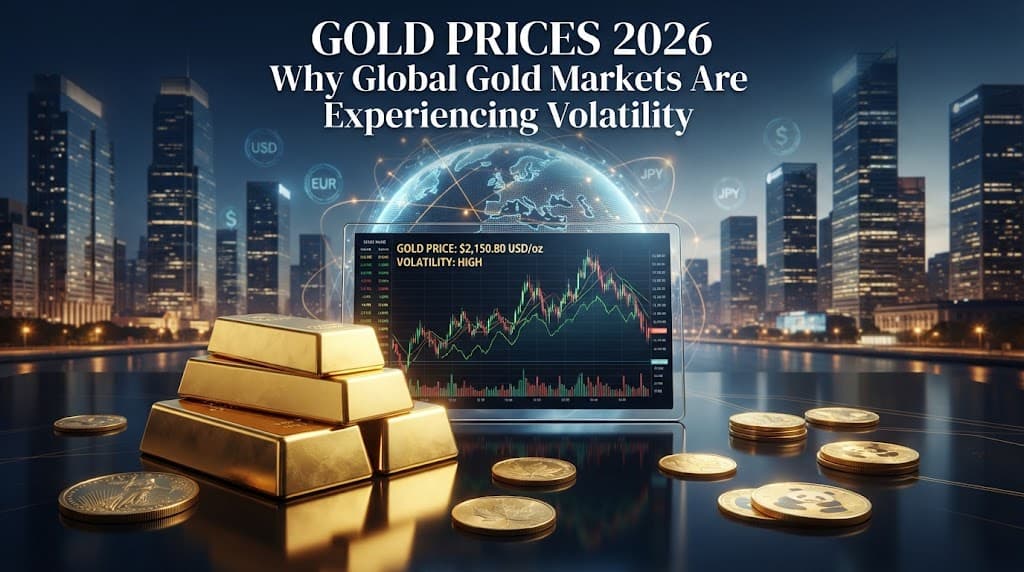
Gold has remained an important asset in global financial markets, attracting attention from investors, central banks, businesses and individuals seeking to protect their wealth. In 2026, gold prices continue to be influenced by economic uncertainty, inflation expectations, interest rate decisions, currency movements and geopolitical developments.
As financial markets respond to changing economic conditions, investors are closely monitoring gold as a potential store of value and a way to diversify their portfolios. Gold also plays an important role in the jewelry industry, central bank reserves and international commodity markets.
Understanding the factors that influence gold prices can help investors and businesses make informed decisions. However, gold prices can fluctuate significantly, and the performance of the precious metal depends on several interconnected global economic factors.
Why Gold Prices Matter in the Global Economy
Gold has played an important role in financial systems for centuries. Unlike currencies issued by governments, physical gold is a tangible asset that is traded internationally and held by individuals, financial institutions and central banks.
Gold prices influence several sectors, including jewelry manufacturing, mining, investment management and international trade. Changes in gold prices can affect consumer demand, mining revenues and investment strategies.
Investors often consider gold during periods of economic uncertainty because it is not directly dependent on the financial performance of a single company or government. However, gold does not generate interest or dividends, and its market value can rise or fall depending on demand and broader economic conditions.
Gold is also traded in international markets, where prices are commonly quoted in US dollars per troy ounce. As a result, movements in the US dollar can affect gold prices and the purchasing costs faced by international buyers.
The Impact of Inflation on Gold Prices
Inflation is one of the economic factors that investors consider when evaluating gold. When the prices of goods and services increase, the purchasing power of money decreases.
Some investors purchase gold as a way to diversify against inflation-related uncertainty. Historically, gold has sometimes maintained or increased its value during periods of elevated inflation, but its performance is not consistent across all economic environments.
The relationship between inflation and gold also depends on interest rates, currency movements and investor expectations.
If inflation remains high and investors become concerned about the future purchasing power of currencies, demand for gold may increase. On the other hand, if central banks raise interest rates significantly in response to inflation, interest-bearing assets may become more attractive compared with gold.
This means that inflation alone does not determine the direction of gold prices. Investors need to consider the wider economic environment.
How Interest Rates Influence Gold Prices
Interest rates play a major role in the gold market because they affect the relative attractiveness of different investments.
Gold does not pay interest or dividends. When interest rates rise, savings accounts, government bonds and other interest-bearing assets may offer higher returns, potentially reducing the appeal of gold for some investors.
When interest rates decline, the opportunity cost of holding gold may decrease. This can make the metal more attractive to investors seeking portfolio diversification.
Expectations about future central bank decisions can also influence gold prices before official policy changes take place.
Investors closely monitor announcements from major central banks, including the Federal Reserve, to understand potential changes in monetary policy.
However, gold prices can react differently depending on whether interest rate changes are already expected, how inflation evolves and what happens to the US dollar.
The US Dollar and Its Relationship With Gold
Gold is generally priced internationally in US dollars, making the value of the dollar an important factor in gold markets.
When the US dollar strengthens against other currencies, gold can become more expensive for international buyers using those currencies. This may reduce demand in some markets.
When the US dollar weakens, gold may become relatively more affordable for international buyers, potentially supporting demand.
However, the relationship is not automatic. Gold prices can increase alongside a strengthening dollar if investors are responding to other factors, such as financial instability, strong demand or geopolitical uncertainty.
Currency movements therefore need to be considered alongside interest rates, inflation and global investment trends.
Geopolitical Uncertainty and Safe-Haven Demand
Geopolitical developments can influence investor confidence and financial market conditions. International conflicts, trade disputes, political uncertainty and disruptions to important supply chains can increase concerns about economic stability.
During periods of uncertainty, some investors increase their holdings of assets they consider stores of value, including gold.
This demand can contribute to higher gold prices, particularly when investors are concerned about financial market volatility or currency stability.
However, geopolitical uncertainty does not always cause gold prices to rise. Other market factors, including liquidity needs, interest rate expectations and currency movements, can influence gold demand at the same time.
Investors should therefore avoid assuming that every geopolitical event will result in an increase in gold prices.
Central Banks and Global Gold Demand
Central banks are important participants in the international gold market. Many monetary authorities hold gold as part of their foreign exchange reserves.
Central banks may use gold to diversify reserve assets, manage financial risks and maintain confidence in their reserve holdings.
Changes in central bank gold purchases can influence overall market demand, particularly when several institutions adjust their reserve strategies during the same period.
Central bank demand is only one component of the gold market. Jewelry consumption, investment demand, gold-backed exchange-traded funds and physical bullion purchases also contribute to price movements.
Monitoring these different sources of demand can help investors understand the broader conditions influencing gold prices.
Gold Investment Opportunities in 2026
Gold can be accessed through several investment methods, each with different costs, risks and characteristics.
Physical gold: Investors can purchase gold bars and coins. Physical ownership provides direct possession but involves storage, security and potential buying and selling costs.
Gold-backed exchange-traded funds: These funds provide exposure to gold prices through financial markets. They may offer convenient access, although fees, market risks and fund structures should be reviewed.
Gold mining stocks: Investors can purchase shares in companies involved in gold exploration and production. Their performance depends not only on gold prices but also on production costs, management, debt and operational conditions.
Gold-related funds: Certain investment funds provide exposure to companies and financial instruments connected with gold. Their risks depend on the underlying holdings and investment strategy.
Each approach has different advantages and disadvantages. Investors should understand the associated costs, market risks, liquidity and suitability for their financial circumstances before investing.
Gold Prices and the Jewelry Industry
Gold is widely used in jewelry manufacturing, particularly in countries where gold jewelry has cultural, traditional and financial significance.
Changes in gold prices can affect jewelry affordability and consumer purchasing decisions. When prices rise substantially, some buyers may delay purchases, choose lighter jewelry or explore alternative products.
Jewelry manufacturers and retailers may also face higher inventory costs when the price of gold increases.
In countries such as Pakistan and India, gold jewelry is closely connected with weddings, celebrations and household savings. Price fluctuations can therefore affect both consumer budgets and the jewelry trade.
Demand in the jewelry sector can vary with income levels, seasonal celebrations, cultural preferences and broader economic conditions.
Gold Prices in Pakistan and Their Economic Impact
Gold prices in Pakistan are influenced by international gold prices, the exchange rate of the Pakistani rupee against the US dollar, local market conditions and applicable taxes or charges.
When international gold prices rise or the rupee weakens, the domestic cost of gold may increase. These changes can affect jewelry buyers, traders and households that purchase gold as a form of saving.
Higher prices can create challenges for families planning weddings or purchasing gold jewelry for traditional occasions.
Gold also has a place in household wealth management, but physical gold carries risks such as theft, storage costs and price volatility.
People considering gold purchases should compare local market prices, understand making charges and buy from reputable sellers who provide appropriate documentation.
Risks of Investing in Gold
Although gold is often considered a diversification asset, it is not risk-free.
Price volatility: Gold prices can experience substantial fluctuations in response to changing economic conditions and investor demand.
No regular income: Physical gold does not generate interest or dividends, unlike some bonds or dividend-paying shares.
Currency risk: International gold prices and exchange rate movements can affect returns for investors purchasing gold in local currencies.
Storage and security: Physical gold requires appropriate storage and security, which may involve additional expenses.
Market timing: Purchasing gold after a substantial price increase can expose investors to losses if prices subsequently decline.
Investors should consider these risks alongside their broader financial goals and avoid relying entirely on a single asset.
What Could Influence Gold Prices in the Coming Months?
Gold prices may continue to respond to several economic and financial developments.
Inflation data can influence expectations about monetary policy, while central bank decisions can change the relative attractiveness of gold and interest-bearing investments.
The direction of the US dollar may affect international purchasing power and gold demand. Geopolitical developments, central bank purchases and investment flows may also contribute to market volatility.
Changes in jewelry demand and gold production can influence the balance between supply and demand.
Rather than relying on a single prediction, investors can monitor economic indicators, official central bank announcements and market developments to better understand potential changes in gold prices.
The Future of Gold in Global Financial Markets
Gold is likely to remain an important component of global financial markets because of its established role in jewelry, investment and central bank reserves.
Its future performance will depend on economic conditions, monetary policy, currency movements, investor demand and developments in international markets.
As financial systems evolve and investors gain access to a wider range of investment products, gold may continue to serve as one of several assets used for diversification.
However, its long-term role will depend on how investors assess its value relative to other assets, including bonds, equities and alternative investments.
Conclusion
Gold prices in 2026 are influenced by a combination of inflation expectations, interest rates, US dollar movements, geopolitical uncertainty and global investment demand. These factors interact to create changing market conditions that affect investors, businesses, jewelry manufacturers and consumers.
Gold may provide diversification for some investment portfolios, but it also carries risks, including price volatility, storage costs and the absence of regular income.
For investors, understanding the economic forces behind gold prices is important when evaluating investment decisions. For consumers and businesses, monitoring international prices and local currency movements can help with budgeting and purchasing plans.
As global financial markets continue to evolve, gold will remain an important asset to watch, although its future price movements cannot be predicted with certainty.
Frequently Asked Questions (FAQs)
1. Why are gold prices fluctuating in 2026?
Gold prices can fluctuate due to changes in inflation expectations, interest rates, the US dollar, geopolitical uncertainty, central bank purchases and investor demand. These factors influence the balance between buyers and sellers in international markets.
2. Is gold a good investment in 2026?
Gold may be useful for diversification, depending on an investor's financial objectives, time horizon and risk tolerance. However, it does not guarantee profits, produces no regular income and can experience significant price fluctuations.
3. How does inflation affect gold prices?
Gold may attract demand when investors are concerned about inflation and declining purchasing power. However, higher interest rates introduced to control inflation can make interest-bearing assets more attractive, so the relationship is not always straightforward.
4. Why do interest rates influence gold prices?
Gold does not pay interest. When interest rates rise, bonds and savings products may offer more attractive returns, potentially reducing demand for gold. Lower interest rates can reduce the opportunity cost of holding gold.
5. How does the US dollar affect gold prices?
Gold is generally priced in US dollars. A stronger dollar can make gold more expensive for buyers using other currencies, while a weaker dollar can make it relatively more affordable. Other factors can sometimes override this relationship.
6. Why do central banks buy gold?
Central banks may hold gold to diversify their reserves, manage certain financial risks and maintain a reserve asset that is not the liability of another institution.
7. How are gold prices determined in Pakistan?
Gold prices in Pakistan are influenced by international gold prices, the Pakistani rupee exchange rate, local market conditions and applicable charges or taxes.
8. What are the different ways to invest in gold?
Investors can access gold through physical bars and coins, gold-backed exchange-traded funds, gold mining shares and other gold-related investment funds. Each method involves different costs and risks.
9. Can gold prices fall during economic uncertainty?
Yes. Gold prices can decline even during uncertain periods if investors need liquidity, interest rates rise, the US dollar strengthens or other market conditions reduce gold demand.
10. What factors should investors monitor before buying gold?
Investors may monitor international gold prices, interest rate expectations, inflation reports, US dollar movements, central bank demand and local buying and selling costs. They should also consider diversification and their individual financial circumstances.