
Artificial intelligence (AI) is transforming the global economy in 2026, creating new opportunities for businesses, investors, entrepreneurs and workers. From automating business operations to improving financial services, AI is changing how organizations operate, make decisions and compete in an increasingly digital world.
Companies across the globe are investing in artificial intelligence to improve productivity, reduce operational costs, enhance customer experiences and develop innovative products. Technologies such as generative AI, machine learning, robotics and advanced data analytics are becoming increasingly important across industries.
As AI adoption expands, it is influencing global investment strategies, employment trends, business models and economic development. Understanding how AI investment is reshaping the economy can help businesses and individuals prepare for emerging opportunities and challenges.
The Growing Importance of AI Investment in 2026
Artificial intelligence has become a significant part of modern business strategies. Organizations are investing in AI-powered software, advanced computing infrastructure, cloud platforms and specialized talent to improve efficiency and remain competitive.
Large technology companies are developing advanced AI models, while startups are creating specialized solutions for healthcare, finance, manufacturing, education and retail. This investment is also supporting industries involved in semiconductor manufacturing, data centers and digital infrastructure.
Businesses are increasingly using AI to analyze large amounts of data, automate repetitive tasks and support decision-making. These capabilities can help companies identify market trends, improve planning and respond more effectively to customer needs.
AI investment is not limited to large corporations. Small businesses and startups can also access AI-powered tools through affordable software and cloud-based platforms, allowing them to automate certain activities without building expensive technology systems.
However, successful AI adoption requires careful planning, employee training, data protection and a clear understanding of the expected return on investment.
How Artificial Intelligence Is Transforming Businesses
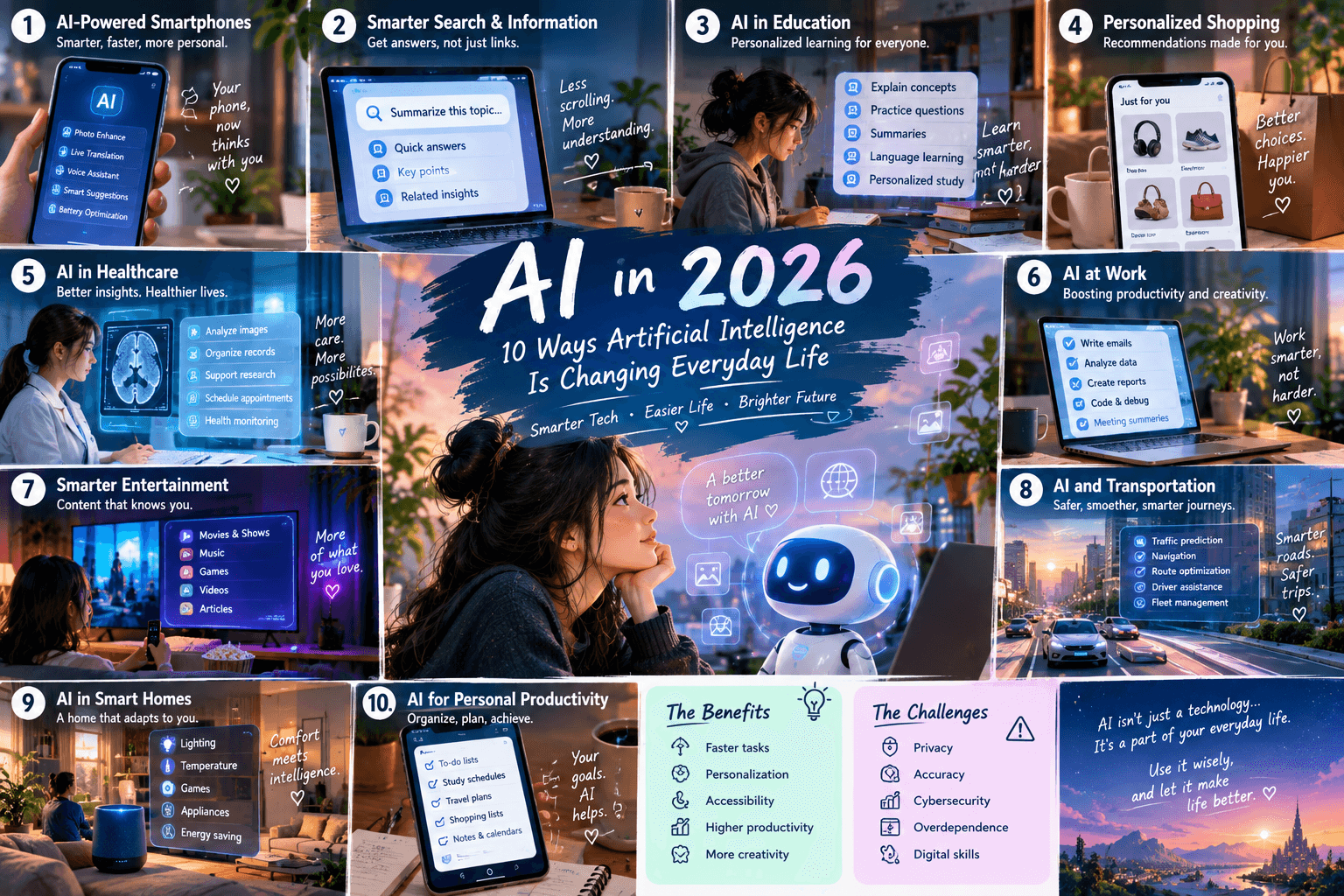
AI is changing traditional business operations by introducing automation, intelligent analytics and personalized services. Organizations are using these technologies to improve productivity and develop more efficient workflows.
In customer service, AI-powered chatbots and virtual assistants can answer common questions, provide product information and assist customers around the clock. This allows employees to focus on complex customer issues that require human judgment.
In financial services, AI is helping institutions detect suspicious transactions, analyze financial risks and automate certain administrative processes. These applications can support faster analysis and improve operational efficiency.
Manufacturing companies are adopting AI-powered systems to monitor equipment, predict maintenance requirements and improve production schedules. Identifying potential equipment problems early can help reduce unexpected downtime and maintenance expenses.
Retail businesses are using AI to understand customer preferences, forecast demand, personalize product recommendations and manage inventory. These applications can help retailers improve customer experiences and make more informed business decisions.
As AI technology develops, businesses are increasingly exploring ways to integrate it into their daily operations rather than treating it as a separate technology initiative.
Generative AI Is Creating New Economic Opportunities
Generative AI has become an important part of the artificial intelligence industry. These systems can create text, images, computer code, audio and other digital content based on user instructions.
Businesses are adopting generative AI to support marketing, research, software development, content creation and internal communications. These tools can accelerate certain tasks, helping employees spend more time on planning, creativity and problem-solving.
For entrepreneurs, generative AI can make advanced digital capabilities more accessible. Small businesses can use AI to draft marketing campaigns, prepare product descriptions, create website content and organize customer inquiries.
Software developers can use AI-assisted coding tools to help write, explain and review code. Marketing teams can use generative AI to brainstorm ideas and adapt content for different audiences.
Despite these advantages, generative AI can produce inaccurate, biased or misleading information. Businesses should review AI-generated content, protect confidential data and maintain appropriate human oversight.
AI Investment and the Future of Employment
Artificial intelligence is changing the nature of work in several industries. Automation can reduce the time required for repetitive tasks while increasing demand for specialized technical and analytical skills.
Jobs involving routine data entry, basic administrative activities and repetitive information processing may be affected as organizations introduce AI-powered systems.
At the same time, AI is creating demand for professionals in areas such as machine learning, data science, software engineering, cybersecurity, robotics and AI management.
Many jobs are also likely to evolve as employees learn to use AI tools to improve their productivity. For example, financial analysts may use AI to organize and interpret data, while marketing professionals may use it to assist with research and campaign planning.
Education providers, employers and governments have an important role in helping workers develop relevant digital skills. Professional training and reskilling programs can help employees adapt to changing workplace requirements.
The overall impact of AI on employment will depend on how quickly businesses adopt automation, which tasks are affected and whether new opportunities develop alongside technological change.
AI Infrastructure Is Driving Global Investment
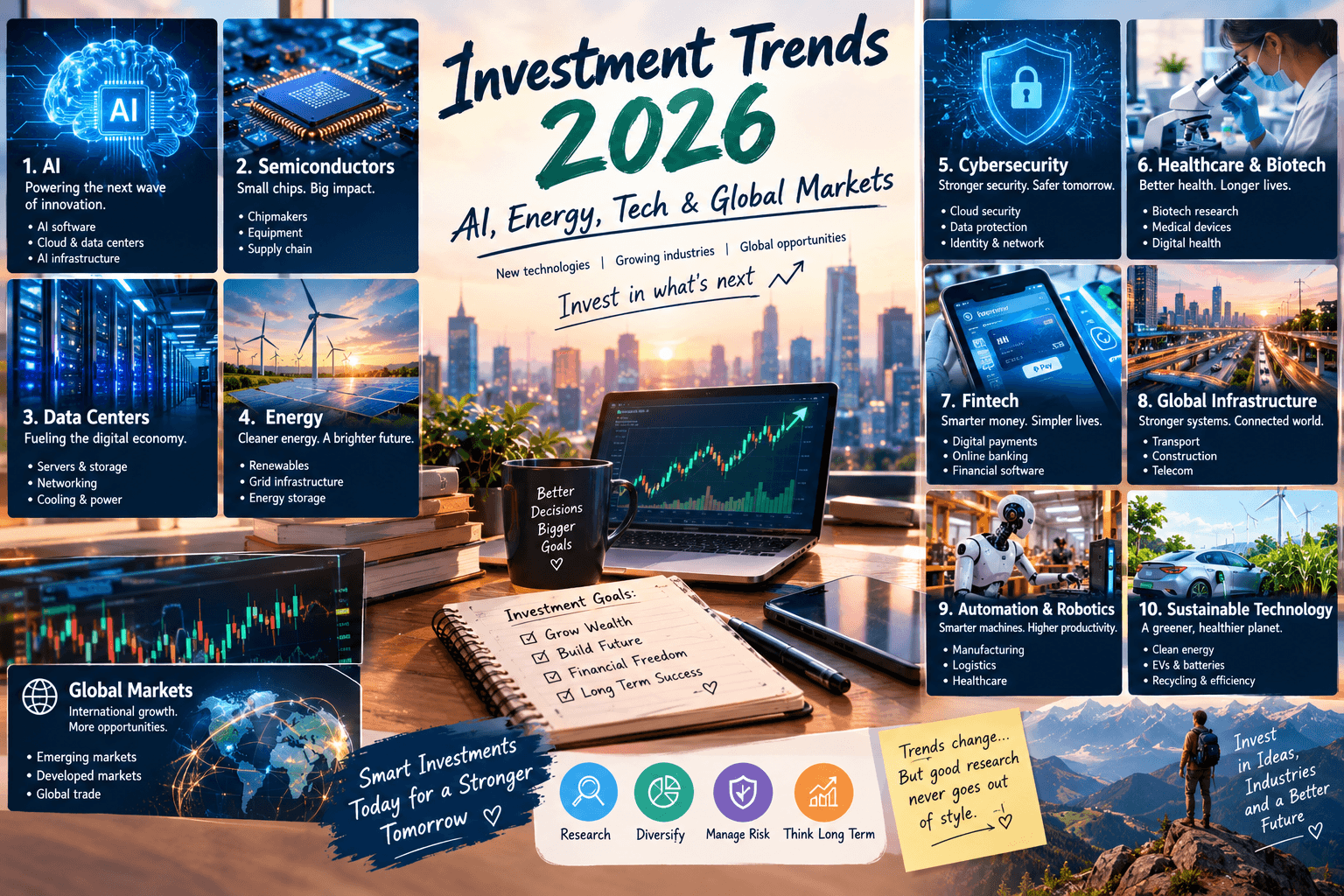
The rapid growth of AI is increasing demand for powerful computing infrastructure. Data centers, advanced semiconductors, cloud computing platforms and reliable energy supplies are essential for operating modern AI systems.
Technology companies are investing in specialized processors and high-performance computing systems to train and operate increasingly sophisticated AI models.
Data centers are particularly important because they provide the computing power and storage required by many AI applications. Their development creates opportunities for construction companies, equipment manufacturers, cloud service providers and energy businesses.
However, AI infrastructure can be expensive to build and operate. Data centers require significant electricity, advanced cooling systems and reliable network connections.
As a result, businesses are exploring energy-efficient processors, improved cooling technologies and renewable energy sources to manage costs and reduce environmental impacts.
Investment in AI infrastructure is therefore contributing to developments across technology, energy, construction and telecommunications.
Opportunities for Small Businesses and Startups
Artificial intelligence is creating new opportunities for small businesses by making advanced tools more accessible.
Entrepreneurs can use AI to automate customer support, analyze sales information, manage inventory, organize financial records and improve marketing activities. Cloud-based AI services allow businesses to access capabilities that once required substantial technical resources.
Startups can also develop AI-powered products that solve specific industry problems. Examples include automated appointment scheduling, intelligent document processing, customer analytics and inventory forecasting.
In emerging markets, AI could help small businesses improve their digital operations and reach wider customer groups. Entrepreneurs may be able to use AI-powered translation, marketing and customer service tools to serve customers across different regions.
In Pakistan, AI applications could support sectors such as agriculture, education, healthcare, financial technology and e-commerce. However, affordable internet access, electricity, financing and digital skills remain important factors in making these opportunities accessible.
For small businesses, a practical approach is to begin with one clearly defined problem, test an appropriate AI solution and measure whether it improves business performance.
AI Investment in Healthcare, Finance and Education
Artificial intelligence is creating opportunities across essential services and major economic sectors.
Healthcare
AI systems can assist healthcare professionals with medical image analysis, patient data organization, research and administrative tasks. These applications may help improve certain workflows, but medical decisions must remain subject to appropriate professional judgment and oversight.
Finance
Banks and financial institutions are using AI to support fraud detection, financial forecasting, risk analysis and customer services. AI-powered systems can analyze large amounts of transaction data and identify patterns that may require further investigation.
Education
AI-powered educational tools can provide personalized learning support, generate practice exercises and help educators prepare learning materials. These technologies may expand access to educational resources, although accuracy, student privacy and equitable access remain important considerations.
The adoption of AI in these sectors demonstrates how technology investment can influence both commercial activity and services that affect everyday life.
Risks and Challenges of AI Investment
Although artificial intelligence offers significant opportunities, businesses must also consider its financial, technical and ethical challenges.
High implementation costs: Developing, integrating and maintaining AI systems can require significant investment in software, infrastructure and skilled employees.
Data privacy: AI systems may process sensitive business and personal information. Organizations need appropriate safeguards and must comply with relevant privacy requirements.
Cybersecurity threats: AI can help identify cyber threats, but it can also be misused to create sophisticated scams, fraudulent content and malicious software.
Accuracy and reliability: AI-generated information may contain errors or misleading conclusions. Human review and ongoing system monitoring are important for reliable use.
Regulatory uncertainty: Governments are developing regulations and guidelines concerning AI safety, transparency, accountability and data protection. Businesses may need to adapt to different requirements in different markets.
Employment disruption: Automation can change job responsibilities and create demand for reskilling. Organizations need to consider the impact of technological changes on their employees.
Addressing these challenges is essential for businesses seeking to adopt AI responsibly and achieve sustainable benefits from their investments.
How AI Is Reshaping Emerging Economies
Artificial intelligence has the potential to support economic development in emerging markets by improving productivity, expanding access to digital services and creating opportunities for entrepreneurship.
In agriculture, AI-powered applications can support crop monitoring, weather analysis and resource planning. These tools may help farmers make more informed decisions about planting, irrigation and crop management.
In education, AI-based learning platforms can offer additional learning resources and help students access educational support beyond traditional classroom settings.
In financial services, AI can support digital payment systems, fraud detection and financial analysis. Carefully designed digital services may also help businesses serve customers in areas with limited access to traditional financial institutions.
For countries such as Pakistan, developing AI skills, expanding digital infrastructure and supporting local technology companies could contribute to broader economic participation in the digital economy.
However, these benefits are not automatic. Governments and businesses must address infrastructure gaps, affordability, data protection and the availability of qualified professionals.
What Investors Should Know About AI in 2026
AI has become an important area of interest for investors because it is influencing multiple industries and creating demand for new products and services.
AI-related investment opportunities can include software development, semiconductor manufacturing, cloud computing, data centers, robotics and specialized business applications.
However, not every company associated with AI will necessarily achieve sustainable profitability. Some businesses may face high development costs, intense competition, uncertain demand or difficulties turning technological innovation into revenue.
Investors evaluating AI-related businesses should consider financial performance, competitive positioning, operating costs, customer demand and long-term business models.
They should also consider market valuations, regulatory developments and the risk that new technological advances may make existing products less competitive.
Careful research, diversification and an understanding of individual financial circumstances are important when evaluating investments in emerging technologies.
The Future of Artificial Intelligence and the Global Economy
Artificial intelligence is expected to remain an important force in business and technology as organizations explore increasingly advanced applications.
AI agents, robotics, predictive analytics and intelligent automation may expand the range of tasks that can be supported by digital systems. These developments could influence production, logistics, customer service, research and business management.
The economic effects will depend on how effectively organizations integrate AI into their operations and whether the resulting productivity improvements justify the costs.
Governments will also need to consider digital infrastructure, workforce development, cybersecurity and responsible AI governance.
For businesses, the ability to combine technological innovation with human expertise may become an important part of adapting to economic change.
The future of AI will not depend on technology alone. Investment decisions, education, public policy and access to digital resources will all influence how its benefits and challenges are distributed across society.
Conclusion
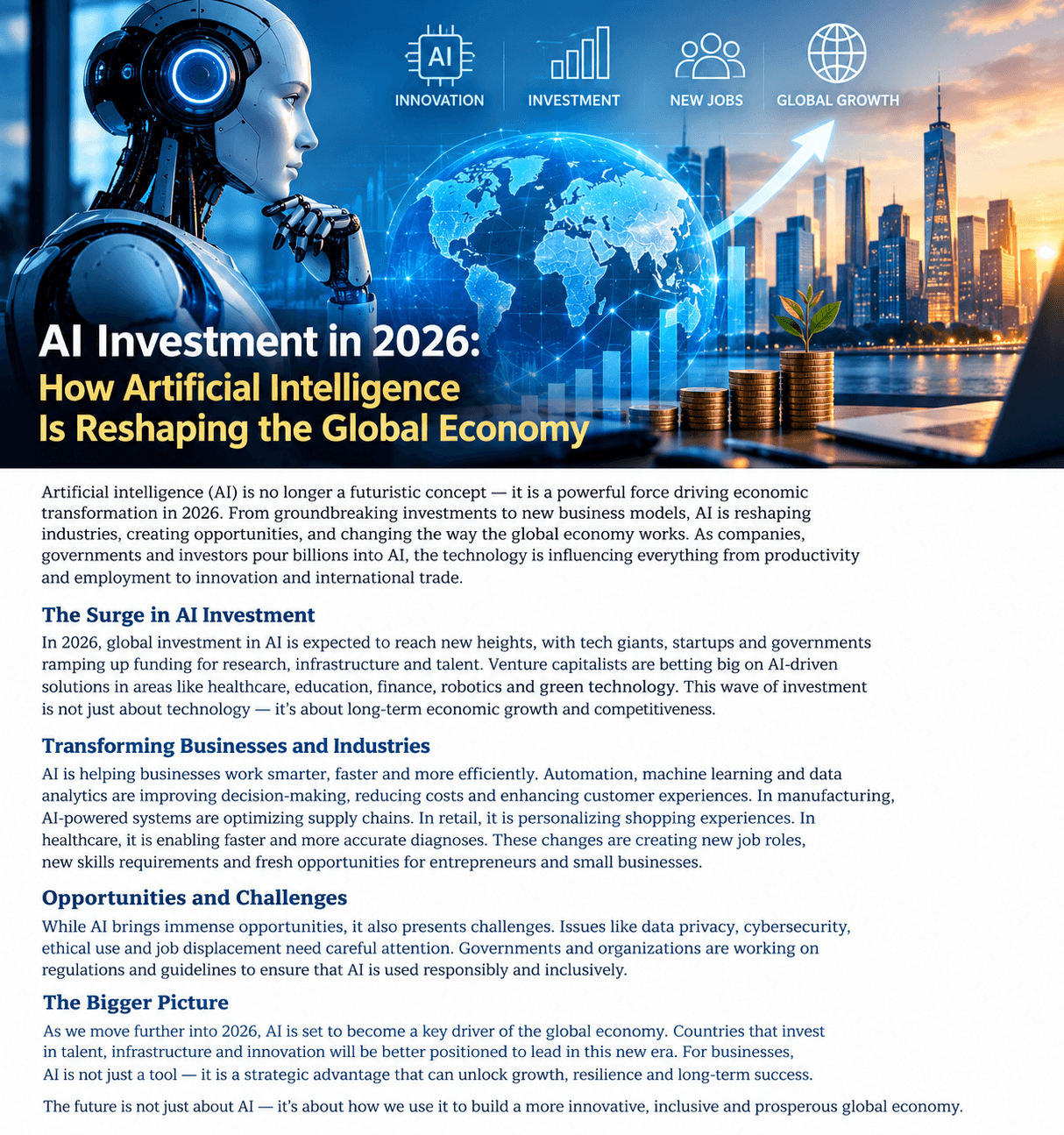
AI investment in 2026 is transforming the global economy by influencing business operations, creating new industries and changing how organizations approach productivity and innovation.
From generative AI and intelligent automation to advanced computing infrastructure, artificial intelligence is creating opportunities across healthcare, finance, manufacturing, education, retail and emerging markets.
However, the expansion of AI also introduces challenges involving investment costs, cybersecurity, data privacy, employment and responsible technology use.
Businesses that adopt AI with clear objectives, appropriate safeguards and effective employee training can explore its potential while managing associated risks. Entrepreneurs can use accessible AI tools to develop new services, while investors can examine the changing technology landscape through careful research.
As artificial intelligence continues to evolve, its long-term contribution to the global economy will depend on responsible investment, human skills, technological innovation and the ability to turn new capabilities into practical economic value.
Frequently Asked Questions (FAQs)
1. What is AI investment in 2026?
AI investment in 2026 refers to the money businesses, governments and investors are putting into artificial intelligence technologies, including machine learning, generative AI, robotics, computing infrastructure and AI-powered software.
2. How is artificial intelligence changing the global economy?
Artificial intelligence is changing the global economy by automating tasks, supporting business decisions, improving productivity and creating new products and services. It is also influencing employment requirements, investment strategies and competition across industries.
3. Which industries are benefiting from AI investment?
Industries adopting AI include healthcare, finance, manufacturing, retail, education, agriculture, transportation and information technology. The specific benefits depend on how AI is implemented and the needs of each industry.
4. How can small businesses benefit from artificial intelligence?
Small businesses can use AI to automate customer service, improve marketing, analyze sales data, manage inventory and streamline administrative activities. Affordable cloud-based tools make some AI capabilities accessible without major infrastructure investment.
5. Will AI replace jobs in 2026?
AI may automate certain repetitive tasks and change responsibilities in many occupations. It is also creating demand for new technical and analytical skills. The overall employment impact will vary by industry, occupation and the pace of adoption.
6. Is AI investment a good opportunity for investors?
AI is an evolving area of investment that includes software, semiconductors, cloud infrastructure and robotics. However, individual companies face different risks, and technological growth does not guarantee investment returns. Investors should conduct independent research and consider their financial circumstances.
7. What are the biggest risks of artificial intelligence?
Major risks include data privacy concerns, cybersecurity threats, inaccurate AI-generated information, high implementation costs, regulatory uncertainty and potential disruption to employment.
8. How can AI help Pakistan's economy?
AI could support Pakistan's agriculture, healthcare, education, financial technology and small-business sectors through automation, data analysis and improved digital services. Expanding infrastructure, digital skills and access to affordable technology will be important to realizing these opportunities.
9. What is generative AI, and why is it important for businesses?
Generative AI is a type of artificial intelligence that can produce content such as text, images, audio and computer code. Businesses use it to assist with marketing, research, software development, customer communications and other tasks, subject to appropriate human review.
10. What is the future of AI investment?
AI investment is likely to continue influencing software, computing infrastructure, automation and industry-specific applications. Its long-term economic impact will depend on technological progress, business adoption, workforce skills, regulation and the ability to achieve measurable benefits.