
Introduction
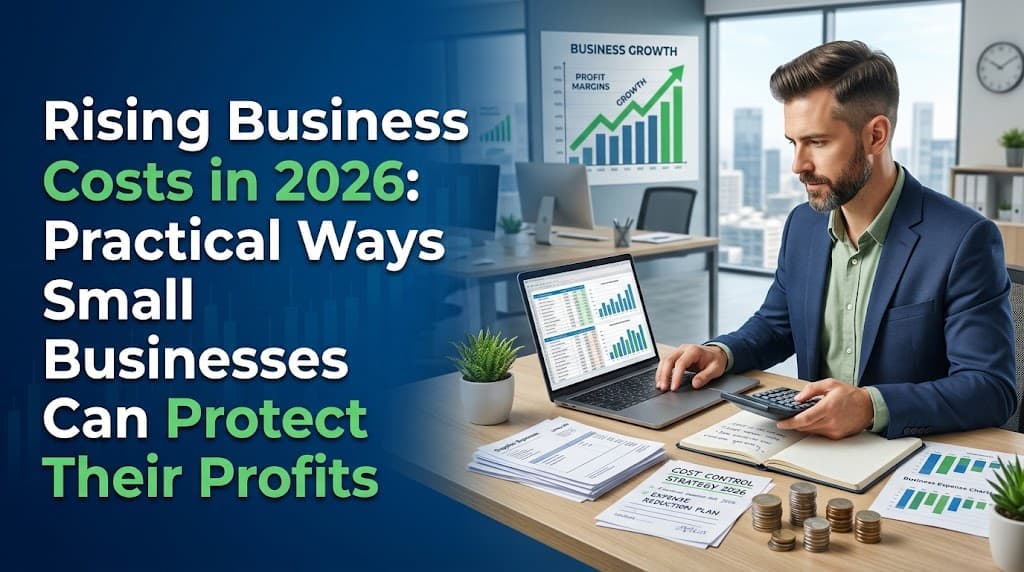
Rising business costs remain a major concern for small businesses in 2026. From rent and electricity bills to employee wages, transportation, raw materials, software subscriptions, and marketing expenses, operating a business can require careful financial planning. When expenses increase faster than revenue, even businesses with regular customers may find it difficult to maintain healthy profit margins.
Small businesses often have fewer financial resources than large corporations. They may also have less bargaining power with suppliers and fewer opportunities to absorb unexpected price increases. As a result, managing operating costs has become an important part of building a sustainable business.
However, reducing expenses does not mean compromising product quality, customer service, or employee well-being. Business owners can protect profitability by reviewing spending, improving operational efficiency, negotiating with suppliers, monitoring cash flow, and making informed pricing decisions.
This article explores why business costs are rising, how higher expenses affect small businesses, and which practical strategies can help companies protect their profits in 2026.
1. Inflation and Higher Input Prices
Inflation can increase the cost of goods and services that businesses purchase. Suppliers may charge more for raw materials, packaging, equipment, and other essential inputs.
Small companies that rely on frequent purchases may feel these increases particularly quickly.
Business owners should regularly compare supplier prices and review the cost of producing each product or delivering each service.
2. Higher Energy and Utility Expenses
Electricity, heating, cooling, water, and fuel are essential expenses for many businesses. Companies operating restaurants, retail shops, manufacturing facilities, and refrigerated storage systems may be especially sensitive to changes in energy prices.
Monitoring consumption, maintaining equipment, improving insulation where practical, and switching off unused equipment can help reduce waste.
3. Employee and Recruitment Costs
Employee wages, recruitment, training, payroll administration, and benefits can represent a significant share of operating expenses.
Although reducing staffing costs may appear to offer immediate savings, understaffing can lead to poor service, employee burnout, and lost sales.
Instead, businesses should improve scheduling, clarify responsibilities, and invest in training that helps employees perform their work efficiently.
4. Transportation and Supply Chain Expenses
Delivery charges, fuel prices, shipping fees, customs costs, and supplier delays can affect the final cost of products.
Companies that depend on imported materials or long-distance transportation may face additional uncertainty.
Planning purchases earlier, consolidating shipments, and identifying reliable alternative suppliers can reduce unnecessary expenses.
5. Technology and Digital Service Fees
Small businesses increasingly rely on accounting software, online stores, payment processors, cloud storage, cybersecurity tools, and digital marketing platforms.
Although these services can improve productivity, multiple subscriptions and transaction fees may become expensive.
Reviewing technology expenses can reveal unused subscriptions, overlapping services, and opportunities to negotiate better plans.
1. Review Every Business Expense
One of the most practical ways to protect profits is to conduct a regular expense review.
Start by collecting recent bank statements, invoices, receipts, payroll records, subscription charges, and supplier bills. Organize expenses into categories such as rent, utilities, inventory, wages, marketing, software, transportation, and professional services.
Compare current expenses with previous months to identify unusual increases.
Identify Essential and Flexible Costs
Essential costs are necessary for delivering products or services and maintaining operations. Flexible costs may include optional advertising campaigns, unused software features, or discretionary purchases.
Do not automatically eliminate every flexible expense. Instead, assess whether each expense contributes enough value to justify its cost.
For example, a marketing campaign that consistently brings profitable customers may be worth maintaining, while an unused subscription may be an obvious candidate for cancellation.
2. Negotiate Better Supplier Agreements
Supplier negotiations can help businesses manage purchasing expenses without reducing product quality.
Before renewing a contract, compare available suppliers and review your purchasing history.
Consider asking suppliers about:
Discounts for larger or more frequent orders.
Better payment terms.
Reduced delivery charges.
Price protection for a specified period.
Discounts for early payment, where financially practical.
Alternative products that meet the same quality requirements.
Negotiation should focus on building reliable long-term relationships rather than demanding unsustainable price reductions.
Avoid purchasing excessive inventory simply to qualify for a discount. Storage, spoilage, damage, and money tied up in unsold stock can outweigh the savings.
3. Improve Inventory Management
Poor inventory management can increase costs through overstocking, waste, theft, expired products, and stock shortages.
Businesses should monitor which products sell quickly and which remain unused for long periods.
Practical Inventory Strategies
Use sales records to estimate future demand, establish reorder points for essential items, and conduct regular stock checks.
For businesses selling perishable goods, the first-expiring, first-out method can help ensure older stock is used before newer stock.
For retailers, inventory software or a well-maintained spreadsheet can make stock levels easier to monitor.
The objective is to keep enough inventory to serve customers without tying up too much working capital in products that may not sell.
4. Reduce Energy Waste
Energy savings can improve profitability while also reducing unnecessary resource consumption.
Businesses can begin with simple changes, including switching off unused equipment, replacing inefficient lighting when cost-effective, maintaining heating and cooling systems, and adjusting temperature settings appropriately.
Where possible, review utility bills to identify unusual consumption patterns.
Businesses with significant energy usage may benefit from an energy assessment before investing in major equipment upgrades.
Calculate the expected savings and payback period before purchasing expensive energy-saving equipment. Not every upgrade will provide the same financial benefit in every location.
5. Use Technology to Improve Efficiency
Technology can help small businesses complete repetitive tasks more efficiently and reduce administrative work.
Examples include:
Accounting software for organizing transactions and invoices.
Inventory systems for tracking stock.
Scheduling tools for coordinating staff.
Customer relationship management software for managing customer information.
Automated reminders for invoices and payments.
Digital booking systems for service-based businesses.
Artificial intelligence tools may also help draft routine communications, summarize information, and organize certain workflows.
However, technology should solve a specific business problem rather than create additional costs. Review subscription fees, security requirements, staff training needs, and the time required to implement a new system.
Protect confidential business and customer information when using digital tools.
6. Review Pricing Without Losing Customers
When operating costs increase, reviewing prices may become necessary. However, raising prices without understanding customer expectations and competitor offerings can affect demand.
Begin by calculating the direct and indirect costs associated with each product or service.
Consider materials, labor, packaging, delivery, rent allocation, transaction fees, and other relevant expenses..
7. Improve Cash Flow Management
A business can be profitable on paper and still experience financial difficulties if customers pay late or expenses become due before money arrives.
Cash flow management helps owners anticipate these timing differences.
Prepare a cash flow forecast showing expected receipts and payments over the coming weeks or months.
Follow up on overdue invoices, establish clear payment terms, and invoice customers promptly after completing work.
Where appropriate, request deposits for large orders or projects. Before offering credit to customers, assess the potential risks and administrative costs.
Maintain a cash reserve when possible and avoid relying on short-term borrowing to cover predictable, recurring losses.
8. Focus on Profitable Products and Services
Not every product or service contributes equally to a business's financial performance.
Some products may generate substantial revenue but require expensive materials, extensive labor, or frequent returns. Others may produce lower sales but offer stronger margins and more predictable demand.
Review product-level costs, sales volumes, customer demand, and the resources required to deliver each offering.
This information can help business owners prioritize products that contribute more effectively to overall profitability.
However, avoid removing products solely because their individual margins are lower. Some offerings attract customers who also purchase other profitable products or are important for maintaining customer loyalty.
Evaluate the broader relationship before making changes.
9. Retain Existing Customers
Attracting new customers can require advertising, promotions, sales staff, and introductory discounts. Existing customers may already understand the business and trust its products or services.
Providing reliable service, responding to customer concerns, and maintaining consistent quality can encourage repeat purchases.
Businesses can also use customer feedback to identify problems that lead to refunds, complaints, or lost sales.
Loyalty programs may be useful when their costs are carefully measured. Discounts should encourage profitable repeat business rather than reduce margins without generating enough additional sales.
Customer retention is not free, but thoughtful service improvements can support more stable revenue.
10. Build a Practical Cost-Control Plan
Reducing expenses works best when it becomes an ongoing management process rather than a one-time reaction to rising prices.
Create a monthly cost-control plan with a few measurable priorities.
For example:
Review major expenses at the beginning of each month.
Compare supplier prices before important contract renewals.
Monitor inventory waste and slow-moving products.
Track overdue customer invoices.
Review the performance of advertising campaigns.
Compare actual spending with the business budget.
Assign responsibility for each task and set a date for reviewing results.
Avoid setting arbitrary cost-reduction targets that could damage customer service, workplace safety, product quality, or legal compliance.
11. Common Cost-Management Mistakes to Avoid
Cutting Costs Without Measuring the Consequences
Removing an expense may create larger costs elsewhere. For example, reducing preventive maintenance may increase equipment failures and repair bills.
Evaluate the full financial effect before making significant changes.
Ignoring Small Recurring Charges
Unused subscriptions, transaction fees, and repeated delivery charges may appear minor but can accumulate over time.
Review them regularly.
12. Key Financial Metrics Every Small Business Should Monitor
Small business owners do not need dozens of complex reports to understand their financial position. A few important metrics can provide a useful starting point.
Metric | What it measures |
|---|---|
Revenue growth | Whether sales are increasing or decreasing |
Gross profit margin | Revenue remaining after the cost of goods sold |
Operating profit margin | Operating profit as a percentage of revenue |
Cash flow | Money moving into and out of the business |
Inventory turnover | How efficiently inventory is sold and replenished |
Accounts receivable days | How long customers typically take to pay |
Customer acquisition cost | The cost of gaining a new customer |
Review these indicators consistently and compare them with previous periods. Interpret the results in the context of the business's industry, seasonality, and size.
Conclusion
Rising business costs in 2026 can place pressure on small businesses, but careful financial management can help owners protect profitability and strengthen their operations.
Start by reviewing expenses, negotiating with suppliers, improving inventory management, reducing energy waste, and monitoring cash flow. Consider technology where it provides measurable value, review prices using accurate cost calculations, and prioritize products and services that contribute to sustainable profits.
Most importantly, avoid making decisions based only on short-term savings. Long-term business success depends on balancing cost control with customer satisfaction, product quality, employee well-being, and reliable operations.
By reviewing financial performance regularly and responding to changes early, small businesses can make more informed decisions and become better prepared for uncertain economic conditions.