The Rise of Sustainable Supply Chains in Global Business
R
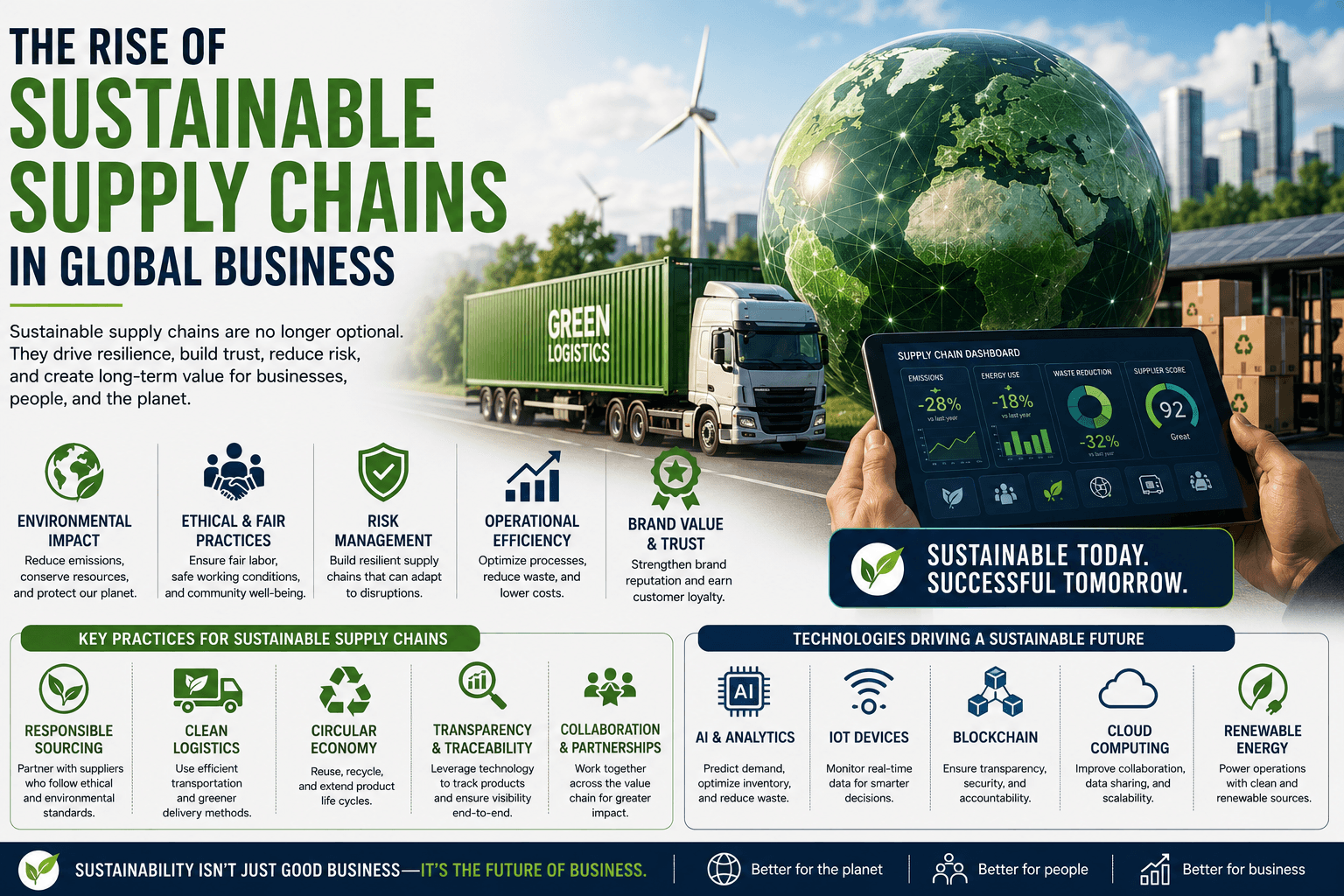
Global supply chains are undergoing a profound transformation. In 2026, businesses are no longer focused solely on reducing costs and improving efficiency—they are also prioritizing sustainability, resilience, and ethical sourcing. Consumers, investors, and regulators increasingly expect companies to minimize their environmental impact while maintaining transparency throughout their operations.
A sustainable supply chain integrates environmental, social, and economic considerations into every stage of production, from sourcing raw materials to delivering finished products. Companies that embrace sustainable practices are strengthening their brands, reducing operational risks, and creating long-term value in an increasingly competitive marketplace.
Understanding Sustainable Supply Chains
A sustainable supply chain balances profitability with environmental responsibility and social accountability. It considers the impact of every business decision on people, communities, and the planet.
Rather than focusing only on cost reduction, organizations evaluate:
Carbon emissions
Energy consumption
Water usage
Waste generation
Ethical labor practices
Supplier transparency
Resource efficiency
This broader approach helps businesses operate more responsibly while maintaining long-term profitability.
Why Sustainability Matters More Than Ever
Climate change, resource shortages, and changing consumer expectations are driving organizations to rethink traditional supply chain models.
Customers increasingly prefer brands that demonstrate environmental responsibility and ethical business practices. Investors are also paying closer attention to sustainability initiatives when evaluating long-term business performance.
As a result, sustainability has become a strategic priority rather than simply a corporate responsibility initiative.
Ethical Sourcing Builds Trust
Businesses are paying greater attention to where their materials and products originate.
Ethical sourcing involves selecting suppliers that:
Follow fair labor practices
Protect worker rights
Reduce environmental impact
Comply with regulations
Maintain responsible business standards
Transparent supplier relationships strengthen customer confidence while reducing reputational risks.
Technology Improves Supply Chain Visibility
Digital technologies are making supply chains more transparent than ever before.
Businesses use:
Artificial Intelligence
Internet of Things (IoT)
Blockchain
Cloud computing
Advanced analytics
These technologies provide real-time visibility into inventory, shipments, supplier performance, and environmental metrics.
Greater transparency enables faster decision-making and improves overall operational efficiency.
Reducing Carbon Emissions
Transportation and logistics remain major contributors to global greenhouse gas emissions.
Organizations are reducing their environmental footprint by:
Optimizing delivery routes
Using electric delivery vehicles
Improving warehouse efficiency
Consolidating shipments
Investing in renewable energy
Reducing unnecessary packaging
These initiatives lower emissions while often reducing operational costs.
Circular Supply Chains
Many companies are moving beyond the traditional "take, make, dispose" model.
Circular supply chains emphasize:
Recycling materials
Reusing components
Repairing products
Refurbishing equipment
Recovering valuable resources
This approach reduces waste while creating additional business opportunities.
Artificial Intelligence Enhances Sustainability
Machine learning models analyze vast amounts of operational data to identify opportunities for greater efficiency while minimizing environmental impact.
AI-driven decision-making supports both sustainability goals and financial performance.
Building Supply Chain Resilience
Recent global disruptions have highlighted the importance of resilient supply chains.
Businesses are diversifying suppliers, increasing inventory visibility, strengthening risk management strategies, and investing in digital monitoring systems.
A resilient supply chain can respond more effectively to unexpected disruptions while maintaining customer satisfaction.
Meeting Consumer Expectations
Today's consumers want greater transparency regarding how products are made and delivered.
Companies increasingly provide information about:
Product origins
Manufacturing practices
Sustainability certifications
Carbon reduction initiatives
Recycling programs
Open communication helps strengthen customer trust and brand loyalty.
Challenges Businesses Face
Implementing sustainable supply chains requires significant planning and investment.
Organizations may encounter challenges including:
Higher initial costs
Supplier compliance
Technology integration
Data accuracy
Regulatory changes
Global logistics complexity
Despite these challenges, many businesses find that long-term benefits outweigh short-term implementation costs.
The Future of Sustainable Supply Chains
Future supply chains will become increasingly digital, intelligent, and environmentally responsible.
Artificial intelligence, automation, blockchain, renewable energy, and advanced analytics will continue improving transparency, efficiency, and sustainability across global operations.
Organizations that invest today will be better prepared for evolving customer expectations, regulatory requirements, and market opportunities.
Conclusion
Sustainable supply chains are becoming a competitive advantage in the global business environment. By embracing ethical sourcing, reducing carbon emissions, improving transparency, and leveraging advanced technologies, businesses can strengthen resilience while supporting long-term growth.
As sustainability becomes an essential part of corporate strategy, organizations that integrate responsible supply chain practices into their operations will be well positioned to build customer trust, attract investment, and succeed in the rapidly evolving global marketplace.
| Category | Details |
|---|---|
| Topic | Business |
| Author | Rose |
| Published | 30/06/2026 |
| Read Time | Not set |
R