

Why Cloud Computing Remains Essential for Business Growth
L
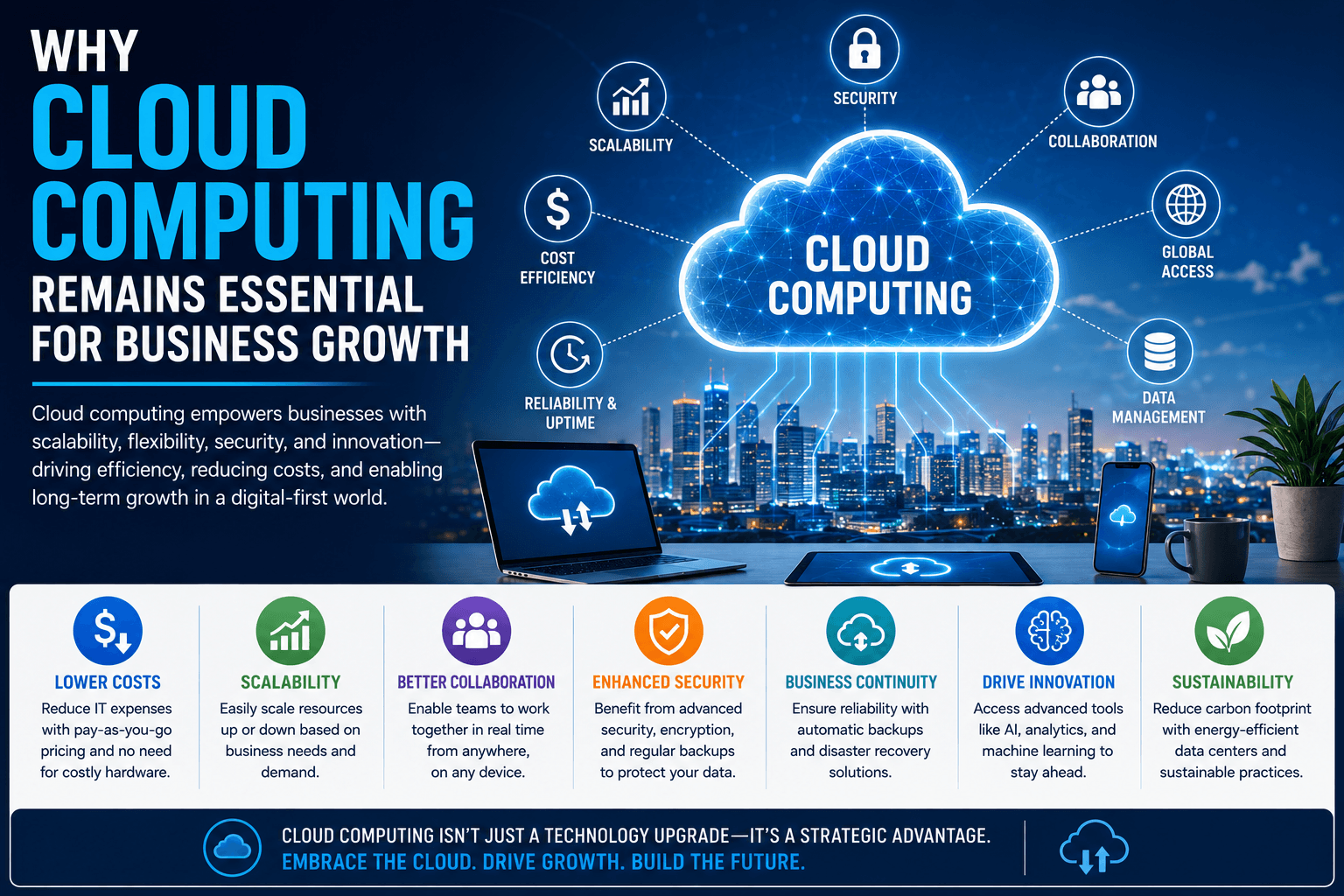
Cloud computing has become one of the most important technologies driving modern business success. Over the past decade, organizations have increasingly shifted from traditional on-premises infrastructure to cloud-based solutions that offer greater flexibility, scalability, security, and cost efficiency. In 2026, cloud computing is no longer simply an IT upgrade—it is a strategic business asset that enables innovation, digital transformation, and long-term growth.
From startups to multinational corporations, businesses across every industry rely on cloud technology to streamline operations, improve collaboration, support remote work, and deliver better customer experiences. As digital transformation accelerates, cloud computing continues to play a central role in helping organizations remain competitive in an increasingly connected world.
What Is Cloud Computing?
Cloud computing allows businesses to access computing resources—including servers, storage, databases, networking, software, and analytics—over the internet instead of maintaining expensive physical infrastructure.
Rather than purchasing and managing hardware, organizations can use cloud services on demand and pay only for the resources they consume.
This approach provides greater flexibility while reducing infrastructure costs.
Lower IT Costs
One of the biggest advantages of cloud computing is cost savings.
Businesses no longer need to invest heavily in:
Physical servers
Data centers
Hardware maintenance
Software upgrades
Backup infrastructure
Cloud providers handle infrastructure management, allowing organizations to focus on business growth instead of maintaining technology systems.
Scalability Supports Business Growth
Business needs constantly change.
Cloud computing enables organizations to quickly scale resources up or down based on demand.
For example, businesses can increase computing capacity during busy sales periods and reduce resources during slower seasons without purchasing additional hardware.
This flexibility helps organizations grow efficiently while controlling costs.
Supporting Remote and Hybrid Work
Modern workplaces increasingly depend on cloud technology.
Cloud platforms allow employees to:
Access files securely
Collaborate in real time
Attend virtual meetings
Share documents
Work from any location
Maintain productivity across devices
Cloud computing has become essential for supporting remote and hybrid work environments.
Improved Data Security
Leading cloud providers invest heavily in cybersecurity.
Security features often include:
Data encryption
Multi-factor authentication
Continuous monitoring
Threat detection
Automatic software updates
Disaster recovery solutions
Although businesses remain responsible for securing their own data and user access, cloud providers offer enterprise-grade security capabilities that many organizations could not easily implement independently.
Business Continuity and Disaster Recovery
Unexpected events such as cyberattacks, hardware failures, or natural disasters can disrupt business operations.
Cloud computing helps organizations maintain business continuity through:
Automatic backups
Geographic redundancy
Rapid disaster recovery
High system availability
These capabilities reduce downtime while protecting critical business information.
Accelerating Innovation
Cloud computing provides access to advanced technologies without requiring significant upfront investment.
Businesses can quickly adopt:
Artificial Intelligence
Machine Learning
Data Analytics
Internet of Things (IoT)
Automation
High-performance computing
This allows organizations to innovate faster while remaining competitive.
Better Collaboration
Cloud-based collaboration tools improve communication across teams.
Employees can:
Edit documents simultaneously
Share information instantly
Track project progress
Manage workflows
Collaborate with partners worldwide
Improved collaboration increases productivity while supporting faster decision-making.
Enabling Data-Driven Decisions
Businesses generate enormous amounts of data every day.
Cloud platforms provide powerful analytics capabilities that help organizations:
Monitor performance
Understand customer behavior
Forecast demand
Improve operations
Identify growth opportunities
Real-time insights support better strategic planning.
Supporting Small Businesses
Cloud computing has significantly reduced technology barriers for startups and small businesses.
Instead of investing in expensive infrastructure, smaller organizations can access enterprise-level technology through affordable subscription-based services.
This creates opportunities to compete with larger organizations while maintaining lower operating costs.
Sustainability Benefits
Cloud computing also supports environmental sustainability.
Modern cloud providers improve efficiency through:
Energy-efficient data centers
Renewable energy investments
Resource optimization
Reduced hardware waste
Businesses benefit from lower carbon emissions while improving operational efficiency.
Challenges to Consider
Although cloud computing offers numerous benefits, businesses should carefully address potential challenges.
These include:
Data privacy
Regulatory compliance
Vendor dependency
Cybersecurity risks
Internet connectivity
Migration planning
A well-planned cloud strategy helps organizations maximize benefits while reducing potential risks.
The Future of Cloud Computing
Cloud technology continues evolving alongside Artificial Intelligence, edge computing, and automation.
Future developments are expected to include:
AI-powered cloud management
Multi-cloud strategies
Edge computing integration
Intelligent automation
Stronger cybersecurity
More sustainable cloud infrastructure
Cloud computing will remain the foundation for many future digital innovations.
Conclusion
Cloud computing has become an essential driver of business growth, innovation, and digital transformation. Its ability to reduce costs, improve flexibility, strengthen security, support remote work, and enable advanced technologies makes it one of the most valuable investments businesses can make.
Organizations that embrace cloud computing are better positioned to adapt to changing market conditions, improve customer experiences, and accelerate long-term growth.
As technology continues advancing, cloud computing will remain at the center of modern business strategy, helping companies of every size compete, innovate, and succeed in the digital economy.
| Category | Details |
|---|---|
| Topic | Business |
| Author | Lora |
| Published | 27/06/2026 |
| Read Time | Not set |
L