
Introduction
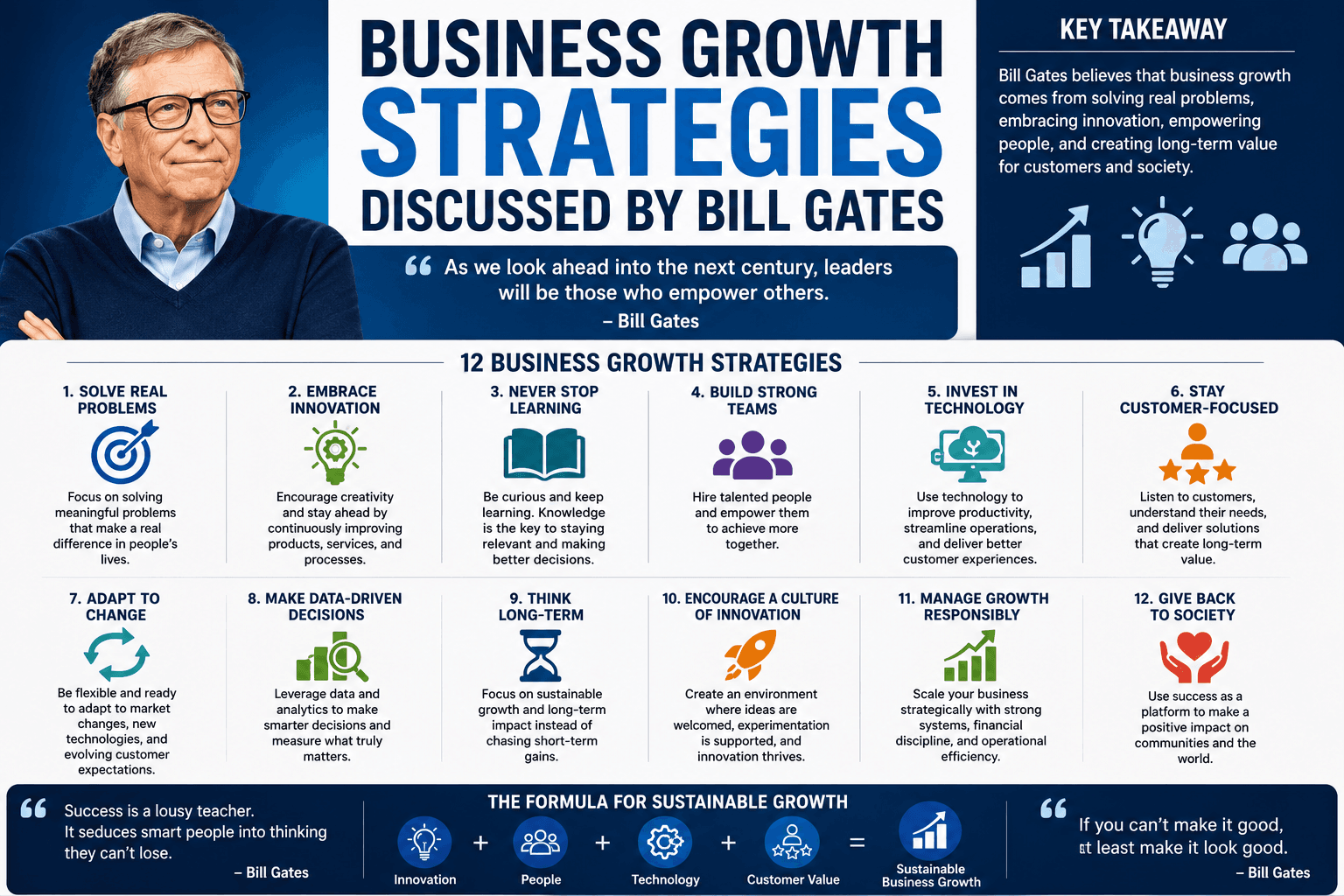
Achieving sustainable business growth requires more than increasing sales or expanding into new markets. Successful organisations build strong foundations through strategic planning, innovation, customer satisfaction, operational excellence, and continuous improvement. In today's rapidly evolving business environment, companies must remain flexible, embrace technology, and make informed decisions to stay competitive.Whether you are launching a startup or managing an established enterprise, implementing proven business strategies can help you navigate challenges, seize opportunities, and achieve long-term success.
Develop a Clear Business Vision
Every successful business begins with a clear vision. A well-defined vision provides direction for employees, helps leaders make strategic decisions, and ensures that every aspect of the business is working towards common objectives.Businesses should regularly review their goals and adapt them as market conditions evolve. A strong vision keeps organisations focused even during periods of uncertainty.
Understand Your Target Market
Knowing your customers is one of the most important elements of business success. Organisations should conduct market research to understand customer needs, purchasing behaviour, and industry trends.Businesses that understand their audience can create products and services that solve real problems while building stronger customer relationships.
Focus on Customer Experience
Exceptional customer service creates loyal customers and encourages positive word-of-mouth marketing. Every interaction with customers should be professional, efficient, and valuable.Businesses can improve customer experience by responding quickly to enquiries, resolving complaints effectively, personalising services, and continuously collecting customer feedback.
Invest in Innovation
Innovation allows businesses to remain competitive in changing markets. Companies should encourage new ideas, improve existing products, adopt emerging technologies, and explore new business opportunities.Continuous innovation enables organisations to increase efficiency while delivering greater value to customers.
Build a Strong Brand Identity
A strong brand helps businesses stand out from competitors. Consistent branding across websites, marketing materials, and customer communications strengthens recognition and builds trust.An effective brand reflects a company's values, professionalism, and commitment to quality.
Strengthen Your Digital Presence
Modern consumers often discover businesses online before making purchasing decisions. A professional website, active social media profiles, valuable content, and search engine optimisation (SEO) improve visibility and credibility.Businesses should also ensure their websites are mobile-friendly, secure, and easy to navigate.
Make Data-Driven Decisions
Business leaders should rely on accurate data rather than assumptions. Monitoring sales, customer behaviour, marketing performance, and operational efficiency provides valuable insights that support better decision-making.Analysing business performance regularly helps identify growth opportunities and areas that require improvement.
Build High-Performing Teams
Employees are among the most valuable assets of any organisation. Businesses should invest in recruitment, employee development, leadership training, and collaborative workplace cultures.When employees feel valued and supported, productivity, innovation, and customer satisfaction often improve.
Manage Finances Responsibly
Financial planning is essential for sustainable growth. Businesses should monitor cash flow, control operating expenses, create realistic budgets, and maintain emergency reserves.Responsible financial management allows organisations to invest confidently in future growth opportunities while reducing financial risks.
Embrace Technology
Technology continues to transform every industry. Businesses should evaluate digital tools that improve productivity, automate repetitive tasks, strengthen cybersecurity, and enhance customer engagement.Cloud computing, artificial intelligence, automation, and business analytics have become valuable resources for organisations seeking greater efficiency.
Adapt to Market Changes
Consumer preferences, economic conditions, and industry trends continue to evolve. Businesses that remain flexible and respond quickly to market changes are more likely to maintain their competitive advantage.Adaptability encourages resilience and helps organisations identify new opportunities before competitors.
Develop Strategic Partnerships
Collaborating with suppliers, technology providers, industry experts, and complementary businesses can accelerate growth. Strategic partnerships provide access to new markets, shared expertise, and innovative solutions that benefit all parties involved.Strong professional relationships often create long-term business opportunities.
Measure Performance Regularly
Tracking key performance indicators (KPIs) enables businesses to evaluate progress towards their goals.Important metrics include:
- Revenue growth
- Customer acquisition
- Customer retention
- Profit margins
- Website traffic
- Conversion rates
- Customer satisfaction
- Employee productivity
Encourage Continuous Improvement
Successful organisations never stop improving. Businesses should regularly review processes, gather customer feedback, invest in employee development, and adopt new technologies that increase efficiency.A culture of continuous improvement helps businesses remain competitive in changing markets and supports sustainable growth.
Practice Ethical Leadership
Integrity and transparency are essential for long-term success. Ethical businesses build stronger relationships with customers, employees, investors, and business partners.Leaders who prioritise honesty, accountability, and responsible decision-making create organisations that inspire trust and maintain strong reputations.
- Develop a Strong Business Strategy
A clear business strategy provides direction and helps organisations achieve long-term goals. Businesses should define their mission, identify their target audience, analyse competitors, and create realistic objectives. Regularly reviewing and adjusting the strategy ensures the business remains aligned with changing market conditions.
A well-defined strategy also helps businesses allocate resources effectively, prioritise investments, and measure progress over time.
14. Build a Strong Brand
A recognisable and trustworthy brand is one of a company's greatest assets. Strong branding goes beyond a logo—it includes the company's values, messaging, customer experience, and reputation.Businesses that maintain consistent branding across their website, social media, marketing campaigns, and customer interactions are more likely to build trust and increase customer loyalty.
15. Improve Financial Management
Financial stability is essential for sustainable growth. Businesses should monitor cash flow, control expenses, maintain emergency reserves, and invest wisely.Regular financial reviews allow organisations to identify opportunities for cost savings while ensuring sufficient resources are available for future expansion.
16. Strengthen Digital Marketing
Digital marketing enables businesses to reach larger audiences and generate qualified leads. Effective strategies include search engine optimisation (SEO), content marketing, email marketing, social media, and paid advertising.A balanced digital marketing strategy helps improve brand awareness, increase website traffic, and convert visitors into loyal customers.
17. Measure Business Performance
Successful businesses consistently evaluate their performance using measurable indicators.Important metrics include:
- Revenue growth
- Profit margins
- Customer retention
- Website traffic
- Conversion rates
- Customer satisfaction
- Employee productivity
18. Manage Risks Effectively
Every business faces risks, including economic uncertainty, changing regulations, cybersecurity threats, and increasing competition. Developing risk management plans helps businesses prepare for unexpected challenges and minimise potential disruptions.Businesses that proactively identify and manage risks are better positioned to maintain stability during difficult periods.
19. Expand into New Markets
Growth often requires exploring new opportunities beyond existing customer segments. Businesses should conduct market research before expanding into new regions, industries, or product categories.Careful planning, understanding customer needs, and analysing market demand increase the likelihood of successful expansion.
20. Commit to Continuous Improvement
Long-term success depends on continuously improving products, services, processes, and customer experiences. Organisations should regularly gather feedback, evaluate performance, adopt new technologies, and encourage innovation across all departments.Businesses that embrace continuous improvement remain competitive, adapt more effectively to market changes, and create lasting value for customers.
Conclusion
Long-term business success is achieved through strategic planning, innovation, customer focus, responsible financial management, and continuous improvement. Organisations that invest in their people, embrace technology, monitor performance, and adapt to changing market conditions are better equipped to achieve sustainable growth.Regardless of industry or company size, businesses that consistently deliver value, make informed decisions, and maintain a long-term perspective will be well positioned to overcome challenges and thrive in an increasingly competitive global marketplace.