Business insolvency can be a serious financial challenge, but identifying the problem early can help a company understand its available options. A business facing financial distress may be able to negotiate with creditors, restructure its finances, seek professional advice, or enter a formal insolvency procedure.
The exact legal process differs by country, so businesses should obtain advice based on the jurisdiction in which they operate.
What Should a Business Do When It Becomes Insolvent?
The first step is to understand the company's actual financial position. Management should review cash flow, debts, assets, liabilities, upcoming payments, and outstanding customer invoices.
Avoiding the problem or continuing to accumulate debt without a realistic plan can make financial difficulties more complicated.
Step 1: Assess the Company's Financial Position
Prepare an up-to-date overview of:
Cash available
Outstanding debts
Supplier invoices
Employee obligations
Taxes and other liabilities
Loans and interest payments
Business assets
Expected customer payments
Upcoming financial commitments
This information helps determine the scale and urgency of the financial problem.
Step 2: Identify the Cause of Financial Distress
Understanding why the business is struggling is essential.
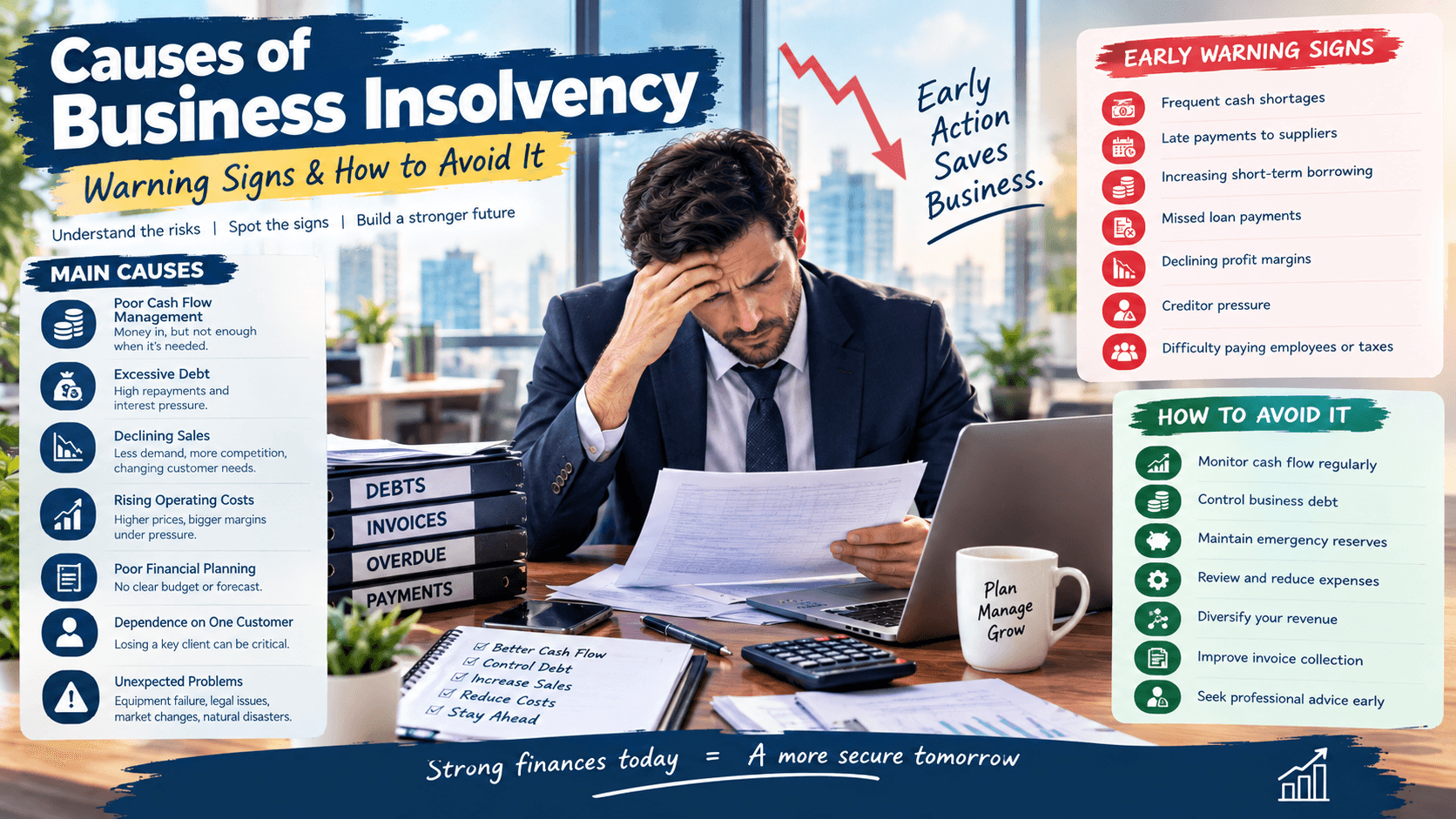
Possible causes include:
Declining sales
Excessive borrowing
Poor cash-flow management
Rising operating costs
Loss of major customers
High interest expenses
Unexpected legal or operational costs
Addressing the underlying cause may be important for any recovery strategy.
Step 3: Protect Cash Flow
When a business is under financial pressure, cash-flow management becomes particularly important.
A company may review unnecessary expenses, accelerate legitimate customer collections, renegotiate payment terms, and prioritize essential operating costs.
Any actions should comply with applicable law and contractual obligations.
Step 4: Communicate With Creditors
Ignoring creditors can increase pressure on a financially distressed business.
Depending on the circumstances, a company may discuss:
Extended payment deadlines
Revised payment schedules
Temporary payment arrangements
Debt settlements
Restructuring proposals
Whether a creditor agrees to a proposal is ultimately a matter between the parties and applicable law.
Step 5: Seek Professional Advice
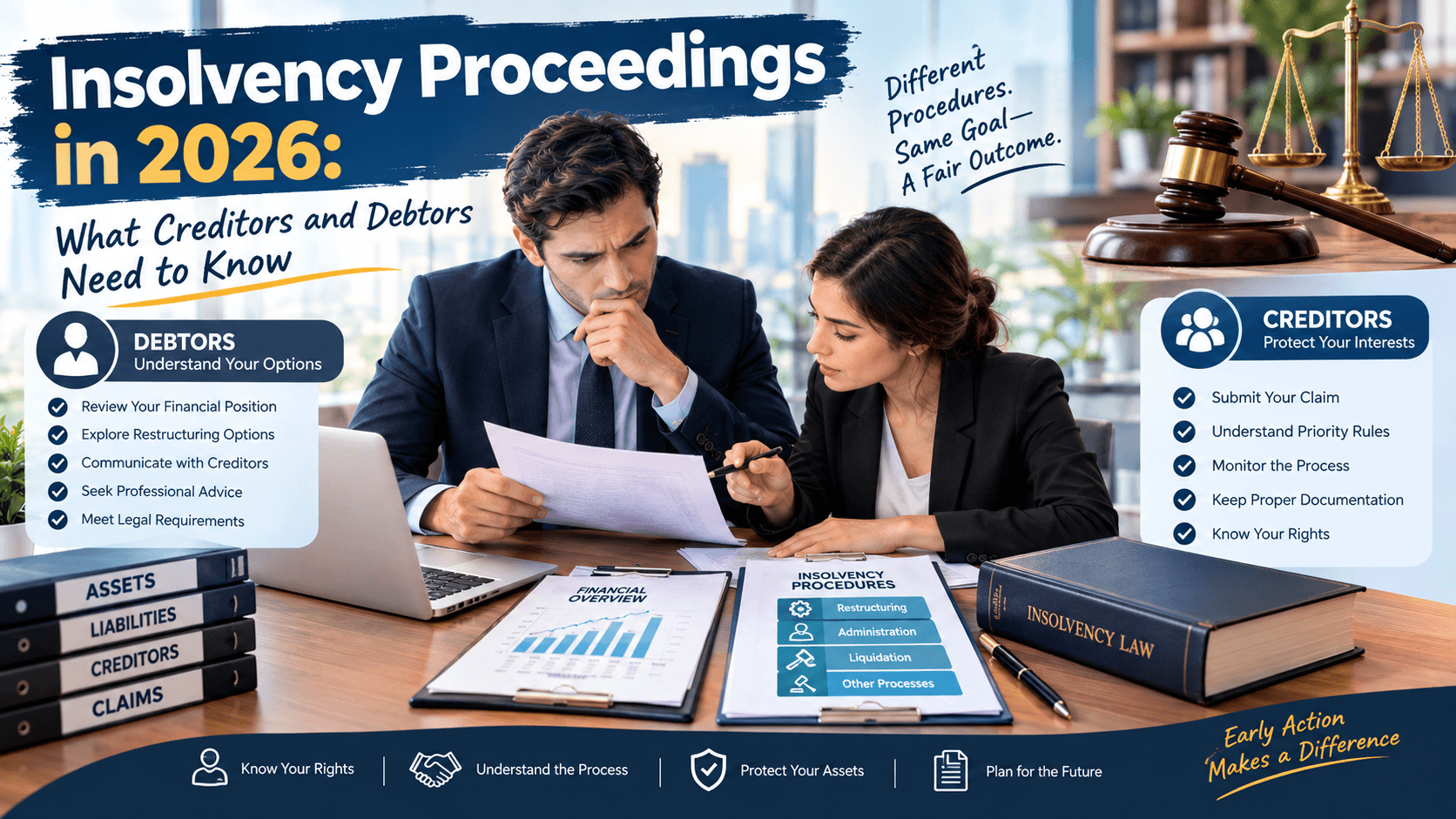
Businesses facing serious financial difficulty should consider speaking with qualified professionals such as accountants, restructuring advisers, insolvency practitioners, or lawyers.
Professional advice can help a company understand its legal obligations and available restructuring or insolvency options.
Step 6: Explore Restructuring Options
Not every financially distressed business needs to close.
Depending on local law, restructuring may involve:
Renegotiating debt
Refinancing
Selling non-essential assets
Reducing operating expenses
Changing business operations
Reorganizing company finances
Formal restructuring procedures
The suitability of each option depends on the company's financial position and jurisdiction.
Step 7: Review Business Assets
A detailed asset review can help determine what resources are available.
Assets may include:
Property
Equipment
Vehicles
Inventory
Investments
Intellectual property
Outstanding receivables
Assets should not be transferred or sold improperly to avoid creditors. Businesses should obtain appropriate legal advice before taking significant actions involving company assets.
Step 8: Understand Creditor Priorities
In a formal insolvency procedure, creditors may have different legal priorities.
Secured creditors, unsecured creditors, employees, tax authorities, and other parties may be treated differently depending on the jurisdiction and specific procedure.
Understanding these priorities is important before making financial decisions.
Step 9: Consider Formal Insolvency Procedures
If informal negotiations and restructuring are not sufficient, a company may need to consider a formal insolvency procedure.
Possible procedures vary by country and may include restructuring, administration, liquidation, or other legally recognized processes.
Step 10: Create a Recovery Plan
If the business has a viable future, management may develop a realistic recovery plan.
A plan could include:
Revenue targets
Cost reductions
Debt restructuring
Cash-flow forecasts
Operational changes
Asset sales
New financing
The plan should be based on realistic financial assumptions rather than optimistic projections.
How Can Businesses Prevent Future Insolvency?
Once financial stability improves, businesses can reduce future risk by monitoring cash flow regularly, maintaining appropriate reserves, controlling debt, reviewing expenses, and keeping accurate financial records.
Early intervention is often easier than trying to resolve a financial crisis after payment defaults have become widespread.
Final Thoughts
Dealing with insolvency requires careful financial analysis and, in many cases, professional advice. A business may have several possible paths, including creditor negotiations, restructuring, refinancing, or formal insolvency proceedings.
Because insolvency laws differ between jurisdictions, businesses should seek qualified local advice before taking major legal or financial action.
Frequently Asked Questions
1. What should a business do first when facing insolvency?
It should assess its current financial position, including cash, debts, assets, liabilities, and upcoming payment obligations.
2. Can an insolvent business continue operating?
In some circumstances, yes. Whether it can legally continue trading depends on the company's situation and applicable law.
3. Should a business contact its creditors?
Early communication can sometimes help businesses negotiate payment arrangements or restructuring options.
4. Can insolvency be reversed?
Financial difficulties may sometimes be addressed through restructuring, refinancing, cost reductions, or improved cash flow. The available options depend on the circumstances.
5. Can an insolvent company restructure its debt?
In some jurisdictions, businesses can restructure debt through informal negotiations or formal restructuring procedures.
6. What happens if a company cannot pay its suppliers?
Suppliers may take contractual or legal action depending on the circumstances. If formal insolvency begins, they may become creditors within that process.
7. Can an insolvent business obtain financing?
It can be difficult, but financing may sometimes be available depending on the company's assets, business plan, security, and lender requirements.
8. What happens to employees during insolvency?
Employees may experience changes to employment, delayed wages, or redundancies. Specific protections depend on local law.
9. What is an insolvency practitioner?
An insolvency practitioner is a qualified professional who may administer certain insolvency or restructuring procedures where authorized by law.
10. Can a company sell assets to raise money?
A company may be able to sell assets as part of legitimate financial management or restructuring, but transactions involving an insolvent company can be subject to specific legal restrictions.
11. How can a business improve cash flow?
Businesses can review expenses, improve legitimate receivables collection, manage inventory, negotiate appropriate payment terms, and monitor cash-flow forecasts.
12. Can creditors reject a repayment plan?
Yes. Whether creditors accept a proposed repayment arrangement depends on the agreement, applicable law, and circumstances.
13. What is business restructuring?
Business restructuring involves changing a company's financial, operational, or debt arrangements to improve its financial position.
14. When should a company hire an insolvency professional?
Professional advice should be considered when a company has persistent difficulty paying debts or faces serious creditor pressure.
15. Does insolvency always lead to liquidation?
No. Some businesses may use restructuring or other rescue procedures instead of liquidation.
16. What is liquidation?
Liquidation is a process that generally involves dealing with company assets and liabilities as part of winding up a company.
17. Can directors continue running an insolvent business?
This depends on the jurisdiction, the company's circumstances, and directors' legal duties. Professional legal advice may be necessary.
18. Can an insolvent company negotiate with banks?
It may be possible to negotiate revised repayment terms, refinancing, or other arrangements, subject to the lender's agreement and applicable law.
19. What happens to company loans during insolvency?
Loans are dealt with according to their contractual terms and the applicable insolvency procedure. Secured and unsecured debts may receive different treatment.
20. How long does business insolvency take to resolve?
There is no standard timeframe. The process can depend on the company's assets, debts, creditors, disputes, and legal procedure.
21. Can insolvency affect a company's reputation?
Yes. Financial distress or formal insolvency can affect relationships with suppliers, lenders, customers, employees, and investors.
22. Can a business recover after insolvency?
Some financially distressed businesses can recover through successful restructuring or operational changes, while others may ultimately be wound up.
23. What are the warning signs of insolvency?
Common warning signs include missed payments, persistent cash-flow shortages, rising debt, creditor demands, and declining revenue.
24. Can a company negotiate with employees during financial distress?
Businesses may need to discuss employment changes or restructuring with employees, but they must follow applicable employment laws and contractual requirements.
25. What happens to unpaid taxes during insolvency?
Tax liabilities are handled according to the relevant tax and insolvency laws. Their priority can vary by jurisdiction.
26. Can a business prevent insolvency?
Businesses can reduce risk through cash-flow monitoring, responsible borrowing, cost control, financial forecasting, and early professional advice.
27. What is a cash-flow forecast?
A cash-flow forecast estimates money expected to enter and leave a business over a future period. It can help identify potential funding shortages.
28. Why is early action important in financial distress?
Early action can give a business more time to understand its position, communicate with creditors, and explore available options.
29. What happens if restructuring fails?
If restructuring cannot restore the business's financial position, the company may need to consider a formal insolvency or liquidation procedure, depending on local law.
30. Where can a business get insolvency advice?
Businesses can consult qualified accountants, insolvency practitioners, restructuring advisers, and lawyers who understand the relevant local laws.