HTHow to Deal With Insolvency: A Step-by-Step Guide for Businesses
Insolvency proceedings are formal legal processes used when a person or business is unable to meet its financial obligations. They can involve restructuring, administration, liquidation, or other procedures depending on the jurisdiction.
For both creditors and debtors, understanding the process can help clarify rights, responsibilities, potential outcomes, and the importance of acting early.
What Are Insolvency Proceedings?
Insolvency proceedings provide a structured way to deal with financial distress. They can establish how debts are handled, how assets are managed, and how creditors can make claims.
The terminology and procedures vary significantly between countries, so the applicable local law is important.
When Can Insolvency Proceedings Begin?
Proceedings may begin when a company or individual meets specific legal criteria for insolvency. Depending on the jurisdiction, they may be initiated by:
The debtor
One or more creditors
A court
Another legally authorized party
The requirements for starting proceedings differ according to the relevant insolvency framework.
What Happens at the Start of an Insolvency Process?
The initial stage generally involves establishing the financial position of the debtor.
This can include reviewing:
Assets
Liabilities
Bank accounts
Outstanding invoices
Loans
Contracts
Employee obligations
Tax liabilities
Creditor claims
A qualified insolvency professional or another authorized person may become responsible for administering the process.
What Should Debtors Do?
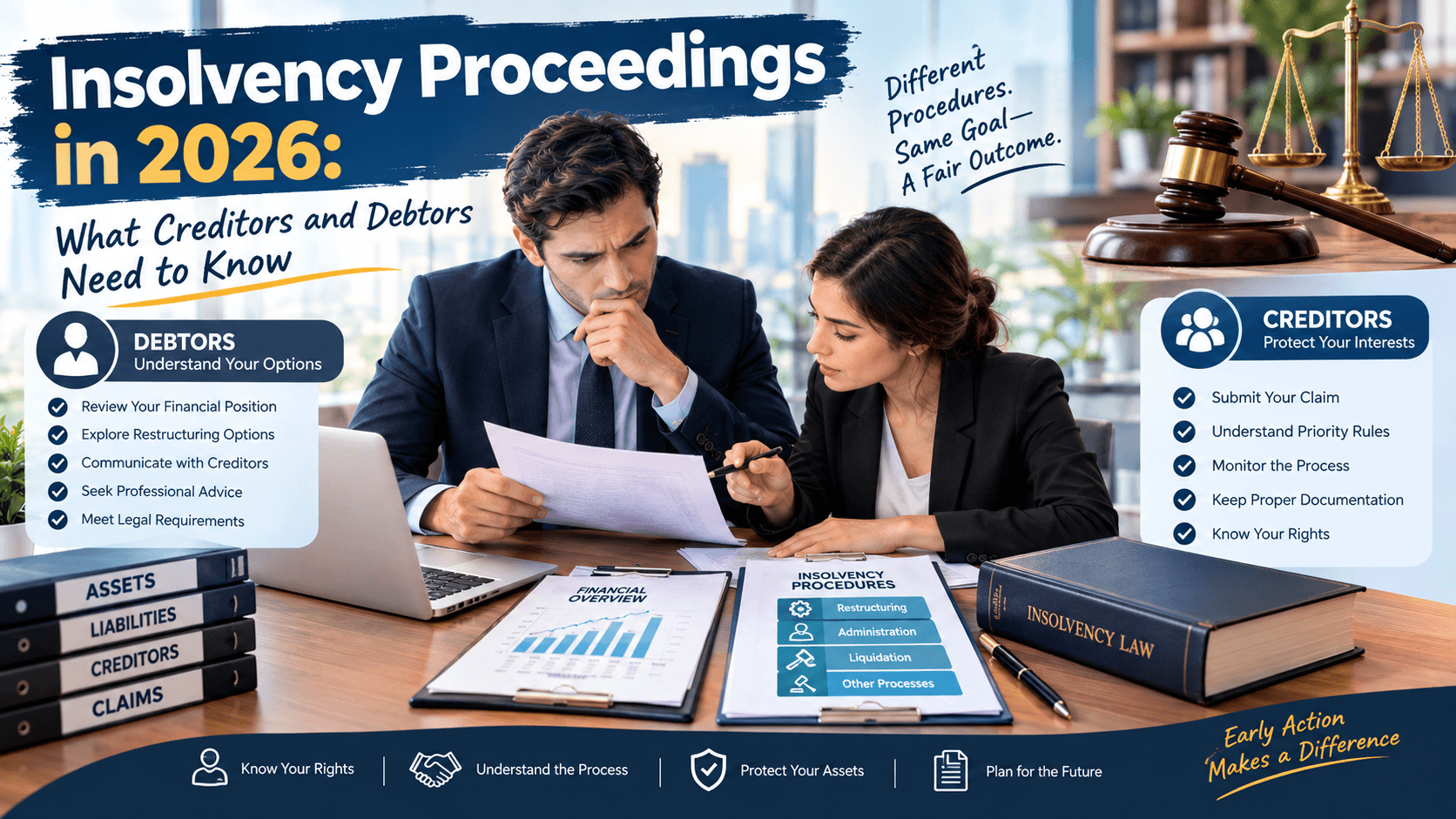
A debtor facing serious financial difficulties should obtain professional advice and accurately disclose its financial position.
Important steps may include:
Reviewing cash flow and liabilities
Identifying available assets
Preparing financial records
Communicating with relevant creditors
Understanding available restructuring options
Following applicable legal requirements
Delaying action can make financial problems more complicated.
What Rights Do Creditors Have?
Creditors may have rights to submit claims and participate in the applicable insolvency process.
Their rights can depend on whether they are:
Secured creditors
Unsecured creditors
Preferential creditors
Employees with certain protected claims
The exact priority system depends on local law.
Secured vs Unsecured Creditors
A secured creditor generally has a legally recognized security interest in particular property or assets.
An unsecured creditor generally does not have specific collateral securing the debt.
This distinction can significantly affect how claims are treated during insolvency proceedings.
What Happens to Company Assets?
Company assets may be identified, protected, managed, or sold during formal proceedings.
The purpose can include preserving value and distributing available funds according to applicable legal rules.
Assets should not be transferred improperly to avoid legitimate creditor claims.
Can an Insolvent Business Continue Trading?
In some circumstances, yes.
Certain restructuring or rescue procedures allow a financially distressed business to continue operating while attempting to stabilize its finances.
Other procedures may result in liquidation and eventual closure.
What Is Insolvency Restructuring?
Restructuring involves changing a company's financial or operational arrangements to address financial difficulties.
It can potentially involve:
Debt restructuring
New repayment schedules
Refinancing
Cost reductions
Asset sales
Operational changes
Formal restructuring arrangements
Whether restructuring is available depends on the company's circumstances and applicable law.
What Is Liquidation?
Liquidation generally involves winding up a company and dealing with its assets and liabilities.
Assets may be sold and the proceeds distributed according to applicable priority rules.
Liquidation does not necessarily follow every insolvency situation because some businesses may qualify for restructuring or other rescue procedures.
How Are Employees Affected?
Employees may be affected by changes to business operations, delayed wages, or redundancies.
Some jurisdictions provide special protections or priority for certain employee claims, but the details vary considerably.
What Happens to Directors?
Directors may continue to have legal responsibilities during financial distress and formal insolvency proceedings.
Their duties and potential liabilities depend on the company's circumstances and the law governing the insolvency process.
Professional legal advice can be particularly important when a company is approaching insolvency.
How Long Do Insolvency Proceedings Take?
There is no universal timeframe.
A straightforward case may be resolved relatively quickly, while complex proceedings involving substantial assets, numerous creditors, disputes, or litigation can take much longer.
How Can Creditors Protect Their Interests?
Creditors should keep accurate documentation of debts and understand the applicable claim procedures.
They may need to:
Submit claims on time
Provide supporting documents
Monitor notices from the insolvency administrator
Understand their security position
Participate in creditor meetings where applicable
What Happens After the Proceedings?
The outcome depends on the type of procedure.
Possible outcomes include:
Successful restructuring
Sale of the business
Distribution of assets
Debt settlement
Completion of liquidation
Closure of the company
Why Is Professional Advice Important?
Insolvency law can be complex and highly jurisdiction-specific. Accountants, insolvency practitioners, restructuring advisers, and lawyers can help creditors and debtors understand the relevant process and obligations.
Final Thoughts
Insolvency proceedings create a structured framework for dealing with financial distress. Debtors need to understand their obligations and available options, while creditors need to understand how claims, security, and priority rules affect potential recovery.
Because insolvency laws differ between jurisdictions, anyone involved in an actual insolvency situation should obtain professional advice based on the applicable local law.
Frequently Asked Questions
What are insolvency proceedings?
Insolvency proceedings are formal legal processes used to deal with financial difficulties and unpaid debts.Who can start insolvency proceedings?
Depending on local law, proceedings may be started by the debtor, creditors, or another legally authorized party.What happens when insolvency proceedings begin?
The debtor's financial position is reviewed, including assets, liabilities, debts, contracts, and creditor claims.What is the role of an insolvency practitioner?
An insolvency practitioner may administer the relevant procedure, manage assets, communicate with creditors, and oversee the process where legally authorized.What is the difference between insolvency and bankruptcy?
Insolvency generally describes a financial condition, while bankruptcy usually refers to a formal legal process in jurisdictions that use that term.Can an insolvent company continue trading?
In some circumstances, yes. Certain restructuring procedures allow businesses to continue operating.What happens to company assets during insolvency?
Assets may be identified, protected, managed, or sold according to the applicable legal procedure.What is a secured creditor?
A secured creditor generally has a legally recognized security interest in specific assets.What is an unsecured creditor?
An unsecured creditor generally does not have specific collateral securing the debt.Do secured creditors get paid first?
Priority depends on the applicable law, the type of security, and other claims against the debtor.How do creditors make a claim?
Creditors generally need to submit their claim and supporting documentation according to the requirements of the relevant insolvency procedure.What happens to employees during insolvency?
Employees may face delayed wages, changes to employment, or redundancies, although employee protections vary by jurisdiction.Can employees receive unpaid wages?
Some jurisdictions provide statutory protections or compensation schemes for certain employee claims.Can creditors challenge an insolvency decision?
Depending on the jurisdiction and procedure, creditors may have rights to challenge certain decisions or participate in court proceedings.Can an insolvent company restructure its debts?
Yes, where applicable law provides restructuring or rescue procedures, a company may be able to reorganize its debts.What is debt restructuring?
Debt restructuring involves changing repayment terms or other financial arrangements to address financial difficulties.What is liquidation?
Liquidation is a process generally involving the realization of company assets and the winding up of the business.Does insolvency always lead to liquidation?
No. Some businesses may use restructuring or other rescue procedures instead.Can a company be sold during insolvency?
In some circumstances, a business or its assets may be sold as part of a restructuring or insolvency process.How long do insolvency proceedings take?
There is no standard timeframe. Complex cases involving many creditors, assets, or disputes can take considerably longer.What happens to business loans during insolvency?
Loans are handled according to their contractual terms and the applicable insolvency procedure.Can creditors negotiate with an insolvent company?
Negotiations may be possible depending on the circumstances and applicable legal framework.What happens to suppliers during insolvency?
Suppliers who are owed money may become creditors and may need to submit claims through the relevant process.Can directors be personally liable for company debts?
Company debts are generally separate from directors' personal debts, although guarantees, misconduct, or other legal exceptions may create personal liability.Can insolvency affect a company's reputation?
Yes. Financial distress and formal proceedings can affect relationships with lenders, suppliers, customers, employees, and investors.Can an insolvent business recover?
Some businesses can recover through restructuring, refinancing, cost reductions, or operational changes, while others may ultimately be liquidated.What happens if restructuring fails?
If restructuring cannot resolve the financial difficulties, the business may need to enter another formal insolvency procedure or liquidation, depending on local law.What rights do debtors have during insolvency?
Debtors may have rights under the applicable insolvency framework, including rights concerning restructuring, creditor claims, and procedural decisions.Why should creditors act quickly?
Timely action can help creditors understand deadlines, submit claims, protect relevant rights, and monitor the insolvency process.Where can businesses and creditors get insolvency advice?
They can consult qualified insolvency practitioners, accountants, restructuring advisers, or lawyers familiar with the relevant jurisdiction.