Why Digital Ecosystems Are Replacing Traditional Business Models
L
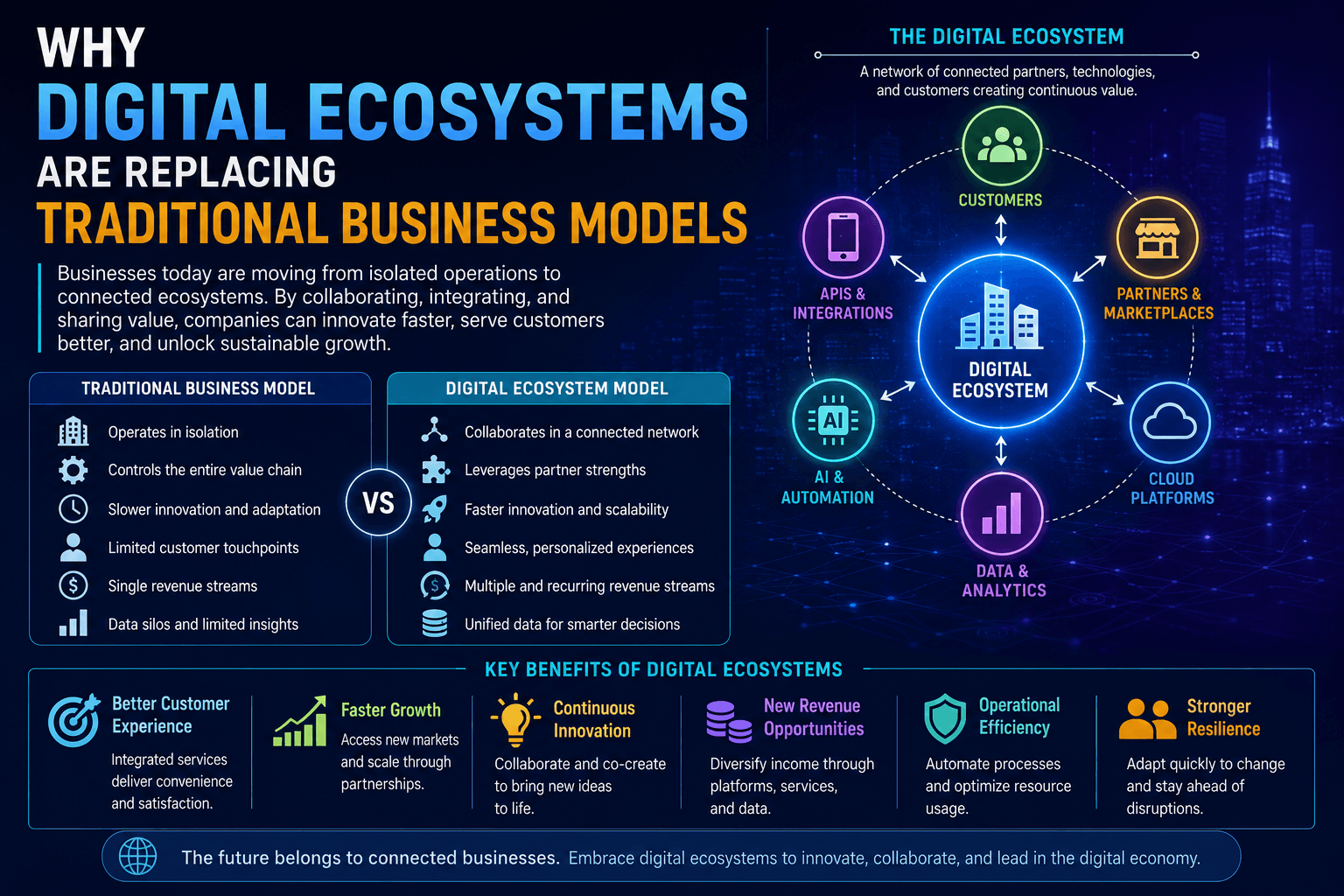
The business world is experiencing a fundamental transformation. Traditional business models, where companies operated independently and controlled every aspect of their value chain, are rapidly giving way to interconnected digital ecosystems. In 2026, organizations are realizing that long-term success depends not only on delivering great products or services but also on building collaborative networks that create greater value for customers.
Powered by cloud computing, artificial intelligence (AI), application programming interfaces (APIs), and data sharing, digital ecosystems are enabling businesses to innovate faster, reach new markets, and deliver seamless customer experiences. Companies that embrace ecosystem thinking are gaining a significant competitive advantage in the digital economy.
## What Is a Digital Ecosystem?
A digital ecosystem is a network of organizations, technology providers, suppliers, developers, and customers connected through digital platforms that work together to deliver integrated products and services.
Instead of operating in isolation, businesses collaborate with partners to create solutions that offer greater convenience and value.
Examples include:
* Online marketplaces connecting buyers and sellers
* Payment providers integrated into e-commerce platforms
* Cloud-based software ecosystems
* Healthcare platforms linking hospitals, insurers, and pharmacies
* Smart manufacturing networks connecting suppliers and factories
These ecosystems allow businesses to expand their capabilities without building every service internally.
## Customers Expect Connected Experiences
Modern consumers want fast, seamless, and personalized experiences across multiple digital channels.
Rather than switching between different websites or applications, customers increasingly prefer platforms where they can shop, pay, communicate, track deliveries, and access support in one place.
Digital ecosystems make this possible by integrating multiple services into a single customer journey, improving convenience and customer satisfaction.
## Faster Innovation Through Collaboration
Traditional businesses often require years to develop new products and services. Digital ecosystems accelerate innovation by allowing organizations to collaborate with specialized partners.
Companies can integrate AI tools, payment systems, logistics providers, customer support platforms, and analytics solutions using APIs and cloud technologies.
This collaborative approach reduces development costs, shortens time-to-market, and encourages continuous innovation.
## Data Drives Smarter Decisions
One of the greatest strengths of digital ecosystems is the ability to share and analyze data across connected platforms.
Businesses gain valuable insights into:
* Customer behavior
* Market trends
* Supply chain performance
* Product demand
* Operational efficiency
* Sales performance
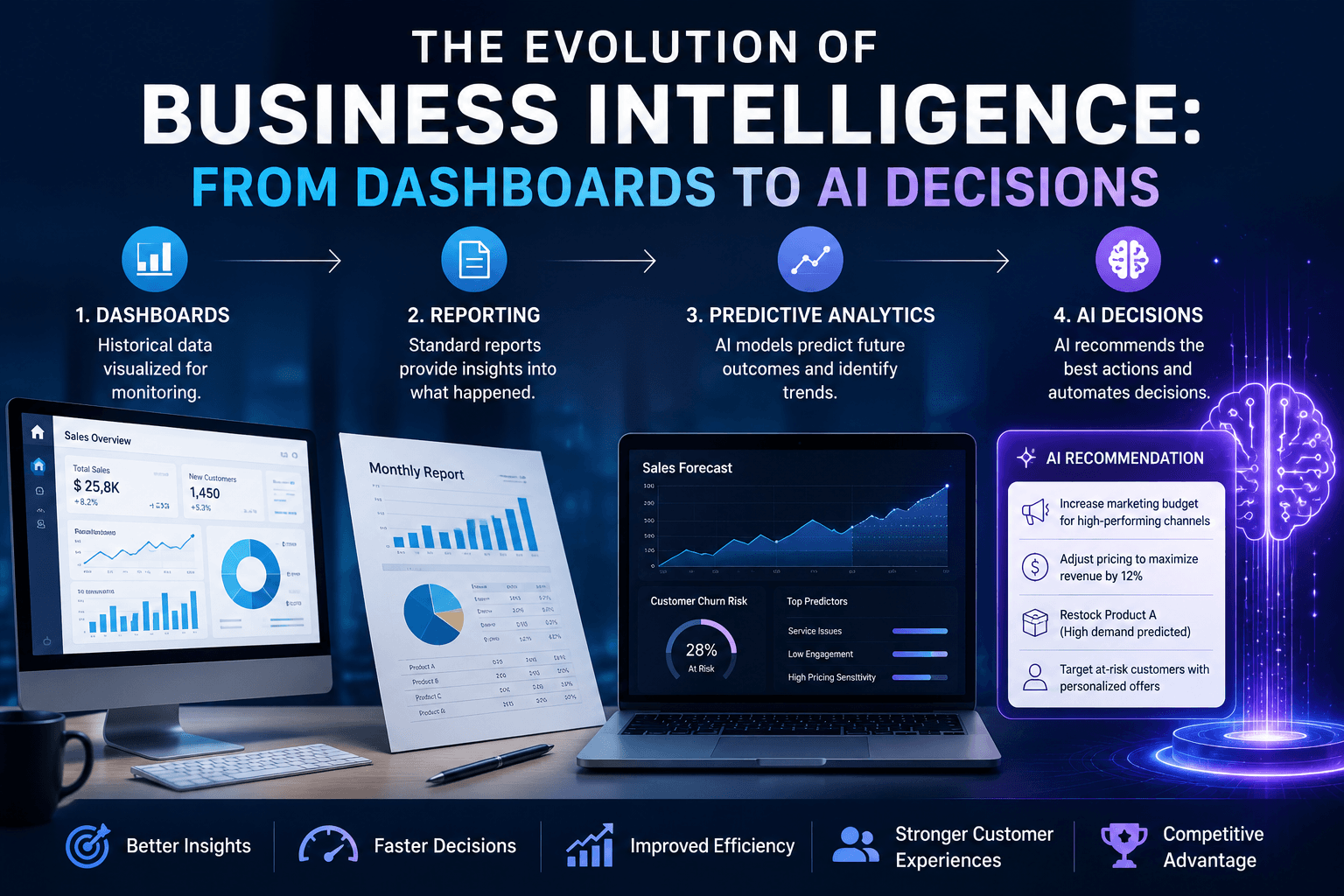
AI-powered analytics transform this data into actionable insights, helping organizations make faster and more informed strategic decisions.
## Creating New Revenue Opportunities
Digital ecosystems enable companies to diversify their business models beyond traditional product sales.
Organizations can generate revenue through:
* Subscription services
* Digital marketplaces
* Platform commissions
* Data-driven services
* Embedded financial products
* Value-added partnerships
This creates multiple income streams while strengthening relationships with customers and business partners.
## Small Businesses Can Compete More Effectively
Digital ecosystems level the playing field for small and medium-sized businesses.
Instead of investing heavily in technology infrastructure, smaller companies can access enterprise-grade cloud platforms, payment systems, marketing tools, logistics networks, and AI-powered solutions through ecosystem partnerships.
This enables businesses of all sizes to compete more effectively in global markets.
## Artificial Intelligence Strengthens Ecosystems
AI plays a critical role in managing modern digital ecosystems.
Artificial intelligence helps organizations:
* Personalize customer experiences
* Automate routine processes
* Predict customer demand
* Detect fraud
* Optimize pricing
* Improve supply chain efficiency
* Enhance customer support through AI assistants
By combining AI with connected digital platforms, businesses can deliver smarter, faster, and more scalable services.
## Security and Trust Are Essential
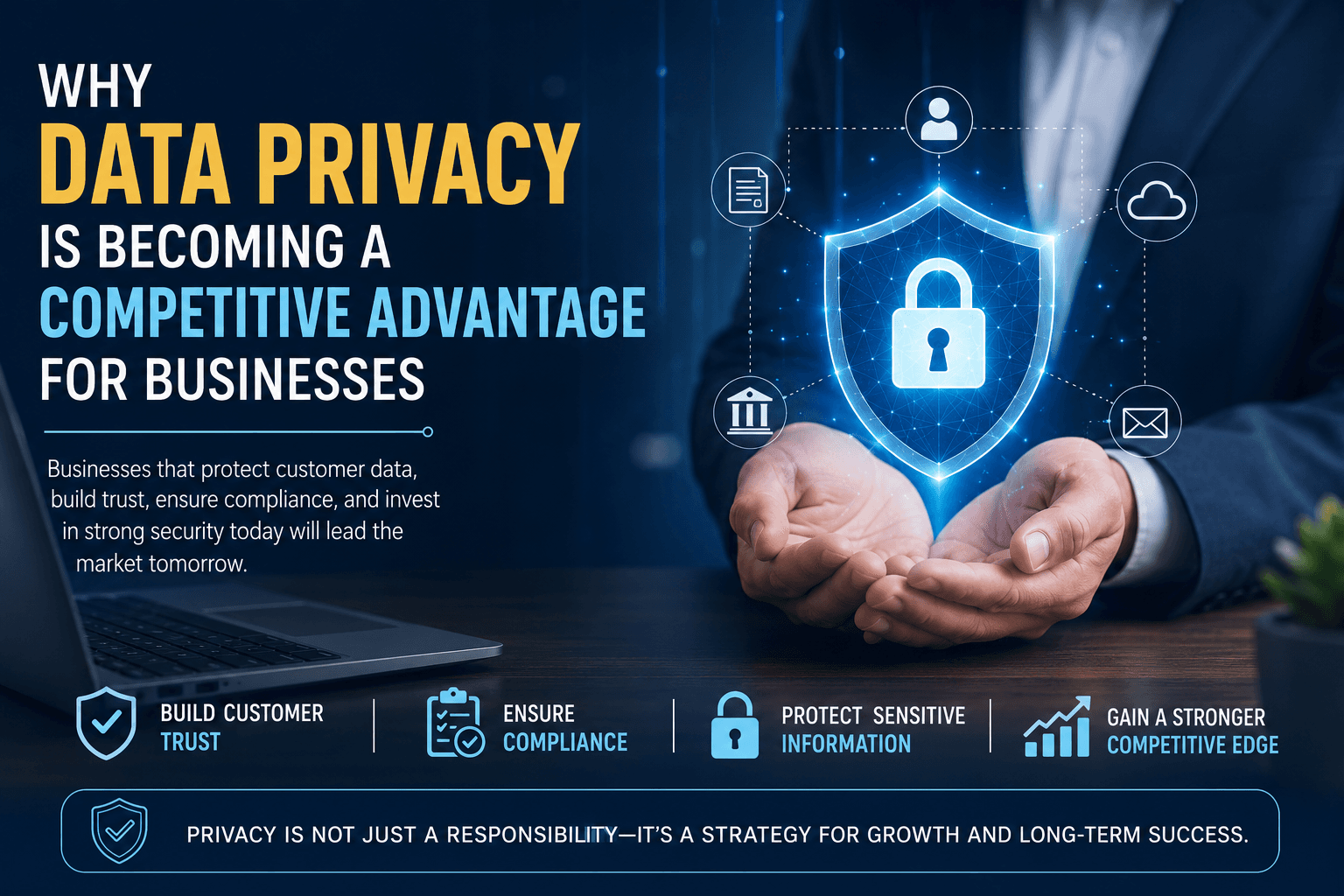
As organizations exchange more data across ecosystem partners, cybersecurity and data privacy become increasingly important.
Businesses must invest in:
* Secure APIs
* Data encryption
* Identity and access management
* Continuous security monitoring
* Privacy compliance
* Third-party risk management
Strong governance and transparency help maintain trust among customers and ecosystem partners.
## The Future of Business Is Platform-Based
Many of the world's fastest-growing companies operate platform-based business models that connect multiple participants rather than relying solely on direct product sales.
Future business success will increasingly depend on an organization's ability to build, join, and manage digital ecosystems that create value for everyone involved.
Companies that remain isolated may struggle to compete against more connected and collaborative competitors.
## Conclusion
Digital ecosystems are replacing traditional business models by enabling organizations to collaborate, innovate faster, and deliver seamless customer experiences. Through AI, cloud computing, APIs, and shared digital platforms, businesses can unlock new revenue opportunities, improve operational efficiency, and respond more quickly to changing market demands.
As digital transformation accelerates, ecosystem-driven strategies will become a defining feature of successful organizations. Businesses that embrace collaboration and connectivity today will be better positioned to thrive in the increasingly interconnected global economy.
Stay updated with the latest insights on artificial intelligence, digital transformation, cloud computing, cybersecurity, fintech, and emerging business trends.
| Category | Details |
|---|---|
| Topic | Business |
| Author | Lora |
| Published | 01/07/2026 |
| Read Time | Not set |
L