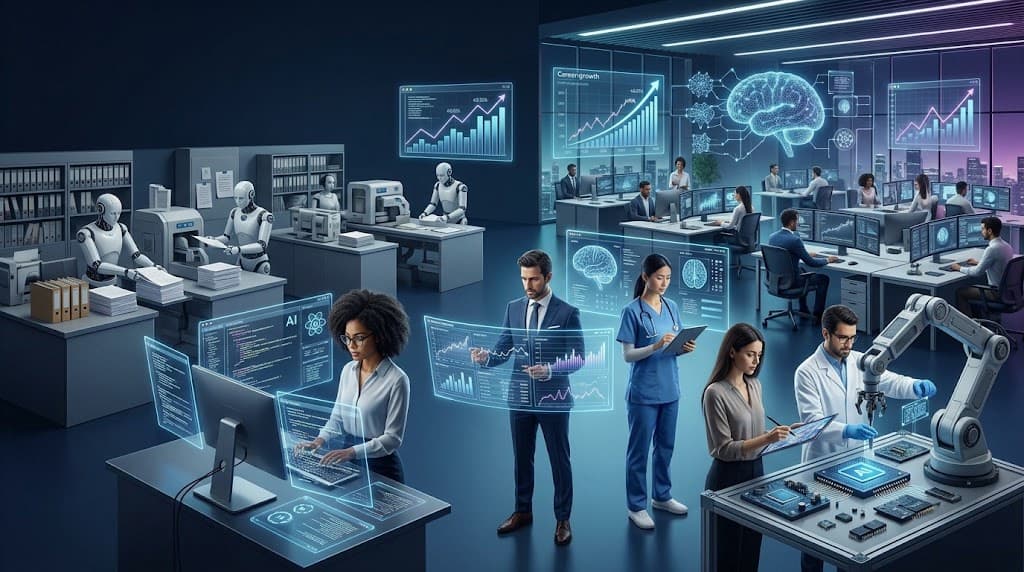
Artificial intelligence is changing the workplace faster than many businesses expected. In 2026, AI is no longer limited to experimental projects—it is increasingly being integrated into customer service, software development, marketing, finance, education, healthcare, and everyday office work.
The biggest question is no longer simply “Will AI replace jobs?” Instead, workers and businesses are asking which careers will grow, which tasks will become automated, and which skills will become more valuable.
1. AI and Machine Learning Careers
AI development remains one of the fastest-growing areas of technology.
Companies need professionals who can build, deploy, evaluate, and maintain AI systems.
Potential roles include:
AI engineers
Machine-learning engineers
AI researchers
Data scientists
AI product managers
AI safety specialists
As businesses adopt AI, demand isn't limited to companies that build AI models. Traditional industries are also looking for AI expertise.
2. Cybersecurity Jobs
AI is creating new cybersecurity challenges while also providing new tools for security professionals.
Organizations need specialists who can protect systems from increasingly sophisticated attacks and monitor AI-powered threats.
Cybersecurity professionals may increasingly work alongside AI systems to detect suspicious behavior and respond to incidents.
3. Healthcare Careers
AI is becoming increasingly useful in healthcare research, medical imaging, administrative processes, drug discovery, and clinical decision support.
However, healthcare still depends heavily on human expertise, communication, ethics, and responsibility.
This means AI is more likely to change many healthcare roles than simply eliminate them.
4. Software Development
Programming is one of the areas where AI has already had a major impact.
AI coding assistants can generate code, explain functions, identify bugs, and automate repetitive programming tasks.
Rather than making developers irrelevant, these tools can shift the role toward:
System design
Architecture
Reviewing AI-generated code
Problem-solving
Security
Product development
Developers who understand how to work effectively with AI may have an advantage.
5. Data and Analytics
Businesses generate enormous quantities of data, creating continued demand for professionals who can turn information into useful decisions.
AI can automate parts of data analysis, but humans are still needed to determine which questions matter, interpret results, and make strategic decisions.
6. Marketing and Content Creation
AI can produce drafts, images, advertising concepts, social-media posts, and marketing ideas quickly.
This doesn't necessarily eliminate the need for marketers.
Instead, marketing professionals may spend more time on:
Strategy
Brand positioning
Audience research
Creative direction
Campaign analysis
Customer psychology
The ability to combine AI tools with strong marketing judgment is becoming increasingly valuable.
7. Education and Training
AI is changing how people learn.
AI tutors can explain concepts, generate practice questions, provide feedback, and adapt explanations to different learning styles.
Teachers and trainers still provide important human functions such as mentorship, classroom management, motivation, and judgment.
The future of education may involve more collaboration between teachers and AI systems.
8. Robotics and Automation
AI-powered robotics could increase demand for professionals who design, maintain, program, and manage automated systems.
Potential careers include:
Robotics engineers
Automation specialists
Robot technicians
Industrial AI specialists
Control-system engineers
As physical automation expands, these roles could become increasingly important.
9. Jobs Most Exposed to Automation
Some jobs involve highly repetitive and predictable tasks, making them more exposed to AI and automation.
Examples can include certain:
Data-entry roles
Basic administrative tasks
Routine customer-support activities
Simple transcription work
Repetitive document processing
However, exposure to automation does not automatically mean an entire occupation will disappear.
Often, individual tasks are automated while the broader job changes.
10. Human Skills Become More Valuable
As AI handles more routine work, uniquely human capabilities can become increasingly important.
These include:
Critical thinking
Creativity
Communication
Leadership
Emotional intelligence
Problem-solving
Collaboration
Decision-making
Workers who combine technical knowledge with strong human skills may be particularly well positioned.
Jobs That Could Grow Alongside AI
The AI economy is creating demand for new and evolving roles.
Some examples include:
AI Product Managers
These professionals help businesses turn AI capabilities into useful products and services.
AI Governance Specialists
Organizations need people who can develop policies for responsible AI use, risk management, compliance, and oversight.
AI Trainers and Evaluators
AI systems require testing and evaluation to determine whether their outputs are useful, safe, and reliable.
AI Security Specialists
As AI becomes more important, protecting AI systems and data becomes increasingly critical.
Automation Consultants
Businesses may need experts who identify processes that can be improved through AI and automation.
Jobs That Are More Likely to Evolve
Many occupations won't simply disappear. Instead, AI may change how people perform them.
For example:
Accountants may use AI for document processing and financial analysis.
Lawyers may use AI to review documents and research cases.
Doctors may use AI-assisted tools for analysis and administrative tasks.
Teachers may use AI to create personalized learning materials.
Designers may use generative tools to explore concepts faster.
Managers may use AI for reporting, planning, and data analysis.
The common pattern is human + AI, rather than human versus AI.
Skills to Learn in 2026
Workers preparing for an AI-driven economy should consider developing a combination of technical and human skills.
AI Literacy
Understand what AI can and cannot do, how to use AI tools effectively, and how to evaluate their outputs.
Data Skills
Learn how to interpret information, identify patterns, and make decisions using data.
Communication
Clear writing, speaking, presentation, and collaboration skills remain valuable even as AI becomes more capable.
Critical Thinking
AI can generate convincing answers that aren't necessarily correct. Human verification and judgment remain essential.
Adaptability
Technology changes quickly. The ability to learn new tools and adjust to new workflows can become a major career advantage.
How Students Can Prepare for the AI Job Market
Students don't need to become AI engineers to benefit from AI.
A strong strategy is to combine AI literacy with another useful skill.
For example:
AI + Programming
AI + Marketing
AI + Design
AI + Finance
AI + Healthcare
AI + Education
AI + Business
Learning how to use AI effectively within a chosen field can be more valuable than simply knowing how to use one AI application.
Final Thoughts
AI is changing the workplace, but the future of employment is more complicated than a simple story of machines replacing humans.
Some repetitive tasks will increasingly be automated. At the same time, new roles and opportunities are emerging around AI development, cybersecurity, robotics, data, governance, and AI-enabled business operations.
The most important career strategy in 2026 may be continuous learning.
Workers who learn how to collaborate with AI while developing strong human skills could be better prepared for the changing job market.
This article discusses general employment trends and is not a guarantee of future job growth or decline.
FAQs
1. Will AI replace most jobs?
There is no reliable evidence that AI will replace most jobs entirely. AI is more likely to automate certain tasks and transform many occupations.
2. Which jobs are growing because of AI?
AI engineering, cybersecurity, data science, AI governance, robotics, and AI-related product roles are among the areas receiving increasing attention.
3. Will programmers lose their jobs because of AI?
Programming is changing significantly, but developers remain important for architecture, system design, security, testing, and complex problem-solving.
4. What skills are important in the AI era?
AI literacy, critical thinking, creativity, communication, adaptability, data skills, and problem-solving are valuable.
5. Can AI create new jobs?
Yes. New roles can emerge around AI development, implementation, evaluation, governance, security, and automation.
6. Which jobs are most exposed to AI automation?
Highly repetitive and predictable tasks are generally more exposed to automation than jobs requiring complex human interaction and judgment.
7. Will AI affect creative jobs?
Yes. Generative AI is already changing writing, design, video, music, and other creative workflows.
8. Is learning AI useful for students?
Yes. Understanding AI tools and their limitations can help students prepare for changing education and workplace environments.
9. Will healthcare workers be replaced by AI?
AI may automate or assist with some healthcare tasks, but healthcare continues to require human expertise, communication, ethics, and responsibility.
10. What is AI literacy?
AI literacy means understanding how AI works at a practical level, knowing how to use AI tools, and being able to evaluate their limitations and outputs.
11. Can AI improve employee productivity?
Yes. AI can assist with repetitive work, research, writing, analysis, coding, and information management.
12. What jobs require strong human skills?
Leadership, teaching, healthcare, management, negotiation, counseling, sales, and many creative and collaborative roles rely heavily on human interaction and judgment.
13. Should workers be afraid of AI?
Rather than focusing only on replacement, workers can focus on learning how AI is changing their industry and developing skills that complement the technology.
14. How can businesses prepare employees for AI?
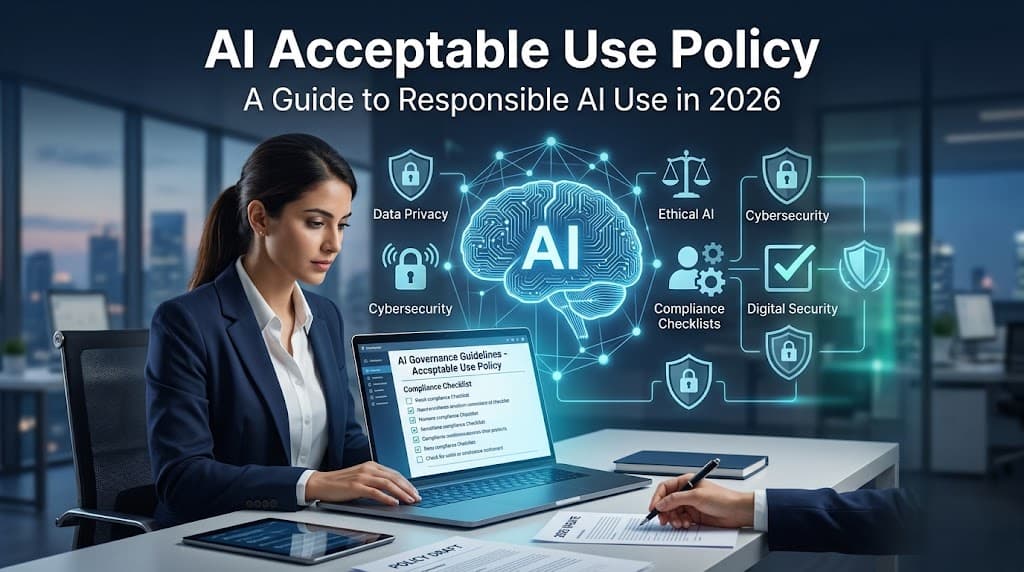
Businesses can provide AI training, redesign workflows, establish responsible-use policies, and identify tasks where AI can safely improve productivity.
15. What is the future of work likely to look like?
Many workplaces may involve greater collaboration between people and AI systems, with employees focusing more on judgment, creativity, strategy, and interpersonal work.
16. Is AI experience becoming important when applying for jobs?
In many industries, familiarity with relevant AI tools can increasingly be useful, particularly when it demonstrates measurable productivity or problem-solving ability.
17. Can AI help people learn new careers?
Yes. AI can provide explanations, practice exercises, feedback, and personalized learning assistance, although important information should be verified.
18. What is the best way to prepare for AI-related changes?
Develop adaptable skills, learn relevant AI tools, understand your industry's technology trends, and continue building strong foundational knowledge.
19. Will every industry be affected by AI?
AI has the potential to affect most industries, although the speed and nature of adoption will vary considerably.
20. What is the biggest career advantage in the AI era?
One major advantage is the ability to combine domain expertise with effective AI use while maintaining strong human judgment and communication skills.q