AAAI Agents in 2026: How Autonomous AI Is Changing Work, Business & Everyday Life
Introduction
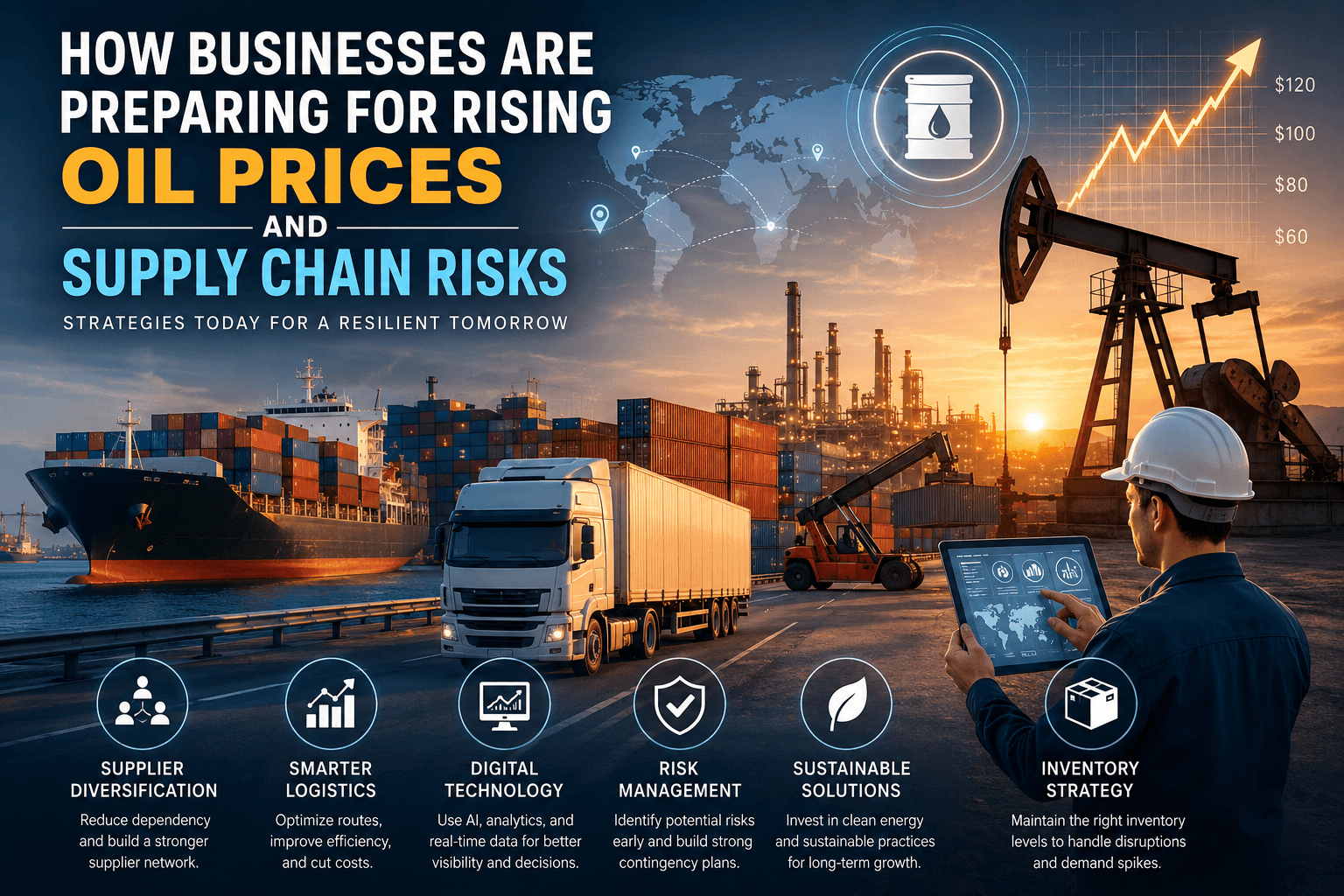
Rising oil prices have once again become a major concern for businesses worldwide in 2026. Energy costs directly influence transportation, manufacturing, logistics, and the overall cost of doing business. Combined with ongoing geopolitical uncertainty, climate-related disruptions, and changing trade policies, higher fuel prices are creating new supply chain challenges for companies of every size.
While many organizations have learned valuable lessons from previous global disruptions, today's business environment demands even greater resilience. Companies are no longer focusing solely on reducing costs—they are redesigning supply chains, diversifying suppliers, investing in technology, and improving operational efficiency to minimize the impact of volatile energy markets.
Businesses that prepare early are better positioned to protect profits, maintain customer satisfaction, and remain competitive even during periods of economic uncertainty.
Why Oil Prices Affect Every Industry
Oil is one of the world's most important commodities. It powers transportation networks, manufacturing equipment, shipping operations, aviation, and many industrial processes.
When oil prices increase, businesses often experience:
Higher transportation expenses
Increased manufacturing costs
Rising raw material prices
More expensive international shipping
Reduced profit margins
Higher consumer prices
Industries such as retail, e-commerce, construction, agriculture, aviation, and manufacturing are particularly sensitive to fluctuations in fuel costs.
Supply Chains Continue to Face Global Pressure
Modern supply chains are highly interconnected. A disruption in one region can quickly affect production and deliveries across multiple countries.
Businesses continue to face challenges such as:
Shipping delays
Port congestion
Geopolitical conflicts
Extreme weather events
Labor shortages
Rising freight costs
Currency fluctuations
Because these risks often occur simultaneously, organizations are adopting more flexible supply chain strategies instead of relying on a single sourcing model.
Companies Are Diversifying Their Supplier Networks
One of the biggest lessons businesses have learned is the danger of depending on a single supplier or manufacturing location.
Today, many organizations are building supplier networks across multiple countries to reduce operational risk. This strategy helps companies maintain production even if one supplier experiences delays or disruptions.
Supplier diversification also improves negotiating power, increases inventory flexibility, and strengthens long-term business continuity.
Digital Supply Chain Technologies Are Becoming Essential
Technology is playing a critical role in helping businesses respond faster to changing market conditions.
Many organizations are investing in:
AI-powered demand forecasting
Real-time shipment tracking
Cloud-based supply chain platforms
Internet of Things (IoT) sensors
Predictive analytics
Automated inventory management
These digital tools provide greater visibility across the supply chain, allowing businesses to identify potential problems before they become costly disruptions.
Inventory Strategies Are Changing
For many years, companies focused on "just-in-time" inventory systems to reduce storage costs. However, recent disruptions have highlighted the risks of keeping minimal inventory.
Many businesses are now adopting hybrid inventory strategies by maintaining safety stock for critical products while continuing to optimize warehouse efficiency.
This balanced approach helps reduce the impact of shipping delays and unexpected increases in customer demand.
Investing in Smarter Logistics
Businesses are increasingly investing in smarter logistics solutions to offset rising fuel costs and improve operational efficiency. Artificial intelligence is helping companies optimize delivery routes, reduce empty miles, predict traffic conditions, and improve fleet utilization.
Many organizations are also adopting electric delivery vehicles, fuel-efficient transportation methods, and warehouse automation to lower long-term operating expenses. These investments not only reduce costs but also support sustainability goals.
Strengthening Risk Management
Risk management has become a central part of supply chain planning. Instead of reacting to disruptions after they occur, companies are using predictive analytics and scenario planning to identify potential risks in advance.
Businesses are creating contingency plans, increasing collaboration with suppliers, and monitoring geopolitical developments that could affect production or shipping. A proactive approach helps organizations recover faster when unexpected disruptions occur.
Sustainability Is Becoming a Competitive Advantage
Higher energy prices are encouraging businesses to invest in renewable energy, energy-efficient equipment, and environmentally friendly logistics practices. Sustainable operations reduce dependence on volatile fuel markets while improving corporate reputation.
Consumers and investors increasingly favor companies that demonstrate environmental responsibility, making sustainability both a financial and strategic advantage.
Building More Resilient Supply Chains
Rather than focusing only on cost reduction, businesses are prioritizing resilience. This includes regional sourcing, multiple distribution centers, stronger supplier relationships, and digital visibility across the supply chain.
Organizations that balance efficiency with flexibility are better prepared to handle future disruptions without significantly affecting customers or profitability.
Future Outlook
Although oil prices are expected to remain volatile due to economic uncertainty, geopolitical events, and global energy demand, businesses now have more advanced tools than ever before to manage supply chain risks.
Artificial intelligence, automation, cloud computing, predictive analytics, and digital logistics platforms will continue transforming supply chain management over the coming years. Companies that invest in these technologies today will be more agile, competitive, and resilient tomorrow.
Conclusion
Rising oil prices and supply chain risks are reshaping how businesses operate in 2026. Organizations are responding by diversifying suppliers, investing in digital technologies, improving logistics, strengthening risk management, and adopting sustainable business practices.
The companies that prepare for uncertainty instead of simply reacting to it will be better positioned to protect profits, maintain customer satisfaction, and achieve long-term growth. Building a resilient supply chain is no longer optional—it has become a critical business strategy for success in an increasingly unpredictable global economy.
Frequently Asked Questions (FAQs)
1. Why do rising oil prices affect businesses?
Higher oil prices increase transportation, manufacturing, shipping, and operational costs, which can reduce profit margins and increase consumer prices.
2. What are supply chain risks?
Supply chain risks include shipping delays, supplier disruptions, geopolitical conflicts, natural disasters, labor shortages, cybersecurity threats, and rising logistics costs.
3. How are businesses reducing supply chain disruptions?
Companies are diversifying suppliers, using AI-powered forecasting, improving inventory management, and investing in digital supply chain technologies.
4. Why is supplier diversification important?
Working with multiple suppliers reduces dependence on a single source and improves business continuity during disruptions.
5. How does artificial intelligence improve supply chains?
AI helps forecast demand, optimize delivery routes, monitor inventory, predict disruptions, and improve overall operational efficiency.
6. What industries are most affected by rising oil prices?
Manufacturing, retail, e-commerce, aviation, logistics, agriculture, and construction are among the industries most impacted.
7. How can businesses lower transportation costs?
Businesses can optimize delivery routes, adopt fuel-efficient vehicles, consolidate shipments, and use AI-driven logistics software.
8. Why is sustainability important in supply chain management?
Sustainable practices reduce fuel dependency, lower operating costs, improve environmental performance, and strengthen brand reputation.
9. What is a resilient supply chain?
A resilient supply chain can quickly adapt to disruptions while maintaining business operations and meeting customer demand.
10. What is the future of supply chain management?
The future will focus on AI, automation, predictive analytics, cloud-based platforms, regional sourcing, and sustainable logistics to improve efficiency and resilience.
11. How do oil prices influence inflation?
Higher oil prices increase transportation and production costs, which often lead to higher prices for goods and services, contributing to inflation.
12. What is supply chain resilience?
Supply chain resilience is the ability of a business to prepare for, respond to, and recover quickly from disruptions while maintaining operations.
13. How can small businesses manage supply chain risks?
Small businesses can diversify suppliers, maintain safety stock, use inventory management software, and build strong relationships with logistics partners.
14. What technologies are improving supply chain efficiency?
Artificial intelligence (AI), the Internet of Things (IoT), blockchain, cloud computing, robotics, and predictive analytics are transforming modern supply chains.
15. WhZZZZZZy is real-time supply chain visibility important?
Real-time visibility helps businesses monitor shipments, detect delays early, optimize inventory, and make faster operational decisions.
16. How do geopolitical events impact global supply chains?
Trade restrictions, political instability, sanctions, and regional conflicts can disrupt manufacturing, transportation routes, and international trade.
17. What is nearshoring in supply chain management?
Nearshoring involves relocating manufacturing or sourcing operations closer to the target market to reduce transportation costs and delivery times.
18. How does inventory management reduce business risks?
Effective inventory management prevents stock shortages, reduces excess inventory, improves cash flow, and ensures products remain available during disruptions.
19. What role does cloud computing play in supply chains?
Cloud platforms enable businesses to share real-time data, improve collaboration, automate workflows, and monitor supply chain performance from anywhere.
20. Why should companies invest in sustainable logistics?
Sustainable logistics help lower fuel consumption, reduce carbon emissions, improve operational efficiency, and meet growing customer and regulatory expectations.