PFPersonal Finance in 2026: Smart Ways to Save Money & Build Wealth
Building wealth is not about finding a single winning investment—it is about creating a balanced portfolio that can withstand changing market conditions while delivering consistent long-term growth. In 2026, diversification remains one of the most effective strategies for managing risk and improving financial stability.
Global financial markets are influenced by technological innovation, economic cycles, inflation, interest rates, and geopolitical events. Investors who spread their investments across multiple asset classes are generally better positioned to navigate market uncertainty than those relying on a single investment.
Whether you are a beginner or an experienced investor, understanding portfolio diversification can help you make smarter financial decisions and achieve long-term investment goals.
What Is Portfolio Diversification?
Portfolio diversification means spreading investments across different asset classes, industries, and geographic regions instead of placing all your money into one investment.
The goal is simple: reduce risk without sacrificing long-term growth.
When one investment underperforms, gains from other investments may help offset losses, making the overall portfolio more stable.
Diversification does not eliminate investment risk, but it helps reduce exposure to unexpected market events.
Why Diversification Matters in 2026
Today's investment environment is more dynamic than ever.
Artificial intelligence, renewable energy, digital finance, and global economic changes continue reshaping financial markets.
A diversified portfolio helps investors benefit from growth opportunities while reducing dependence on any single industry.
Long-term investors understand that market volatility is normal, making diversification an essential part of financial planning.
Stocks: The Foundation of Growth
Stocks remain one of the strongest long-term wealth-building assets.
Companies with strong earnings, sustainable competitive advantages, and healthy balance sheets often generate significant returns over time.
Popular sectors include:
Artificial Intelligence
Technology
Healthcare
Financial Services
Consumer Goods
Industrial Automation
Renewable Energy
Diversifying across sectors helps reduce industry-specific risk.
Exchange-Traded Funds (ETFs)
ETFs have become increasingly popular because they provide instant diversification.
Instead of buying shares in a single company, investors gain exposure to dozens or even hundreds of companies through one investment.
Popular ETF categories include:
Global Equity ETFs
Technology ETFs
Dividend ETFs
AI ETFs
Healthcare ETFs
Clean Energy ETFs
ETFs are often considered cost-effective and suitable for long-term investors.
Bonds Provide Stability
Although bonds generally offer lower returns than stocks, they can help stabilize investment portfolios.
Government and high-quality corporate bonds may provide more predictable income during periods of stock market volatility.
Many investors include bonds to balance higher-risk growth investments.
Real Estate Continues Building Wealth
Real estate remains an important asset class for long-term investors.
Property investments may generate:
Rental income
Long-term appreciation
Portfolio diversification
Inflation protection
For investors who prefer not to purchase physical property, Real Estate Investment Trusts (REITs) provide another option.
Cryptocurrency as an Alternative Asset
Cryptocurrency has become an increasingly recognized alternative investment.
Although digital assets remain volatile, blockchain innovation continues expanding across global finance.
Investors interested in crypto often focus on:
Bitcoin
Ethereum
Blockchain infrastructure
Digital payment companies
Because of higher risk, cryptocurrency typically represents only one portion of a diversified portfolio rather than its largest allocation.
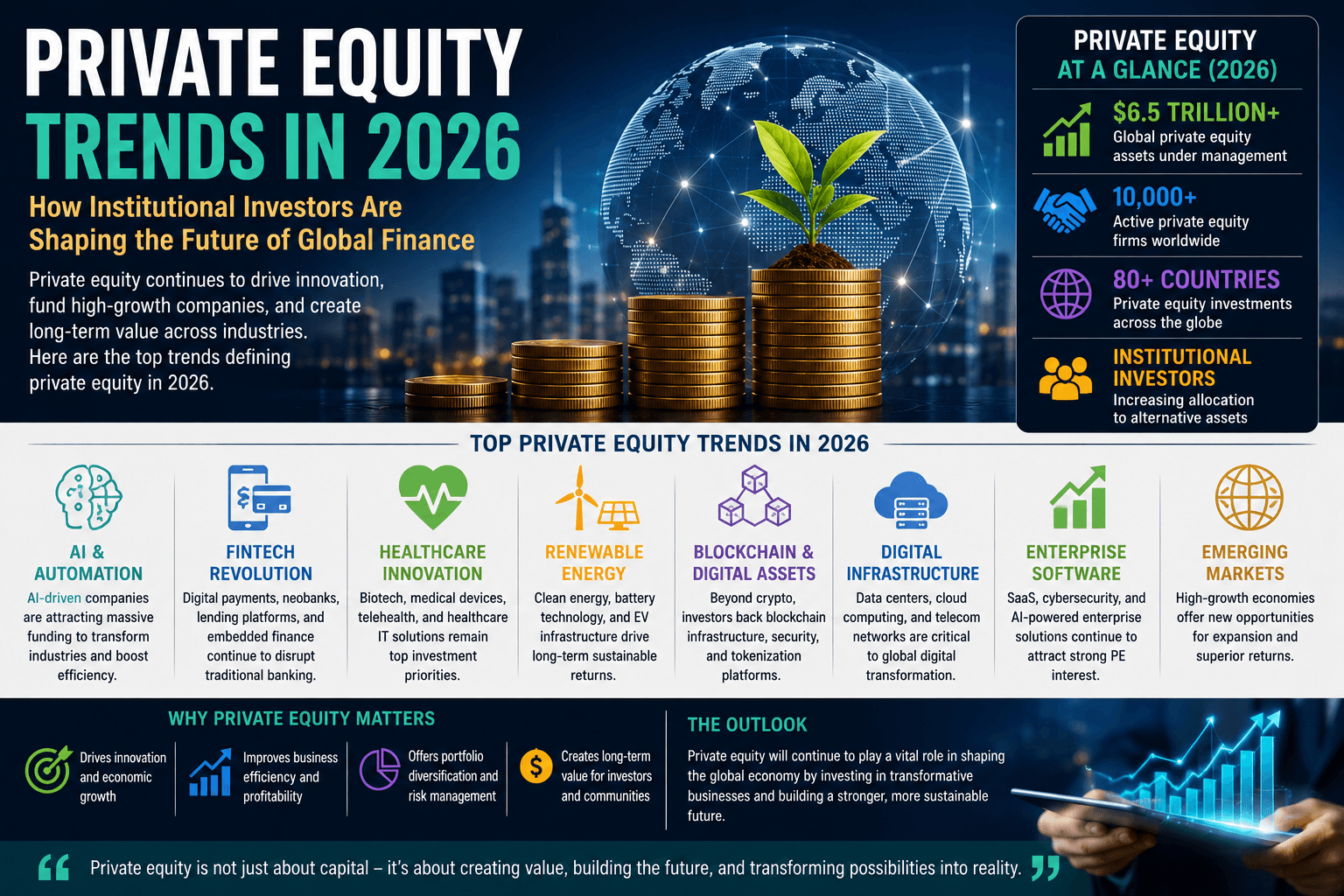
Private Equity Creates Growth Opportunities
Private equity investments focus on privately owned businesses before they enter public markets.
Investment areas include:
Artificial Intelligence
Financial Technology
Healthcare Innovation
Enterprise Software
Cybersecurity
Blockchain Infrastructure
Private equity often offers higher growth potential but usually requires longer investment horizons.
International Investments Reduce Geographic Risk
Global diversification has become increasingly important.
International investments allow exposure to different economies and industries.
Many investors include companies from:
North America
Europe
Asia-Pacific
Emerging Markets
International exposure reduces reliance on one country's economic performance.
Gold and Commodities
Some investors include commodities as portfolio diversifiers.
Gold is often viewed as a hedge during periods of economic uncertainty.
Other commodities include:
Silver
Energy
Industrial metals
Agricultural products
While commodity prices fluctuate, they can help diversify portfolios under certain market conditions.
Managing Investment Risk
Risk management remains essential for long-term success.
Investors should:
Review portfolios regularly
Diversify investments
Avoid emotional decisions
Invest consistently
Maintain realistic expectations
Keep emergency savings separate
Successful investing focuses on managing risk rather than eliminating it entirely.
Common Portfolio Mistakes
Many investors make avoidable mistakes.
These include:
Investing in only one stock
Following market hype
Ignoring diversification
Frequently buying and selling
Taking excessive risks
Discipline and patience generally outperform emotional decision-making over time.
Building Wealth Through Consistency
One of the most effective strategies is investing regularly.
Consistent monthly investing allows investors to purchase assets across different market conditions.
Over time, this disciplined approach helps reduce the impact of short-term market volatility while benefiting from long-term growth.
Future Investment Trends
Several industries are expected to continue expanding:
Artificial Intelligence
Financial Technology
Renewable Energy
Healthcare Innovation
Cybersecurity
Cloud Computing
Digital Infrastructure
Blockchain Technology
Investors who diversify across these sectors may benefit from future economic transformation.
Final Thoughts
A diversified investment portfolio remains one of the strongest foundations for long-term financial success. While no investment strategy eliminates risk completely, spreading investments across stocks, ETFs, bonds, real estate, private equity, and selected alternative assets can improve resilience during changing market conditions.
Successful investing is built on patience, education, diversification, and disciplined financial planning rather than chasing short-term market trends.
As technology continues reshaping global markets, maintaining a balanced portfolio will help investors pursue sustainable growth while managing uncertainty more effectively.