

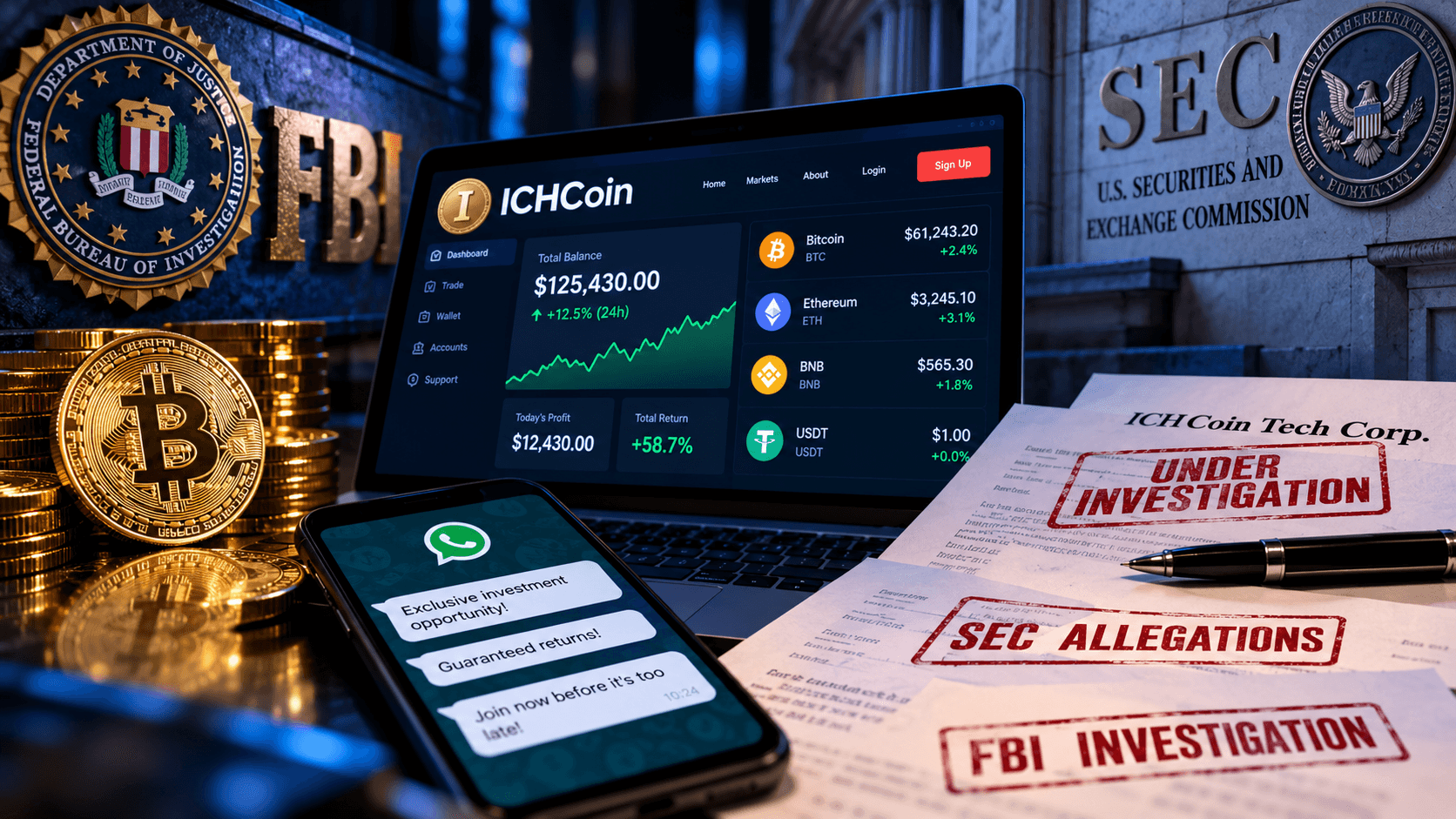
OneCoin became one of the most notorious cryptocurrency fraud cases in modern financial history. Promoted internationally as a revolutionary digital currency, the project attracted investors through presentations, recruitment networks, and promises of substantial financial opportunities.
Authorities later described OneCoin as a fraudulent scheme that misled investors about the nature and value of its cryptocurrency. The case demonstrates how persuasive marketing, complicated financial claims, and trust-based recruitment can expose investors to substantial losses.
What Was OneCoin?
OneCoin was launched in 2014 and promoted by Ruja Ignatova and her associates as an alternative to established cryptocurrencies such as Bitcoin.
The project attracted participants through a multilevel marketing structure in which promoters encouraged others to purchase educational packages associated with cryptocurrency tokens.
However, prosecutors alleged that OneCoin misrepresented important aspects of its business and the cryptocurrency it promoted. Unlike Bitcoin, which operates on a publicly verifiable blockchain, OneCoin did not provide investors with an independently verifiable public blockchain supporting the claims made about its currency.
This distinction is important because investors need reliable ways to verify transactions, ownership, and the underlying technology of a cryptocurrency project.
How the Scheme Attracted Investors
OneCoin expanded through international recruitment and promotional events. Its marketing emphasized the potential for financial success and encouraged participants to introduce additional buyers.
The project's presentation created the impression that early participation could produce substantial financial rewards. Recruitment incentives helped the network expand beyond traditional financial markets.
Such incentives are not automatically proof of fraud. However, when a business depends heavily on recruiting new participants while making misleading claims about an investment product, the arrangement deserves close scrutiny.
Investors should understand whether a project's value comes from genuine economic activity, verifiable technology, or an ongoing stream of money from new participants.
The Warning Signs
Several lessons emerge from the OneCoin case.
1. Unverifiable technology: Investors should be able to independently examine a project's technical claims. Marketing materials are not a substitute for verifiable records.
2. Aggressive recruitment: Be cautious when financial success depends heavily on bringing in new participants rather than using a transparent, sustainable business model.
3. Unrealistic financial expectations: Claims of exceptional returns should be assessed against evidence, costs, risks, and the actual economic purpose of the product.
4. Limited transparency: Investors should be able to identify the responsible parties, understand the investment structure, and verify important claims through independent sources.
5. Reliance on promotional events: Professional presentations, testimonials, and large audiences do not establish that an investment is legitimate.
What Happened to OneCoin's Leaders?
U.S. authorities prosecuted individuals connected with OneCoin. Co-founder Karl Sebastian Greenwood pleaded guilty to fraud and money-laundering charges and was sentenced to 20 years in prison in September 2023.
Ruja Ignatova, widely known as the “Cryptoqueen,” was charged in the United States and remains a fugitive according to official U.S. authorities' public information.
These legal developments distinguish the OneCoin case from projects that are merely unpopular or unsuccessful. Criminal charges, guilty pleas, and court sentences provide documented evidence about the conduct of specific individuals.
Lessons for Today's Crypto Investors
Before investing in a cryptocurrency, verify the project's technology, token distribution, ownership structure, and claims about returns. Check whether transaction data can be independently examined and whether the project explains its economic purpose clearly.
Investigate how promoters are compensated. If recruitment appears more important than a functioning product or service, take extra care.
Never rely solely on celebrity endorsements, polished presentations, or claims that a project will become the next Bitcoin.
Conclusion
OneCoin illustrates how a cryptocurrency's marketing and recruitment structure can conceal serious problems behind claims of innovation and financial opportunity.
The case reinforces a simple principle: investors should verify technology, examine financial incentives, and investigate the people behind a project before committing their funds.
The strongest protection against investment fraud is independent evidence rather than persuasive promises.