

Introduction
Online scams have become a growing concern for internet users, businesses, and families worldwide. As digital payments, online shopping, social media, and mobile banking become part of everyday life, scammers continue to find new ways to deceive people and steal money or personal information.
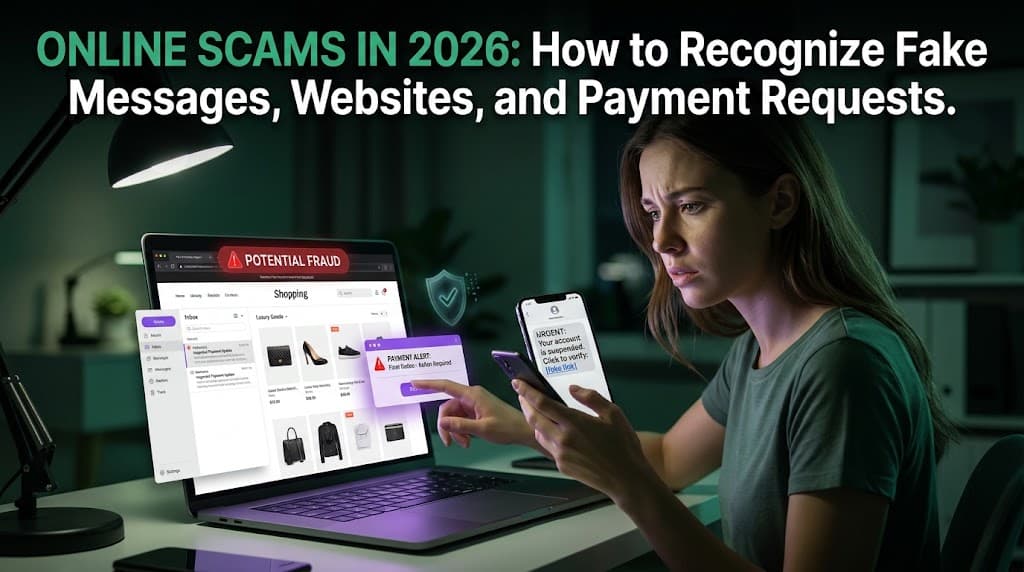
In 2026, online fraud can take many forms, including fake delivery notifications, fraudulent shopping websites, phishing emails, impersonation messages, and suspicious payment requests. Some scams use convincing branding, realistic-looking websites, or messages designed to create urgency. Others exploit trust by pretending to come from friends, employers, banks, or government organizations.
Recognizing warning signs before responding to a suspicious message can help reduce the risk of financial loss and identity theft. This guide explains common online scams, how to identify them, and practical steps to protect your accounts, devices, and personal information.
What Are Online Scams?
Online scams are deceptive activities conducted through websites, email, messaging applications, social media, or other internet-based platforms. Their purpose is usually to obtain money, sensitive information, account access, or other benefits dishonestly.
Scammers may claim that a package cannot be delivered, an account needs verification, a prize is waiting, or an urgent payment must be made. Their messages often encourage people to act quickly without checking whether the request is genuine.
Not every unexpected message is fraudulent. However, requests involving passwords, verification codes, financial details, or unusual payments deserve careful attention.
1. Common Types of Online Scams in 2026
Phishing Emails and Messages
Phishing occurs when scammers impersonate trusted organizations to trick people into revealing confidential information.
For example, an email might claim that a bank account will be suspended unless the recipient clicks a link and confirms their login details. The link may lead to a fake website designed to collect passwords or payment information.
Check the sender's actual email address, inspect unexpected requests carefully, and access important accounts through their official applications or websites rather than links in unsolicited messages.
Fake Online Shopping Websites
Fraudulent shopping websites may advertise expensive products at unusually low prices. Customers might pay for electronics, clothing, cosmetics, or household items that never arrive.
Some fake stores copy the appearance of legitimate retailers, including logos, product photographs, and customer reviews.
Before purchasing, research the seller, check independent reviews, examine return policies, and verify contact information. A website displaying a padlock does not automatically mean the seller is trustworthy.
Delivery and Parcel Scams
A message may claim that a package is delayed because of an unpaid delivery fee or incorrect address.
The recipient is directed to a website that requests payment details or personal information.
If you are expecting a parcel, check its status through the delivery company's official website or application. Avoid paying unexpected fees through unfamiliar links.
Investment and Cryptocurrency Scams
Investment fraud may promise guaranteed returns, exclusive opportunities, or profits that seem unusually high.
Scammers may use fake trading platforms, fabricated testimonials, or social media personalities to create an appearance of legitimacy. Some encourage victims to deposit more money before allowing withdrawals.
Be cautious of guaranteed-profit claims, pressure to invest immediately, and requests to transfer money to personal accounts or unfamiliar cryptocurrency wallets. Research providers independently and understand that all investments carry risks.
Impersonation and Romance Scams
In impersonation scams, criminals pretend to be relatives, colleagues, customer support representatives, or public figures.
Romance scammers may build emotional relationships online before inventing emergencies and requesting money. They might claim to need travel expenses, medical assistance, or help with a financial problem.
Avoid sending money to someone whose identity and circumstances you cannot independently verify. Be particularly careful when a person repeatedly avoids video calls or pressures you to keep financial requests secret.
2. Warning Signs of a Fake Message or Website
Recognizing suspicious details can help you avoid becoming a victim.
Unexpected urgency: Messages may threaten account closure, legal consequences, or missed rewards unless you act immediately.
Suspicious links: Website addresses may contain misspellings, extra words, unusual domain endings, or misleading brand names.
Requests for confidential information: Legitimate organizations generally do not need you to disclose your password or one-time verification code through an unsolicited message.
Unusual payment methods: Requests for gift cards, cryptocurrency, or transfers to personal accounts can be warning signs, particularly when combined with pressure or secrecy.
Unrealistic offers: Extremely cheap products, guaranteed investment profits, and unexpected prize notifications should be treated cautiously.
Poor or inconsistent communication: Strange wording, mismatched sender addresses, and inconsistent branding may indicate fraud. However, professional spelling and design do not prove that a message is genuine.
When in doubt, stop and verify the request using a trusted contact method.
3. How to Protect Your Personal and Financial Information
Use Strong, Unique Passwords
Avoid using the same password across multiple accounts. If one service experiences a data breach, reused passwords can put other accounts at risk.
A reputable password manager can help create and store unique passwords securely.
Enable Multifactor Authentication
Multifactor authentication adds another verification step when signing in. Depending on the service, this may involve an authenticator application, security key, or verification code.
Use the strongest available option that suits your needs. Never share authentication codes with someone who contacts you unexpectedly.
Keep Devices and Applications Updated
Software updates often include security fixes. Install updates for your operating system, browser, banking applications, and other regularly used software.
Download applications from official app stores or verified developer websites, and remove applications you no longer need.
Secure Your Online Payments
Use trusted payment providers and review transactions regularly. Payment methods offering buyer protection may provide additional safeguards when shopping online.
Avoid entering financial details on websites reached through suspicious advertisements or unsolicited messages. Consider enabling transaction alerts so you can identify unfamiliar activity quickly.
Protect Information on Social Media
Scammers can use publicly available information to create convincing impersonation attempts.
Avoid posting sensitive personal details, travel plans, identification documents, or information that could help someone guess account security answers.
Review privacy settings and be selective about accepting connection requests from unfamiliar people.
4. What to Do If You Receive a Suspicious Payment Request
If a message requests money, take a moment to verify it before acting.
Contact the supposed sender through a separate, trusted channel. For example, if a relative messages you from an unfamiliar number asking for urgent financial help, call their previously saved number rather than replying to the new account.
If the request claims to come from a bank or payment provider, use the official application or the contact details on its verified website.
Never rely solely on screenshots of payment confirmations, emailed receipts, or claims that a transfer has been completed. Check your own account records.
For business payments, verify changes to supplier bank details through an established contact method. This precaution can help prevent invoice fraud.
5. What to Do If You Have Already Been Scammed
Act quickly if you have shared sensitive information, transferred money, or clicked a suspicious link.
Contact Your Bank or Payment Provider
If money has been transferred or payment details exposed, contact your bank or payment provider immediately. Ask whether the transaction can be stopped, reversed, or disputed, and follow its instructions to secure your account.
Recovery is not guaranteed, but prompt reporting may improve your options.
Change Compromised Passwords
From a trusted device, change passwords for affected accounts and any other accounts using the same credentials. Enable multifactor authentication and sign out of unfamiliar active sessions.
If you have lost access to an account, use the service's official account-recovery process.
Report the Incident
Save relevant evidence, including messages, transaction records, email addresses, website addresses, and screenshots. Report the incident to the relevant platform, financial institution, and appropriate law-enforcement or cybercrime reporting authority in your country.
Do not delete evidence before preserving useful records.
Watch for Follow-Up Scams
People who have already lost money may be targeted again by criminals claiming they can recover stolen funds for an upfront fee.
Be cautious of anyone promising guaranteed recovery, demanding additional payments, or requesting remote access to your device. Verify any recovery service independently.
6. How Families and Businesses Can Prevent Online Fraud
Online safety is most effective when everyone understands basic security practices.
Families can discuss suspicious messages, teach children and older relatives how to verify requests, and agree on a simple way to confirm urgent financial emergencies.
Businesses should train employees to recognize phishing attempts, use multifactor authentication, restrict access to sensitive information, and maintain secure backups.
Companies should also establish procedures for approving payments and verifying changes to supplier details. No payment request should bypass normal checks simply because it appears urgent or comes from a senior employee.
Regular account reviews and incident-response plans can help organizations identify suspicious activity and respond more effectively.
Frequently Asked Questions (FAQs)
1. What are the most common online scams in 2026?
Common examples include phishing messages, fake shopping websites, delivery-fee scams, investment fraud, romance scams, and impersonation attempts. The methods vary, but many rely on urgency, trust, or promises of financial gain.
2. How can I tell if a website is fake?
Look for suspicious domain names, missing contact details, unrealistic offers, copied content, and unreliable payment methods. Research the business independently rather than relying only on reviews displayed on its website.
3. Is it safe to click links in text messages?
Unexpected links can lead to fraudulent websites or harmful downloads. When a message concerns a bank, delivery, or account, open the official application or manually enter the verified website address instead.
4. Can scammers steal money through online payment apps?
Yes. Scammers may trick people into sending payments, reveal credentials, or authorize fraudulent transactions. Use trusted applications, verify recipients, and never share authentication codes.
5. What should I do after clicking a suspicious link?
Close the page and do not enter information or download files. If you entered a password, change it using a trusted device. If you installed something suspicious, disconnect the affected device from the network if appropriate and seek reliable security assistance.
6. Are online shopping reviews always trustworthy?
No. Reviews can be fabricated, manipulated, or copied. Compare independent sources, research the seller's reputation, and examine its policies before making a purchase.
7. Why do scammers ask for verification codes?
Verification codes can help them access accounts or authorize transactions. Never share a code with someone who contacts you unexpectedly, even if they claim to represent a trusted company.
8. Can a scammer use my personal information for identity theft?
Yes. Depending on the information obtained, criminals may attempt to impersonate you, open fraudulent accounts, or target your existing accounts. Secure affected accounts and follow the reporting procedures available in your country.
9. Are cryptocurrency investments always scams?
No. Cryptocurrency is a legitimate but highly risky asset class. Fraudulent platforms and misleading investment offers exist, so research providers carefully and avoid guaranteed-return promises.
10. How can I report an online scam?
Contact your bank or payment provider if money or financial information is involved. Report fraudulent accounts and messages to the relevant platform, and contact your country's official cybercrime or consumer-protection authority.
Conclusion
Online scams in 2026 can affect anyone who uses digital payments, social media, email, or online shopping services. Fraudsters often exploit urgency, trust, and the desire to find convenient or affordable services.
Fortunately, simple precautions can reduce many common risks. Verify unexpected requests independently, use unique passwords, enable multifactor authentication, keep devices updated, and review financial transactions regularly.
If something seems suspicious, pause before responding. A few moments spent checking a message or payment request may prevent serious financial and personal consequences.
Online security is not about avoiding the internet altogether. It is about using digital services carefully, recognizing warning signs, and knowing what to do when something goes wrong.