

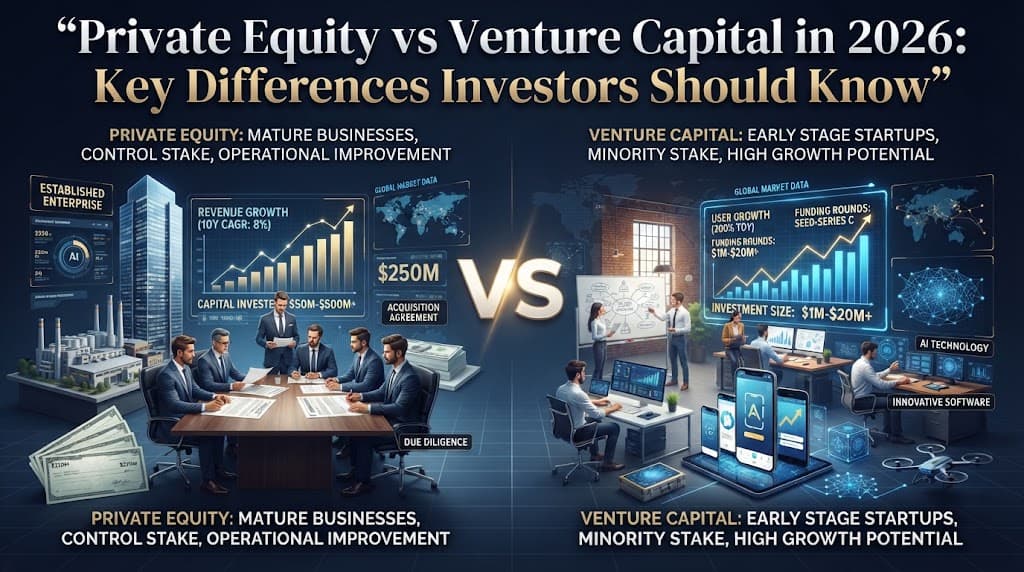
Private equity fundraising is entering a changing phase in 2026 as investors, fund managers, and institutional allocators adapt to higher expectations around performance, transparency, liquidity, and portfolio value creation. After years of abundant capital and strong fundraising activity, the market is increasingly focused on disciplined deployment and measurable returns.
What Is Private Equity Fundraising?
Private equity fundraising is the process through which private equity firms collect capital from institutional and other eligible investors to create investment funds.
Capital may come from:
Pension funds
Insurance companies
Sovereign wealth funds
Family offices
Endowments
Foundations
High-net-worth investors
Other institutional investors
Once a fund closes, the private equity firm typically uses the committed capital to invest in private companies through acquisitions, growth investments, buyouts, or other strategies.
Why Private Equity Fundraising Matters in 2026
Fundraising provides private equity firms with the capital needed to pursue new opportunities. However, investors are increasingly examining whether fund managers can demonstrate a clear strategy and a credible path toward value creation.
Key areas attracting attention include:
Historical fund performance
Investment strategy
Sector expertise
Management experience
Portfolio-company performance
Exit activity
Risk management
Operational improvements
Technology capabilities
The fundraising environment therefore depends not only on the amount of capital available but also on investor confidence in individual managers and strategies.
Investor Demand Is Becoming More Selective
Institutional investors may have significant allocations to private markets, but that does not mean every private equity fund receives equal interest.
Limited partners often evaluate managers based on factors such as:
Track record: Previous investment performance remains an important consideration.
Strategy: Investors want to understand what types of companies and transactions a fund targets.
Team: Experienced investment and operating professionals can influence fundraising discussions.
Portfolio construction: Investors examine how a manager plans to diversify risk.
Value creation: Operational improvements, technology adoption, revenue growth, and cost management can be important components.
The Role of Interest Rates
Interest rates can affect private equity fundraising and investing in several ways.
Higher borrowing costs can make leveraged acquisitions more expensive. This can affect deal activity and potentially influence valuations.
At the same time, changes in interest rates can alter the relative attractiveness of private-market investments compared with bonds and other fixed-income assets.
Fund managers therefore need to consider financing conditions when developing investment and fundraising strategies.
Private Equity Fundraising and Dry Powder
“Dry powder” refers to capital that private equity firms have raised but have not yet invested.
Large amounts of available capital can create both opportunities and challenges.
Managers with substantial uninvested capital may have resources available for acquisitions when attractive opportunities appear. However, investors may also ask how effectively managers are deploying existing capital before committing to another fund.
This makes deployment discipline an important part of fundraising conversations.
Technology Is Changing Fundraising
Technology is becoming increasingly important in private equity operations.
Fund managers can use technology and data analytics to improve:
Investor reporting
Portfolio monitoring
Due diligence
Market research
Risk analysis
Fund administration
Communication with limited partners
Artificial intelligence is also being explored for research, financial analysis, document review, and portfolio monitoring.
AI and Private Equity Fundraising
Artificial intelligence is increasingly relevant to fundraising because investors want to understand how fund managers are using technology to improve decision-making.
AI can help analyze large volumes of information, identify market trends, summarize documents, and support due diligence.
However, technology does not eliminate the importance of investment judgment. Human professionals remain responsible for evaluating opportunities, managing relationships, and making investment decisions.
The Importance of Track Record
A fund manager's historical performance can play a major role in fundraising.
Potential investors may examine:
Previous fund returns
Realized investments
Unrealized portfolio companies
Loss ratios
Exit history
Investment periods
Sector exposure
Consistency across different market environments
Past performance does not guarantee future results, but it can provide investors with information for evaluating a manager's investment approach.
Challenges Facing Private Equity Fundraising in 2026
Private equity managers may encounter several challenges during fundraising.
1. Competition for Capital
Many private-market managers are competing for allocations from institutional investors.
2. Liquidity Concerns
Private-market investments can be less liquid than publicly traded securities. Investors may therefore pay close attention to liquidity and distribution expectations.
3. Higher Performance Expectations
Investors may demand stronger evidence that private equity can provide attractive risk-adjusted returns.
4. Longer Exit Timelines
If market conditions make exits difficult, portfolio companies may remain in funds longer than initially expected.
5. Valuation Uncertainty
Changes in interest rates, earnings expectations, and financing conditions can affect private-company valuations.
Emerging Managers and Fundraising
Smaller and newer private equity firms can face particular challenges when raising capital.
Without a long institutional track record, emerging managers may need to differentiate themselves through:
Specialized industry expertise
Strong investment networks
Experienced teams
Unique sourcing strategies
Focused investment approaches
Demonstrated portfolio-company expertise
Some investors may also consider emerging managers as a way to gain exposure to specialized strategies.
Sector-Specific Fundraising Opportunities
Private equity fundraising can vary significantly by sector.
Areas that may attract attention include:
Artificial intelligence
Technology
Healthcare
Cybersecurity
Energy infrastructure
Industrial technology
Business services
Data centers
Digital infrastructure
Investor interest can change as economic conditions and technological trends evolve.
Private Equity and Healthcare
Healthcare remains an important area for private capital because of long-term demand for healthcare services, technology, and infrastructure.
Potential investment areas include:
Healthcare technology
Medical devices
Healthcare services
Data platforms
Specialty clinics
Life-sciences infrastructure
However, healthcare investments can involve regulatory and operational considerations that require specialized expertise.
ESG and Responsible Investment
Environmental, social, and governance considerations can remain relevant to institutional investors.
Limited partners may ask private equity firms about:
Environmental risks
Governance structures
Workforce policies
Supply-chain practices
Regulatory compliance
Sustainability reporting
The importance of specific ESG criteria can vary among investors and regions.
The Importance of Investor Relationships
Fundraising is not simply a financial transaction. Long-term relationships between general partners and limited partners can be important.
Private equity firms may communicate with investors through:
Annual meetings
Quarterly reports
Investor presentations
Portfolio updates
Market commentary
Due-diligence meetings
Clear and consistent communication can help investors understand how a fund is performing and how capital is being deployed.
What Investors May Watch in 2026
Several indicators could help explain the private equity fundraising environment:
New fund launches
Total capital raised
Average fund size
Institutional allocation trends
Deal activity
Exit volumes
Financing conditions
Private-company valuations
Distribution levels
Demand for specialized strategies
These indicators can provide a broader picture of how private markets are developing.
The Future of Private Equity Fundraising
Private equity fundraising is likely to remain an important part of global capital markets. However, the fundraising process is becoming increasingly focused on strategy, transparency, operational expertise, and measurable portfolio outcomes.
Technology and AI may transform how firms identify opportunities and communicate with investors, while changing economic conditions could continue to influence deal financing and valuations.
For private equity firms, successfully raising capital in 2026 may depend on demonstrating not only access to investment opportunities but also a clear process for creating and protecting value.
FAQs: Private Equity Fundraising in 2026
1. What is private equity fundraising?
It is the process of raising capital from investors to create a private equity investment fund.
2. Who invests in private equity funds?
Common investors include pension funds, insurance companies, sovereign wealth funds, family offices, endowments, and other institutional investors.
3. Why is private equity fundraising important?
It provides private equity firms with capital to acquire, grow, and develop private companies.
4. What is a private equity fund?
A private equity fund pools investor capital and uses it to make investments according to a specific strategy.
5. What does dry powder mean in private equity?
Dry powder is capital that has been committed or raised but has not yet been invested.
6. How do interest rates affect private equity?
Interest rates can influence borrowing costs, acquisition financing, valuations, and investor asset-allocation decisions.
7. What factors do investors consider before committing to a fund?
They may examine track record, strategy, team experience, portfolio construction, risk management, and value-creation plans.
8. Is private equity fundraising becoming more selective?
Investor allocations can vary by market conditions, strategy, manager, and performance expectations, making fundraising highly differentiated across funds.
9. How does AI affect private equity?
AI can support research, due diligence, financial analysis, portfolio monitoring, and other investment processes.
10. What sectors are attracting private equity interest?
Technology, healthcare, cybersecurity, infrastructure, business services, and AI-related businesses are among the areas receiving attention.
11. What challenges do emerging private equity managers face?
They may face challenges related to track record, institutional relationships, competition for capital, and demonstrating a differentiated strategy.
12. What is a limited partner?
A limited partner, or LP, is an investor that provides capital to a private equity fund.
13. What is a general partner?
A general partner, or GP, is the private equity manager responsible for managing the fund and making investment decisions.
14. How long does private equity fundraising take?
Fundraising timelines vary considerably depending on the manager, strategy, target fund size, market conditions, and investor demand.
15. Why are exits important for fundraising?
Successful exits can provide evidence of a manager's ability to realize investments and return capital to investors.
16. What role does technology play in fundraising?
Technology can improve investor reporting, data analysis, due diligence, communication, and portfolio monitoring.
17. Can private equity funds invest in AI companies?
Yes. Private equity funds may invest in AI companies directly or in businesses that use AI as part of their products or operations.
18. What is fund size?
Fund size refers to the total capital raised or targeted by a private equity fund.
19. What is an institutional investor?
An institutional investor is an organization that invests capital on behalf of beneficiaries, clients, members, or other stakeholders.
20. What could shape private equity fundraising in 2026?
Interest rates, valuations, exit markets, institutional allocations, AI adoption, economic conditions, and investor demand can all influence fundraising activity.
Conclusion
Private equity fundraising in 2026 is shaped by changing market conditions, investor expectations, technology adoption, and the ability of fund managers to demonstrate disciplined investment strategies. As investors evaluate new opportunities, factors such as track record, transparency, sector expertise, operational capabilities, and value creation are likely to remain central to fundraising discussions.