PFPersonal Finance in 2026: Smart Ways to Save Money & Build Wealth
Introduction
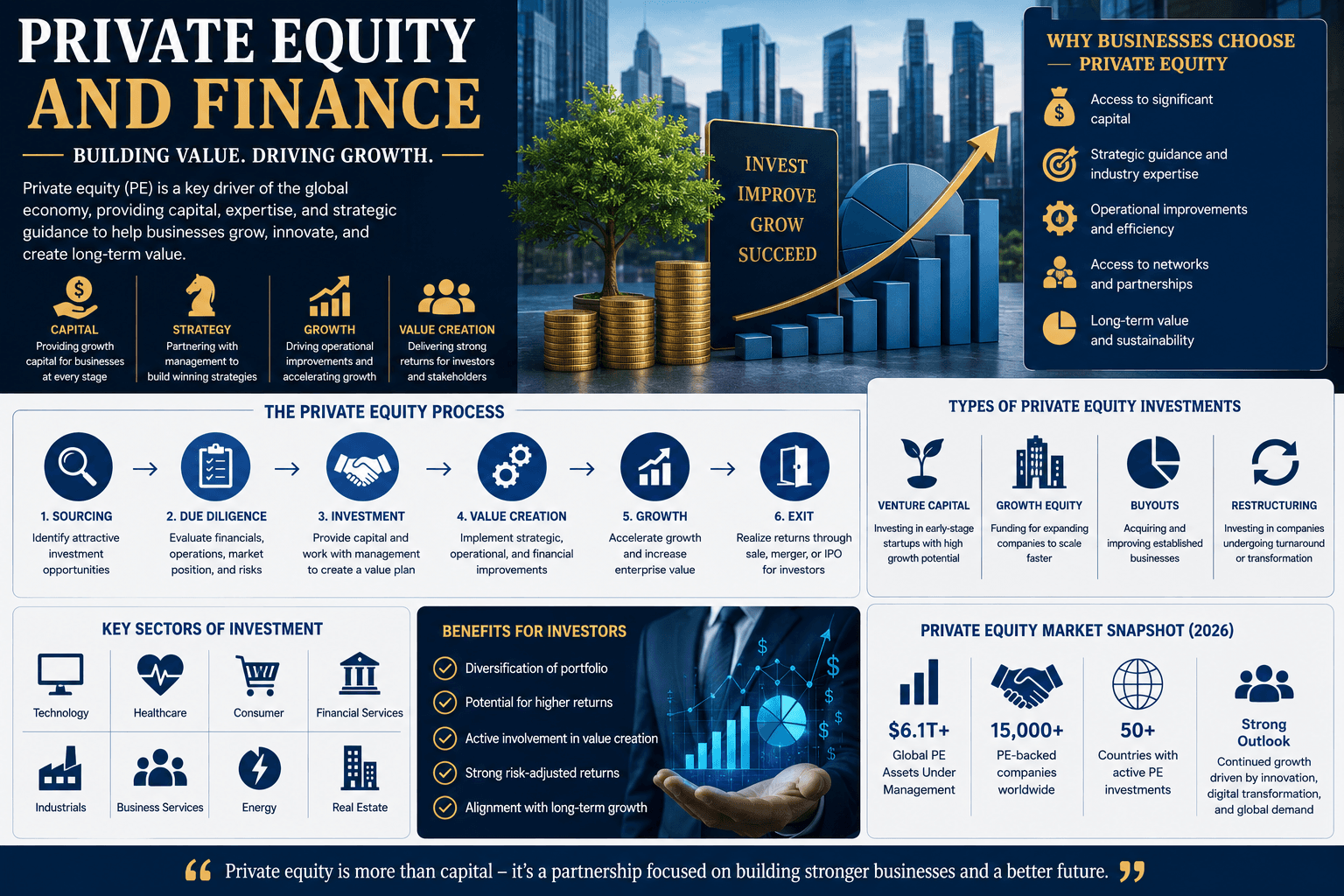
At our organisation, we believe private equity is no longer driven solely by financial investment—it is driven by strategic execution, operational excellence, and long-term value creation. As market conditions continue to evolve, businesses can no longer rely on favourable economic environments or rising valuations to achieve sustainable growth. Instead, success depends on innovation, technology adoption, efficient operations, and disciplined investment strategies.
Our approach focuses on helping businesses maximise the value of private equity by strengthening business performance, embracing digital transformation, and preparing organisations for long-term success in an increasingly competitive global economy.
1. Prioritise Operational Excellence
Our strategy begins with improving business operations rather than relying on market conditions. We encourage organisations to optimise workflows, strengthen financial management, enhance productivity, and improve customer experiences to create measurable and sustainable value.
Businesses that continuously improve their operations are better positioned to increase profitability and remain resilient during changing economic conditions.
2. Focus on Industry Expertise
We believe that deep industry knowledge creates stronger investment decisions. Understanding customer behaviour, market trends, competitive landscapes, and emerging technologies enables businesses to identify opportunities and implement more effective growth strategies.
Specialised expertise helps organisations make informed decisions while reducing unnecessary business risks.
3. Accelerate Digital Transformation
Technology is at the centre of modern business growth. Our strategy promotes investment in artificial intelligence, cloud computing, automation, cybersecurity, and advanced data analytics to improve operational efficiency and strengthen competitive advantages.
Digital transformation allows businesses to reduce costs, improve productivity, and deliver better customer experiences.
4. Create Long-Term Business Value
Private equity should support sustainable growth rather than short-term financial gains. We encourage businesses to invest in scalable infrastructure, product innovation, leadership development, and customer relationships that generate lasting value for stakeholders.
Long-term planning creates stronger organisations that can adapt to future market opportunities.
5. Build Strong Financial Foundations
Responsible financial management is essential for successful investment. Our strategy focuses on maintaining healthy cash flow, controlling operational costs, managing investment wisely, and supporting sustainable expansion without unnecessary financial risk.
Financial discipline provides businesses with greater flexibility during changing economic conditions.
6. Strengthen Leadership and Talent
Business success depends on people as much as investment. We encourage organisations to develop experienced leadership teams, invest in employee development, and create collaborative workplace cultures that encourage innovation and continuous improvement.
Strong leadership enables businesses to execute growth strategies more effectively.
7. Use Data to Drive Better Decisions
Data-driven insights allow businesses to monitor performance, identify opportunities, reduce risks, and improve strategic planning. By analysing financial performance, customer behaviour, and operational efficiency, organisations can make more informed investment decisions.
Accurate data supports sustainable growth and continuous business improvement.
8. Encourage Innovation Across the Business
Innovation should become part of everyday business operations. Our strategy encourages organisations to continuously improve products, adopt emerging technologies, streamline processes, and respond proactively to changing customer expectations.
Businesses that embrace innovation remain more competitive in dynamic markets.
9. Prepare for Future Market Opportunities
Market conditions continue to evolve due to technological advancement, changing regulations, and shifting consumer behaviour. Our approach encourages businesses to remain adaptable, explore new markets, strengthen strategic partnerships, and prepare for future investment opportunities.
A future-focused mindset enables organisations to achieve sustainable long-term growth.
Conclusion
Our private equity strategy is built on strategic investment, operational excellence, digital transformation, and responsible financial management. Rather than relying on changing market conditions, we believe businesses should create their own competitive advantages through innovation, strong leadership, efficient operations, and customer-focused growth.
By combining long-term planning with technology, data-driven decision-making, and continuous improvement, organisations can maximise the value of private equity investment while building resilient businesses that are prepared for future opportunities. Sustainable success comes from creating measurable value, embracing innovation, and maintaining the flexibility to adapt in an increasingly competitive global marketplace.
Frequently Asked Questions (FAQs)
1. What is a private equity strategy?
A private equity strategy is a long-term investment approach that focuses on providing capital, operational expertise, and strategic guidance to help businesses improve performance and increase their value.
2. Why is private equity important for business growth?
Private equity provides businesses with the financial resources and strategic support needed to expand operations, invest in technology, improve efficiency, and enter new markets.
3. How does private equity differ from traditional financing?
Unlike traditional loans, private equity investors typically acquire an ownership stake in a business and actively work with management to drive long-term growth and value creation.
4. What types of businesses attract private equity investment?
Businesses with scalable models, strong leadership, healthy financial performance, market demand, and clear growth opportunities are often attractive to private equity investors.
5. How can businesses prepare for private equity investment?
Companies should develop a strong business plan, maintain accurate financial records, improve operational efficiency, and demonstrate sustainable growth potential.
6. What role does operational excellence play in private equity?
Operational excellence helps businesses reduce costs, improve productivity, strengthen customer satisfaction, and increase profitability, making them more valuable to investors.
7. Why is digital transformation important in private equity?
Digital transformation improves business performance through technologies such as AI, cloud computing, automation, cybersecurity, and data analytics, supporting long-term competitiveness.
8. How does private equity support innovation?
Private equity funding enables businesses to invest in research and development, launch new products, improve services, and adopt emerging technologies.
9. What are the benefits of private equity partnerships?
Businesses gain access to growth capital, industry expertise, strategic guidance, operational improvements, professional networks, and long-term planning support.
10. How can private equity improve business performance?
Private equity investors often help optimise operations, strengthen leadership, improve governance, expand into new markets, and implement scalable growth strategies.
11. What is value creation in private equity?
Value creation refers to increasing a company's worth through operational improvements, innovation, revenue growth, cost optimisation, and strategic expansion.
12. Why is strong leadership important for private equity?
Experienced leadership teams make better strategic decisions, manage business growth effectively, and increase investor confidence.
13. How does data-driven decision-making benefit businesses?
Using business intelligence and analytics enables organisations to monitor performance, identify opportunities, reduce risks, and make informed investment decisions.
14. What role does financial discipline play in private equity?
Responsible financial management ensures businesses use investment capital effectively while maintaining healthy cash flow and sustainable growth.
15. How can businesses improve investor confidence?
Transparent reporting, measurable business performance, realistic financial planning, and a clear growth strategy help build trust with investors.
16. What industries receive the most private equity investment?
Popular sectors include technology, healthcare, fintech, manufacturing, renewable energy, enterprise software, logistics, consumer products, and business services.
17. How does private equity support market expansion?
Investment capital allows businesses to enter new markets, strengthen distribution networks, hire skilled professionals, and expand internationally.
18. Why is scalability important for private equity investors?
Scalable businesses can increase revenue efficiently while controlling costs, making them attractive for long-term investment.
19. How does technology improve private equity performance?
Technology enhances productivity, automates processes, improves customer experiences, strengthens cybersecurity, and supports better business decision-making.
20. What risks should businesses consider before accepting private equity?
Businesses should evaluate ownership dilution, investor expectations, governance changes, financial commitments, and long-term strategic alignment.
21. How does private equity contribute to sustainable growth?
Private equity supports long-term planning, innovation, operational improvements, leadership development, and responsible financial management to create lasting business value.
22. Why is corporate governance important in private equity?
Strong governance improves transparency, accountability, regulatory compliance, and investor confidence while reducing operational risk.
23. How can businesses maximise the value of private equity investment?
Businesses should invest in technology, improve operations, strengthen customer relationships, develop employees, and continuously monitor business performance.
24. What role does innovation play in long-term business success?
Innovation enables businesses to remain competitive by improving products, adopting new technologies, and responding to changing customer expectations.
25. Can small and medium-sized businesses benefit from private equity?
Yes. Many private equity firms invest in high-growth SMEs that demonstrate strong leadership, scalable business models, and clear market opportunities.
26. How do strategic partnerships strengthen private equity investments?
Partnerships with technology providers, suppliers, and industry experts help businesses access new markets, improve operational efficiency, and accelerate growth.
27. What trends are shaping private equity in 2026?
Key trends include artificial intelligence, automation, digital transformation, sustainable investing, climate technology, cybersecurity, healthcare innovation, and data-driven business strategies.
28. How should businesses prepare for future investment opportunities?
Businesses should continuously improve financial performance, embrace digital innovation, strengthen governance, monitor market trends, and maintain scalable operations.
29. Why is a long-term private equity strategy essential?
A long-term private equity strategy enables businesses to create sustainable value through innovation, operational excellence, strategic investment, and responsible growth, ensuring resilience and competitiveness in an evolving global marketplace.