TFThe Future of Smart Homes in 2026: AI, Automation & Connected Living
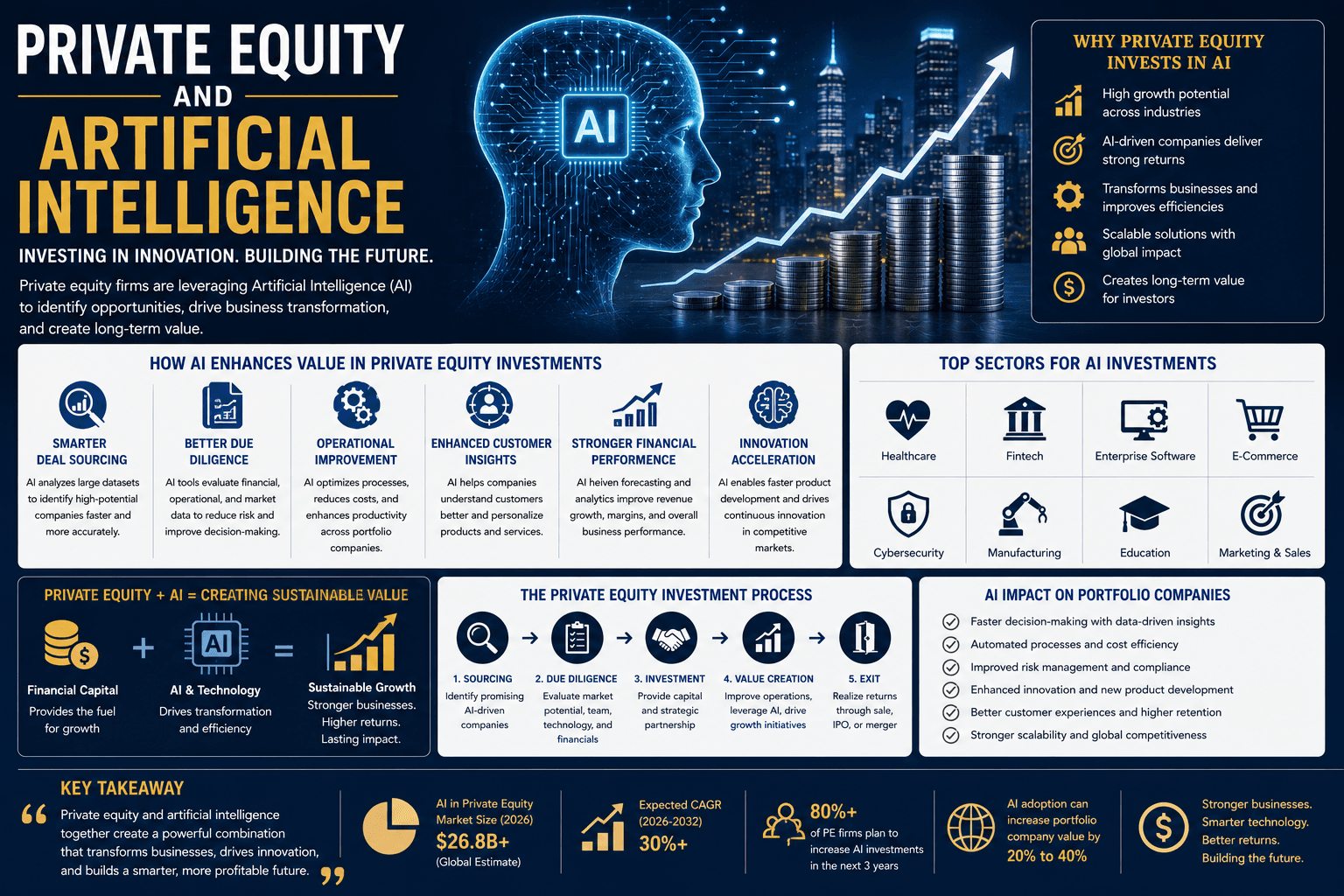
Artificial intelligence is transforming the future of private equity. While financial discipline and operational excellence remain fundamental to successful investing, AI has become an essential driver of value creation throughout the investment lifecycle. Our strategy combines industry expertise, advanced technology, and data-driven decision-making to identify stronger investment opportunities, improve portfolio performance, and deliver sustainable long-term returns.
Rather than viewing AI as a standalone tool, we integrate it into every stage of our investment process—from sourcing opportunities to portfolio management—allowing us to make faster, smarter, and more informed decisions.
Our Strategy for Intelligent Deal Sourcing
Finding the right investment opportunities requires more than traditional networking. Our strategy combines market expertise with AI-powered intelligence to identify businesses that align with our investment objectives.
By leveraging advanced data analysis, we continuously evaluate market trends, company performance, regulatory developments, and industry signals to discover opportunities that may otherwise remain hidden. This proactive approach allows us to identify high-quality businesses earlier, improve investment selection, and maintain a competitive advantage.
Accelerating Due Diligence Through AI
Efficient due diligence is essential for making confident investment decisions. Our strategy uses AI-powered tools to streamline data analysis, document review, financial assessments, and operational evaluations.
This enables our investment professionals to:
Review large volumes of information more efficiently.
Identify operational, financial, and compliance risks earlier.
Improve investment accuracy through data-driven insights.
Reduce manual processes while maintaining rigorous standards.
Focus more time on strategic decision-making and value creation.
Technology enhances our due diligence process while supporting disciplined investment decisions.
Creating Value Across Portfolio Companies
Our commitment extends far beyond completing an acquisition. We work closely with portfolio companies to implement operational improvements that drive sustainable growth.
Our AI-enabled value creation strategy focuses on:
Revenue Growth
We help businesses improve customer engagement, optimise pricing strategies, strengthen sales performance, and uncover new revenue opportunities using advanced analytics and predictive insights.
Operational Efficiency
Artificial intelligence supports automation across finance, customer service, procurement, supply chain management, and business operations. These improvements reduce operational complexity, increase productivity, and improve long-term profitability.
Managing Technology Risk Through Strategic Innovation
As artificial intelligence reshapes industries, businesses must continually adapt to remain competitive. Our investment strategy includes comprehensive technology assessments to ensure portfolio companies are prepared for evolving market conditions.
We evaluate digital capabilities, innovation potential, cybersecurity, operational resilience, and long-term competitiveness before and after every investment. This proactive approach helps businesses embrace innovation while managing emerging risks effectively.
Our Approach to Intelligent Portfolio Management
Our strategy uses AI-driven insights to continuously monitor portfolio performance and identify opportunities for improvement.
Through real-time performance tracking, predictive analytics, and operational reporting, we help management teams make informed decisions that strengthen financial performance, improve efficiency, and support sustainable business growth.
By combining experienced investment professionals with intelligent technology, we create a balanced approach that delivers measurable value throughout the investment lifecycle.
Why Our AI-Driven Strategy Matters
The future of private equity belongs to firms that combine human expertise with advanced technology. Our strategy is built on disciplined investing, operational excellence, sector knowledge, and AI-powered intelligence to create stronger businesses and deliver consistent long-term returns.
Rather than relying solely on market conditions, we focus on improving business performance, accelerating innovation, and unlocking sustainable value for investors, management teams, and portfolio companies. As technology continues to evolve, our commitment remains the same: making smarter investments, building more resilient businesses, and creating lasting value through strategic execution and continuous innovation.
Frequently Asked Questions (FAQs)
1. What is an AI-driven private equity strategy?
An AI-driven private equity strategy combines artificial intelligence with traditional investment expertise to improve deal sourcing, due diligence, portfolio management, and operational value creation.
2. Why is AI important in modern private equity?
AI enables faster analysis, better investment decisions, improved operational efficiency, and enhanced risk management, helping firms create greater long-term value.
3. How does AI improve deal sourcing?
AI analyses market data, industry trends, financial information, and business signals to identify high-potential investment opportunities before they become widely available.
4. How does AI enhance due diligence?
AI automates document analysis, financial reviews, compliance checks, and risk assessments, allowing investment teams to complete due diligence more accurately and efficiently.
5. Does AI replace investment professionals?
No. AI supports investment professionals by providing insights and automation, while experienced teams continue to make strategic investment decisions.
6. What industries benefit most from AI-driven private equity?
Technology, healthcare, manufacturing, financial services, logistics, retail, industrial services, and business services can all benefit from AI-enabled operational improvements.
7. How does your strategy create value after an acquisition?
We improve operations, implement digital transformation, optimise business processes, strengthen management teams, and use AI to drive sustainable revenue growth and profitability.
8. What role does data play in your investment strategy?
Data helps identify opportunities, evaluate investment risks, monitor performance, forecast trends, and support informed decision-making throughout the investment lifecycle.
9. How does AI improve portfolio management?
AI provides real-time performance monitoring, predictive analytics, operational insights, and early risk detection to help improve portfolio company performance.
10. What is operational value creation?
Operational value creation focuses on improving business efficiency, increasing profitability, optimising workflows, and strengthening long-term competitive advantages.
11. How do you evaluate investment opportunities?
Our team conducts detailed financial, operational, commercial, and technological assessments to identify businesses with strong growth potential and sustainable competitive advantages.
12. Can AI reduce investment risk?
Yes. AI helps identify operational, financial, compliance, and market risks earlier, allowing investment teams to make better-informed decisions.
13. How does digital transformation support portfolio companies?
Digital transformation improves productivity, enhances customer experiences, streamlines operations, and enables businesses to adapt more effectively to changing market conditions.
14. What makes your AI-driven strategy different?
Our strategy combines experienced investment professionals, sector expertise, operational excellence, advanced analytics, and AI-powered technology to deliver sustainable long-term value.
15. How do you ensure responsible AI adoption?
We implement AI responsibly by maintaining human oversight, ensuring data security, following regulatory requirements, and aligning technology with business objectives.
16. What technologies do you use to support investments?
Our strategy incorporates artificial intelligence, predictive analytics, automation, cloud technologies, business intelligence tools, and advanced data analysis to improve investment outcomes.
17. How do you measure the success of your investment strategy?
Success is measured through operational improvements, revenue growth, profitability, cash flow, enterprise value, scalability, and long-term returns for investors.
18. Why is continuous innovation important in private equity?
Continuous innovation enables portfolio companies to remain competitive, improve operational efficiency, respond to market changes, and create sustainable long-term growth.
19. What are the long-term benefits of AI in private equity?
AI improves decision-making, accelerates operational improvements, enhances portfolio performance, reduces inefficiencies, and supports stronger long-term investment returns.
20. What is the future of AI in private equity?
AI is expected to become increasingly integrated into every stage of private equity, from investment sourcing and due diligence to portfolio optimisation, strategic planning, and value creation, helping firms make smarter decisions and achieve sustainable growth.
Here's a strong, SEO-friendly conclusion that fits your AI-driven private equity strategy article.
Conclusion: Shaping the Future of Private Equity with AI-Driven Innovation
Artificial intelligence is redefining how successful private equity firms identify opportunities, evaluate investments, and create long-term value. While financial discipline, operational excellence, and strategic leadership remain the foundation of successful investing, AI has become a powerful enabler that enhances every stage of the investment lifecycle. Firms that successfully combine human expertise with intelligent technology are better positioned to make faster decisions, uncover hidden opportunities, manage risk more effectively, and drive sustainable growth across their portfolios.
Our AI-driven private equity strategy reflects this new reality. By integrating advanced analytics, automation, predictive intelligence, and data-driven decision-making into our investment process, we create a more efficient, scalable, and resilient approach to value creation. From intelligent deal sourcing and accelerated due diligence to portfolio optimisation and operational transformation, every stage of our strategy is designed to strengthen business performance and maximise long-term investment returns.
We believe that technology should enhance—not replace—the experience, judgement, and expertise of investment professionals. Our team combines deep industry knowledge with innovative AI capabilities to identify high-quality businesses, improve operational performance, support management teams, and unlock sustainable growth opportunities. This balanced approach enables us to adapt to changing market conditions while maintaining disciplined investment principles and responsible risk management.
As the private equity industry continues to evolve, businesses that embrace digital transformation and continuous innovation will be best positioned for future success. Our commitment is to remain at the forefront of this evolution by investing in technologies, strategies, and partnerships that create measurable value for investors, portfolio companies, employees, and stakeholders. Through intelligent investing, operational excellence, and AI-powered innovation, we are building stronger businesses today while creating sustainable long-term value for tomorrow.