
PFPersonal Finance in 2026: Smart Ways to Save Money & Build Wealth
The global stock market continues to evolve at an unprecedented pace. Driven by artificial intelligence, economic recovery, technological innovation, and changing investor behavior, 2026 has become a defining year for both experienced investors and newcomers. Understanding current market trends and developing a disciplined investment strategy has never been more important.
Whether your goal is long-term wealth creation, retirement planning, or generating passive income, staying informed about financial markets can significantly improve investment decisions.
This article explores the biggest stock market trends of 2026, sectors attracting investor attention, common investment mistakes, and practical strategies that can help investors navigate today's dynamic financial environment.
Why the Stock Market Matters
The stock market serves as one of the most effective platforms for building long-term wealth. Companies raise capital through public offerings, while investors gain ownership in businesses with growth potential.
Historically, diversified stock investments have outperformed many traditional savings methods over extended periods. While markets experience periods of volatility, patient investors who focus on quality companies often benefit from long-term appreciation and dividend income.
In today's digital economy, investing has become more accessible than ever, allowing individuals worldwide to participate with relatively small amounts of capital.
Major Stock Market Trends in 2026
Several powerful trends are shaping global financial markets this year.
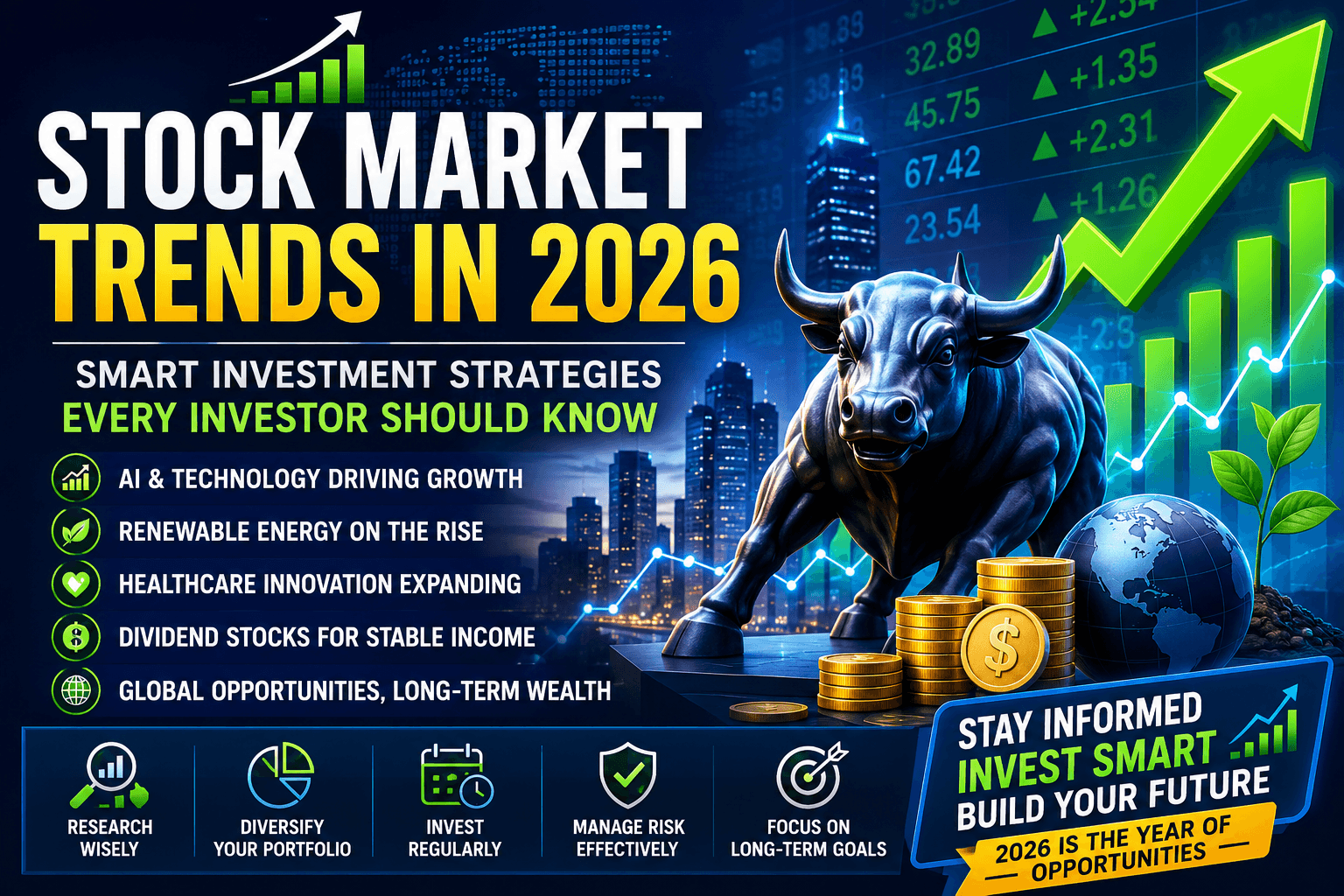
1. Artificial Intelligence Continues to Drive Market Growth
Artificial intelligence remains one of the strongest growth themes in global markets. Companies developing AI software, cloud computing infrastructure, semiconductor technologies, cybersecurity solutions, and automation platforms continue attracting significant investor interest.
Businesses implementing AI to improve productivity and reduce operational costs are also experiencing stronger financial performance, making the technology sector a major focus for institutional investors.
2. Renewable Energy Investments Expand
Governments and private companies continue investing heavily in renewable energy projects. Solar power, wind energy, electric vehicle infrastructure, and battery technology are creating long-term opportunities across global markets.
Investors increasingly recognize sustainability as both an environmental priority and an attractive financial opportunity.
3. Healthcare Innovation Attracts Capital
Healthcare remains one of the most resilient investment sectors.
Advancements in biotechnology, personalized medicine, robotics, medical devices, and digital healthcare platforms continue creating growth opportunities while serving aging populations worldwide.
Healthcare companies with strong research capabilities often demonstrate stable long-term growth.
4. Financial Technology Keeps Expanding
Digital banking, online payments, blockchain applications, and financial software continue transforming traditional banking.
Consumers increasingly prefer mobile financial services, creating significant opportunities for fintech companies focused on convenience, security, and innovation.
5. Dividend Stocks Gain Popularity
With investors seeking consistent returns during uncertain market conditions, dividend-paying companies remain attractive.
Stable businesses that generate predictable cash flow often provide shareholders with regular income while offering potential capital appreciation over time.
Top Sectors Investors Are Watching
Diversification remains one of the most important investment principles. Rather than concentrating investments in a single industry, experienced investors often allocate capital across multiple sectors.
Popular sectors in 2026 include:
Artificial Intelligence
Technology
Healthcare
Renewable Energy
Financial Services
Cybersecurity
Semiconductor Manufacturing
Cloud Computing
Infrastructure
Consumer Goods
Each sector offers unique opportunities depending on economic conditions and technological developments.
Building a Strong Investment Portfolio
Successful investing requires planning rather than speculation.
Investors should begin by defining financial goals, risk tolerance, and investment horizon.
A balanced portfolio may include:
Large-cap growth companies
Dividend-paying blue-chip stocks
Exchange-Traded Funds (ETFs)
International equities
Healthcare stocks
Technology leaders
Renewable energy companies
Defensive consumer businesses
Regular portfolio reviews help maintain diversification and align investments with changing market conditions.
The Importance of Long-Term Investing
One of the most common mistakes investors make is reacting emotionally to short-term market fluctuations.
Financial markets naturally experience periods of optimism and uncertainty. Attempting to predict every market movement often results in poor investment decisions.
Long-term investors generally focus on company fundamentals, earnings growth, competitive advantages, and industry leadership rather than daily price movements.
Patience often becomes one of the greatest competitive advantages in investing.
Common Mistakes New Investors Should Avoid
Many beginners repeat similar investment mistakes.
Investing Without Research
Buying stocks simply because they are popular on social media can expose investors to unnecessary risks.
Always evaluate a company's financial health, business model, earnings history, and future growth prospects.
Ignoring Diversification
Concentrating an entire portfolio in one company or sector increases overall investment risk.
Diversification helps reduce the impact of unexpected market events.
Emotional Trading
Fear and greed frequently influence poor decisions.
Successful investors develop investment plans and follow them consistently rather than reacting emotionally.
Chasing Quick Profits
Many speculative investments promise extraordinary returns but involve substantial risk.
Building wealth generally requires discipline, consistency, and patience rather than attempting to become wealthy overnight.
Risk Management Strategies
Every investment carries some degree of risk.
Effective investors manage rather than eliminate risk.
Useful strategies include:
Diversify investments
Invest regularly
Review portfolios periodically
Maintain emergency savings
Avoid excessive borrowing
Focus on quality businesses
Keep realistic return expectations
Managing downside risk often becomes more important than maximizing short-term returns.
The Role of Economic Indicators
Investors closely monitor economic data because it influences market performance.
Important indicators include:
Inflation rates
Interest rates
Employment data
Consumer spending
Corporate earnings
Manufacturing activity
GDP growth
Central bank policy
Understanding these indicators helps investors interpret broader market trends.
Technology Is Changing Investing
Modern investors benefit from advanced technology that was unavailable just a decade ago.
Artificial intelligence assists with market analysis, while financial platforms provide real-time data, educational resources, and low-cost trading.
Data analytics enables investors to make more informed decisions based on objective information rather than speculation.
Global Markets Create New Opportunities
Investors are increasingly looking beyond domestic markets.
International diversification provides exposure to different economic cycles, industries, and emerging markets.
Global investing also allows participation in companies leading innovation across Europe, Asia, North America, and other rapidly developing regions.
ESG Investing Continues Growing
Environmental, Social, and Governance (ESG) investing has become an important consideration for many institutional and retail investors.
Companies demonstrating responsible corporate governance, sustainable practices, and ethical operations often attract long-term investment capital.
While financial performance remains essential, sustainability increasingly influences investment decisions.
Future Outlook
Although market volatility will continue, the long-term outlook for global equities remains encouraging.
Technological innovation, digital transformation, healthcare advancements, renewable energy development, and expanding global economies continue creating investment opportunities.
Successful investors will likely be those who remain informed, diversify wisely, control emotions, and maintain a long-term perspective.
Final Thoughts
The stock market in 2026 presents exciting opportunities for investors willing to approach investing with discipline and patience. While short-term market fluctuations are inevitable, long-term wealth creation remains achievable through careful research, diversification, and consistent investing.
Whether you are beginning your investment journey or refining an existing portfolio, focusing on quality companies, emerging technologies, sound financial principles, and effective risk management can improve your chances of long-term success.
As financial markets continue evolving, education remains one of the most valuable investments any investor can make. Staying informed, adapting to changing market conditions, and maintaining a disciplined strategy can help investors build wealth and achieve financial independence over time.