

Introduction
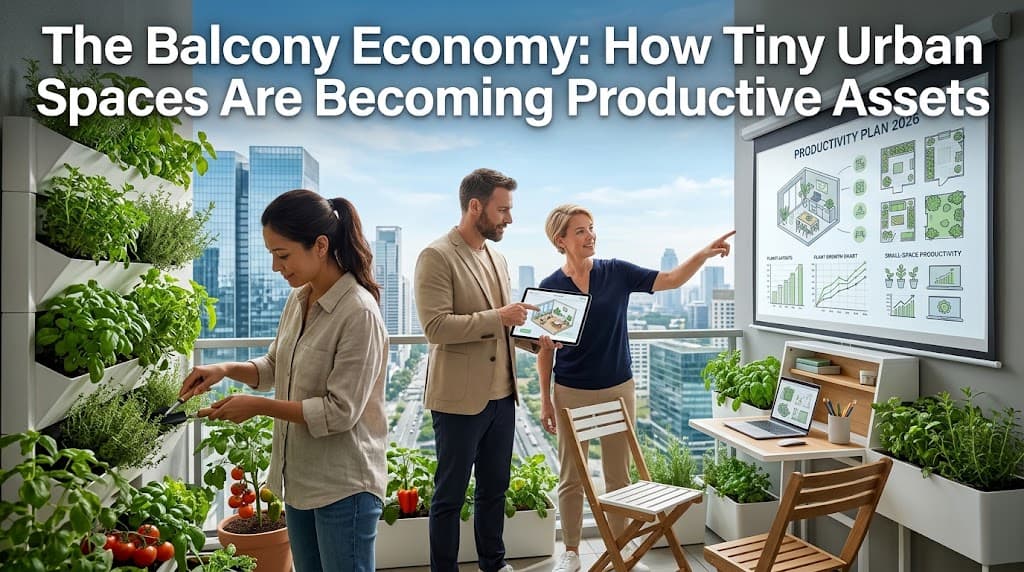
As cities become more crowded and living costs continue to rise, people are discovering new ways to make the most of limited space. A small balcony that once served only as a place to dry clothes or enjoy fresh air can now become a productive part of everyday life.
From growing vegetables and herbs to creating home workspaces, starting small creative businesses, and improving energy efficiency, urban residents are finding practical uses for spaces they already own or rent. This trend can be described as the balcony economy: the idea of turning small urban outdoor areas into useful, productive, and potentially money-saving assets.
Although a balcony cannot replace a full garden, office, or commercial property, thoughtful planning can help residents gain more value from a few square metres.
What Is the Balcony Economy?
The balcony economy refers to the growing practice of using balconies, terraces, and other small outdoor spaces for activities that improve daily life, reduce household expenses, or support small income-generating projects.
It is not a formal economic sector. Instead, it describes a practical lifestyle trend shaped by urban density, rising housing costs, interest in home gardening, and the growing need for flexible living spaces.
Examples include:
Growing herbs and vegetables for household use.
Creating a comfortable reading or remote-working corner.
Growing seedlings for personal use or lawful local sales.
Using compact furniture to make small homes more functional.
Creating a small photography setup for online products.
Growing decorative plants that make a home more attractive.
The main idea is simple: people can make underused space more useful without moving to a larger home.
Why Small Urban Spaces Are Becoming More Valuable
1. Urban Homes Have Limited Space
In many cities, apartments offer little outdoor space. A balcony may be the only area where residents can grow plants, sit outdoors, or enjoy natural light.
Instead of treating it as leftover space, residents are beginning to design it according to their needs. Even a narrow balcony can support a few plant containers, a folding chair, and compact storage.
2. Household Expenses Encourage Practical Solutions
Food, housing, and utility costs can put pressure on household budgets. Growing herbs such as mint, coriander, basil, or parsley may reduce the need to purchase small quantities frequently.
The savings will depend on local prices, plant growth, climate, and how much the household consumes. Balcony gardening is not guaranteed to be cheaper than buying produce, but it can be useful when planned carefully.
3. Flexible Work Has Changed How People Use Their Homes
Remote and hybrid work have encouraged people to create dedicated work areas at home. A balcony may offer natural light and a change of scenery, especially in pleasant weather.
However, outdoor workspaces need protection from glare, rain, heat, noise, and unreliable internet connections. A shaded seat with a stable table may be more practical than an expensive renovation.
Five Ways to Turn a Balcony Into a Productive Space
1. Start a Small Balcony Garden
A small garden is one of the easiest ways to use an outdoor space productively.
Begin with plants that suit the local climate and the amount of sunlight your balcony receives. Leafy herbs, lettuce, spring onions, and selected compact vegetables can work well in suitable containers.
Practical tips:
Choose containers with proper drainage.
Use a suitable potting mix rather than heavy garden soil.
Check how many hours of direct sunlight the area receives.
Group plants according to their watering needs.
Start with a few plants before expanding.
Make sure containers are secure and cannot fall from the balcony.
Avoid placing excessive weight on balcony floors or railings. Check building restrictions and seek professional advice if you are unsure about load limits.
2. Create a Compact Work or Study Corner
A balcony can become a useful study area or occasional workspace.
A folding desk, comfortable chair, shade, and weather-resistant storage may be enough. For renters, removable accessories are often more practical than permanent installations.
Before using the balcony for work, consider privacy, temperature, noise, electrical safety, and internet access. Never use electrical equipment outdoors unless it is designed for the conditions and connected safely.
3. Grow Seedlings and Decorative Plants
People who enjoy gardening may be able to propagate suitable plants or grow seedlings in small quantities. These can be used at home or, where local rules permit, sold to neighbours and community members.
Before spending money, research demand, plant varieties, seasonal conditions, and the cost of containers and growing materials.
Start with a small trial. Track expenses and time so you can determine whether the activity is genuinely worthwhile.
4. Build a Small Creative Studio
A balcony with good natural light can provide a simple setting for product photography, crafts, or creating online content.
For example, a small-business owner might photograph jewellery, handmade decorations, stationery, or other products against a clean background.
A compact table, neutral backdrop, and phone camera can be sufficient. Protect equipment from rain, wind, direct heat, and theft, and avoid filming neighbours or private areas without permission.
5. Improve Comfort and Energy Efficiency
Balcony plants and appropriate shading may help improve comfort in some homes, depending on the building's design and climate. Plants can provide limited shade, while suitable blinds or screens may reduce direct sunlight.
Results vary significantly. Plants should not be treated as a replacement for proper insulation, ventilation, or safe cooling systems.
Before installing screens, awnings, solar equipment, or heavy structures, check landlord approval, building regulations, and wind safety.
How to Design a Small Balcony on a Budget
A productive balcony does not require expensive furniture or professional landscaping.
Step 1: Measure the Space
Record the length, width, door clearance, and any areas that must remain accessible. A simple sketch can help you plan the layout.
Step 2: Choose One Main Purpose
Decide whether the balcony will mainly support gardening, studying, relaxation, or creative work. Trying to fit every activity into a tiny area can make it uncomfortable.
Step 3: Use Vertical Space Carefully
Wall-mounted planters and vertical shelves can save floor space, but they must be securely installed and permitted by the building owner or management. Do not attach heavy objects to railings or walls without checking their suitability.
Step 4: Select Multi-Purpose Furniture
Folding chairs, compact tables, and storage benches can help make a small balcony flexible. Choose outdoor-suitable materials if the furniture will be exposed to weather.
Step 5: Keep a Clear Walking Route
Never block the balcony door, emergency access, drainage outlets, or required escape routes. Avoid clutter that could create trip hazards.
Can the Balcony Economy Generate Income?
Potentially, but the results depend on the activity, local demand, available time, and initial costs.
Possible small projects include:
Selling locally grown seedlings.
Propagating suitable decorative plants.
Creating product photographs for small online shops.
Making and photographing handmade products.
Producing gardening or home-organisation content.
A balcony itself does not automatically create a profitable business. Revenue may be small or irregular, and expenses such as materials, packaging, utilities, delivery, and advertising can reduce earnings.
Before investing, estimate the full cost of the project and test demand on a small scale. Follow applicable business, tax, rental, and local selling rules.
Common Mistakes to Avoid
Buying Too Much Before Planning
Expensive planters and furniture may not fit the space or suit its conditions. Begin with a basic setup and add items only when necessary.
Ignoring Sunlight and Weather
Plants that need full sun may struggle in shaded spaces, while intense heat can damage delicate plants. Observe the balcony throughout the day before choosing plants.
Overloading the Balcony
Soil, water, large containers, and heavy furniture add weight. Never assume a balcony can support unlimited loads.
Forgetting Neighbours and Building Rules
Water dripping onto lower balconies, strong lights, smoke, noise, or unauthorised structures can cause problems. Respect shared spaces and building policies.
Expecting Immediate Financial Returns
Gardening and small creative projects require time and experimentation. Evaluate them based on realistic costs and benefits rather than assuming quick profits.
The Future of the Balcony Economy
As cities continue to grow, small outdoor spaces may become more important to urban residents. Compact gardening systems, lightweight furniture, efficient irrigation, and modular storage can make balconies easier to use.
Designers and property developers may also pay more attention to flexible outdoor spaces in residential buildings. Yet the benefits will depend on affordability, accessibility, climate, and safe building design.
The balcony economy is best understood as a practical approach to making limited space more useful—not as a guaranteed way to earn money or solve urban housing challenges.
Conclusion
A small balcony can offer more than a place to stand outside. With careful planning, it can support a home garden, a quiet study corner, a creative workspace, or a modest side project.
The best approach is to start with one clear purpose, keep costs manageable, and prioritise safety. By making thoughtful use of the space already available, urban residents can improve everyday living without necessarily needing a larger home.
Frequently Asked Questions
1. What is the balcony economy?
The balcony economy is an informal term for using small balconies and outdoor areas to grow food, create workspaces, support hobbies, or pursue small income-generating activities.
2. Can a small balcony really be productive?
Yes. Even a compact balcony can support a few plants, a folding study table, or a small creative setup. The best use depends on space, sunlight, weather, and building rules.
3. What vegetables can I grow on a balcony?
Depending on the climate and sunlight, you may be able to grow lettuce, leafy greens, spring onions, chillies, herbs, and compact tomato varieties in suitable containers.
4. Is balcony gardening expensive?
It can be inexpensive if you begin with a few containers and basic supplies. Costs rise when you purchase large planters, specialised equipment, or elaborate irrigation systems.
5. Can balcony gardening reduce grocery bills?
It may reduce spending on frequently used herbs and some vegetables. Actual savings depend on growing costs, local food prices, harvest size, and plant survival.
6. Can I grow food on a shaded balcony?
Some leafy plants and herbs tolerate partial shade, but most fruiting vegetables need more direct sunlight. Choose varieties suited to your conditions.
7. Can I earn money from a balcony garden?
Possibly. Small-scale options include selling seedlings or propagated plants where permitted. Profitability depends on demand, costs, available space, and local regulations.
8. Is it safe to put large plant pots on a balcony?
Not always. Soil and water can be heavy, especially in large containers. Check the balcony's permitted load and avoid placing heavy items near unsupported edges.
9. How can renters create a productive balcony?
Renters can often start with portable containers, folding furniture, and removable accessories. They should check their rental agreement and building rules before making changes.
10. Can a balcony become a home office?
Yes, if weather, noise, privacy, temperature, and internet access are manageable. A compact desk and shade may be enough for occasional work.
11. What is the best furniture for a small balcony?
Folding chairs, compact tables, and lightweight outdoor furniture are useful options. Always ensure furniture is stable and suitable for local weather.
12. How do I maximise a narrow balcony?
Measure carefully, keep the floor as clear as possible, use approved vertical storage, and choose compact items that serve more than one purpose.
13. Are vertical gardens suitable for apartments?
They can be, provided the installation is secure, permitted, and appropriate for the wall or railing. Consider drainage and the additional weight of wet growing materials.
14. Can balcony plants help cool a home?
Plants and shading may reduce some direct solar exposure, depending on the balcony's design. They cannot reliably replace insulation, ventilation, or air conditioning when needed.
15. What are the biggest risks of balcony gardening?
Common risks include falling containers, excess weight, water leakage, pests, plant disease, and damage caused by strong wind or extreme weather.
16. Can I use my balcony for product photography?
Yes. Natural light can be helpful for photographing small products, but avoid harsh glare and protect equipment from wind, rain, and heat.
17. Do I need permission to change my balcony?
You may need permission from a landlord, homeowners' association, or building management. Structural changes, external fixtures, and certain screens may also be regulated locally.
18. How much time does balcony gardening require?
A simple garden may need only a few minutes of daily checking, plus periodic watering, pruning, and repotting. The workload depends on plant type, season, and climate.
19. Is the balcony economy suitable for every apartment?
No. Some balconies receive little light, have strict restrictions, or are unsuitable for heavy containers or outdoor work. Indoor alternatives such as windowsill herbs may be more appropriate.
20. How should beginners start a productive balcony?
Choose one goal, measure the space, check sunlight and safety requirements, set a modest budget, and test a simple setup before buying more equipment.
21. What is the most affordable way to improve a balcony?
Start by cleaning and organising the space, then add a few suitable plants or one compact piece of furniture. Reuse safe, suitable items where practical.
22. Can children help with balcony gardening?
Yes, with adult supervision. Use stable containers, keep tools and fertilisers safely stored, avoid toxic plants, and never allow children to climb railings or stand on furniture.
23. How can I prevent water from leaking onto neighbours' balconies?
Use containers with appropriate drainage trays, water carefully, and keep drainage outlets clear. Follow building rules and avoid allowing excess water to spill over the edge.
24. Can a balcony support a small online business?
It may support certain activities, such as product photography, crafts, or plant propagation. However, check local business requirements, noise restrictions, storage needs, and the limits of the available space.
25. Is the balcony economy a long-term trend?
It may remain relevant as people seek flexible ways to use limited urban space. Its future will depend on housing design, costs, environmental conditions, and residents' needs.