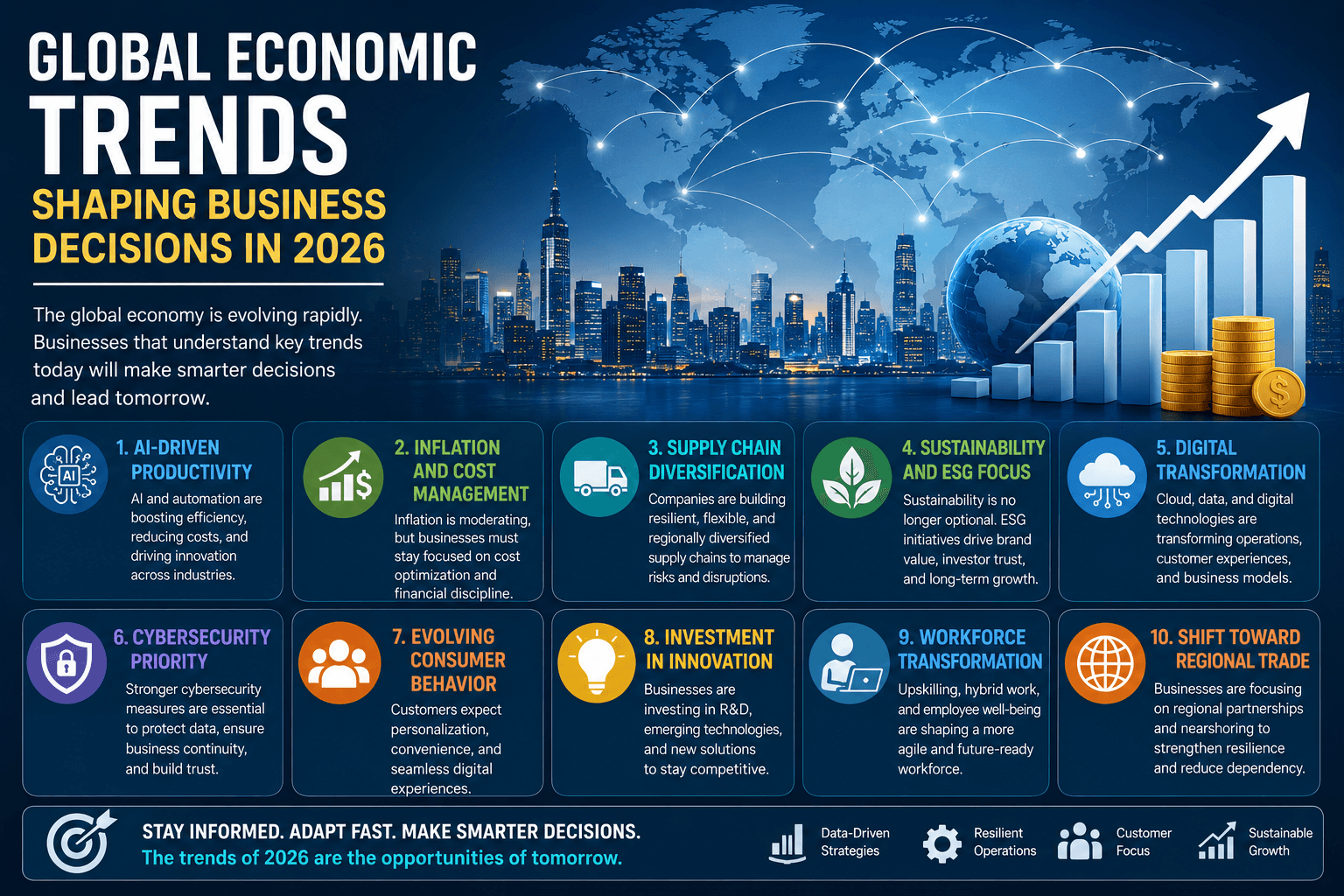
The global economy 2026 continues to be shaped by inflation, interest rates, economic growth, financial markets, consumer spending, trade, technology, and changing business conditions. Investors, businesses, governments, and consumers are closely watching economic indicators to understand where markets and economies may be heading.
Global Economic Growth in 2026
Economic growth remains one of the most important indicators of global economic health. Growth can vary significantly between countries depending on consumer demand, business investment, government policies, trade conditions, and productivity.
Developed economies may experience different growth patterns from emerging markets, while individual countries can also face unique challenges.
Inflation Remains a Key Economic Issue
Inflation measures how quickly the prices of goods and services are increasing.
Although inflation can rise or fall over time, consumers continue to pay attention to:
Food prices
Energy costs
Housing expenses
Transportation
Healthcare
Consumer goods
Changes in inflation can directly affect household budgets and business costs.
Interest Rates and Central Banks
Central banks play a major role in the global economy by setting monetary policy.
Interest-rate decisions can influence:
Borrowing costs
Mortgage rates
Business loans
Savings returns
Bond markets
Stock markets
Currency values
When interest rates change, the effects can spread throughout financial markets and the wider economy.
Stock Markets and Global Investors
Stock markets remain highly sensitive to economic expectations.
Investors may watch corporate earnings, interest rates, inflation, economic growth, employment data, and geopolitical developments when evaluating stocks.
Technology, healthcare, energy, financial services, and consumer companies can respond differently to changing economic conditions.
Bond Markets and Government Debt
Bond markets are another important part of the global financial system.
Government bond yields can reflect expectations about inflation, interest rates, economic growth, and government borrowing.
Higher borrowing costs can create additional challenges for governments and businesses carrying significant debt.
Global Trade and Supply Chains
International trade continues to influence economic activity around the world.
Businesses depend on global supply chains for raw materials, components, manufacturing, transportation, and distribution.
Trade policies, shipping costs, geopolitical tensions, and supply disruptions can affect prices and business operations.
Energy Prices and the Global Economy
Energy markets have a major influence on inflation and economic growth.
Changes in oil, natural gas, and electricity costs can affect transportation, manufacturing, agriculture, and household spending.
Businesses often monitor energy prices closely because higher costs can reduce profit margins.
Technology and Economic Growth
Technology remains an important driver of productivity and investment.
Artificial intelligence, cloud computing, automation, robotics, semiconductors, and digital services are influencing how businesses operate.
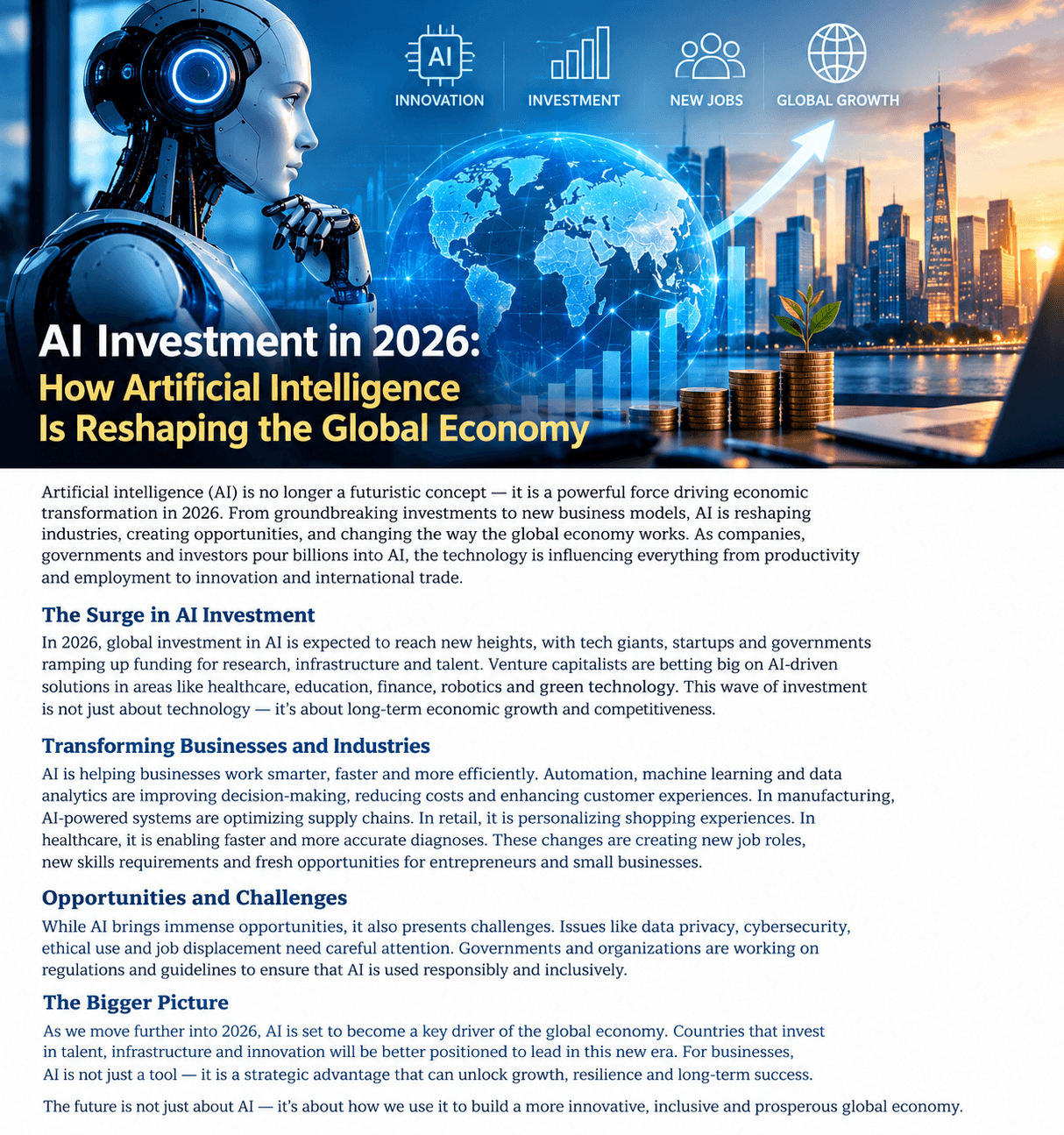
AI investment in particular is attracting attention because it could improve productivity while also creating new infrastructure and energy demands.
Consumer Spending in 2026
Consumer spending is a major component of many economies.
Households make decisions based on income, employment, inflation, interest rates, housing costs, and confidence about the future.
Strong consumer demand can support businesses, while weaker spending can create challenges for retailers and other consumer-focused companies.
Business Investment and Corporate Growth
Companies are making investment decisions based on economic conditions and expectations for future demand.
Areas receiving attention include:
Artificial intelligence
Technology infrastructure
Manufacturing
Renewable energy
Healthcare
Digital services
Logistics
Businesses may delay major investments when borrowing costs or economic uncertainty are high.
Employment and the Global Economy
Employment conditions are closely connected to economic growth.
Strong employment can support consumer spending, while weak labor markets can reduce household purchasing power.
At the same time, automation and AI are changing the skills companies need across many industries.
Emerging Markets
Emerging economies remain an important part of global growth.
These markets can benefit from rising consumer demand, industrial development, infrastructure investment, technology adoption, and international trade.
However, emerging markets may also be more sensitive to currency movements, external debt, commodity prices, and global interest rates.
Currencies and Foreign Exchange
Currency markets respond to many economic factors.
Interest-rate differences, inflation, trade flows, economic growth, and investor sentiment can all influence exchange rates.
Currency movements can affect international businesses, imports, exports, tourism, and investment returns.
AI and the Future of the Economy
Artificial intelligence could become an increasingly important economic factor.
Businesses are exploring AI for:
Automation
Data analysis
Customer service
Software development
Marketing
Research
Productivity improvement
The long-term economic impact will depend on how quickly organizations adopt AI and how effectively workers and businesses adapt.
Economic Risks to Watch
Several risks could influence the global economy during 2026.
These may include:
Persistent inflation
Sudden interest-rate changes
Weak economic growth
High government debt
Trade disruptions
Geopolitical uncertainty
Energy-price volatility
Financial-market instability
Economic conditions can change quickly, making diversification and careful financial planning important.
Key Economic Indicators to Follow
People following global economic news may want to monitor:
Inflation rates
Interest-rate decisions
GDP growth
Employment data
Consumer spending
Manufacturing activity
Stock-market performance
Bond yields
Currency movements
Energy prices
Together, these indicators can provide a broader picture of economic conditions.
FAQs About the Global Economy 2026
1. What is the global economy?
The global economy refers to the interconnected economic activities of countries, businesses, consumers, governments, and financial markets around the world.
2. Why is inflation important in 2026?
Inflation affects household purchasing power, business costs, interest rates, and investment decisions.
3. How do interest rates affect the economy?
Interest rates influence borrowing, saving, investment, housing, consumer spending, and financial markets.
4. What does a central bank do?
A central bank manages monetary policy and may adjust interest rates and other tools to influence economic conditions.
5. How does inflation affect consumers?
Higher inflation can reduce purchasing power when wages do not increase as quickly as prices.
6. Why are stock markets affected by interest rates?
Interest rates influence borrowing costs, company valuations, investor behavior, and expectations for economic growth.
7. What is GDP?
GDP, or gross domestic product, measures the value of goods and services produced within an economy during a specific period.
8. Why is global trade important?
Global trade allows countries and businesses to exchange goods, services, raw materials, technology, and capital.
9. How do energy prices affect inflation?
Higher energy costs can increase transportation, manufacturing, electricity, and production expenses, potentially putting upward pressure on prices.
10. How does AI affect the economy?
AI can improve productivity, automate tasks, create new services, and generate demand for technology infrastructure and specialized skills.
11. What happens when interest rates rise?
Higher rates generally make borrowing more expensive and can influence consumer spending, business investment, housing, bonds, and stocks.
12. Why are emerging markets important?
Emerging markets can contribute significantly to global growth through expanding populations, consumer demand, industrialization, and investment.
13. How do currencies affect businesses?
Currency movements can change the cost of imports, the value of exports, international revenues, and overseas investments.
14. What economic indicators should investors watch?
Inflation, interest rates, GDP growth, employment, corporate earnings, bond yields, currencies, and consumer spending are commonly monitored.
15. Can inflation affect savings?
Yes. High inflation can reduce the purchasing power of money if savings do not earn returns that keep pace with rising prices.
16. How does the economy affect businesses?
Economic conditions influence customer demand, operating costs, borrowing, investment, hiring, and profitability.
17. Why are bond yields important?
Bond yields can provide information about interest-rate expectations, inflation, government borrowing costs, and investor sentiment.
18. What could slow global economic growth?
Potential factors include high borrowing costs, weak consumer demand, trade disruptions, geopolitical uncertainty, financial instability, and persistent inflation.
19. Is the global economy connected to technology?
Yes. Technology influences productivity, investment, employment, trade, financial services, manufacturing, and consumer behavior.
20. Why should people follow economic news?
Understanding economic trends can help people make more informed decisions about spending, saving, borrowing, investing, and business planning.
Conclusion
The global economy in 2026 is being shaped by inflation, interest rates, financial markets, technology, trade, energy prices, employment, and consumer behavior.
For investors, businesses, and households, following major economic indicators can provide useful context for understanding changing financial conditions. While economic forecasts can change, keeping track of inflation, monetary policy, markets, employment, and global trade can help people better understand the forces shaping the economy.