
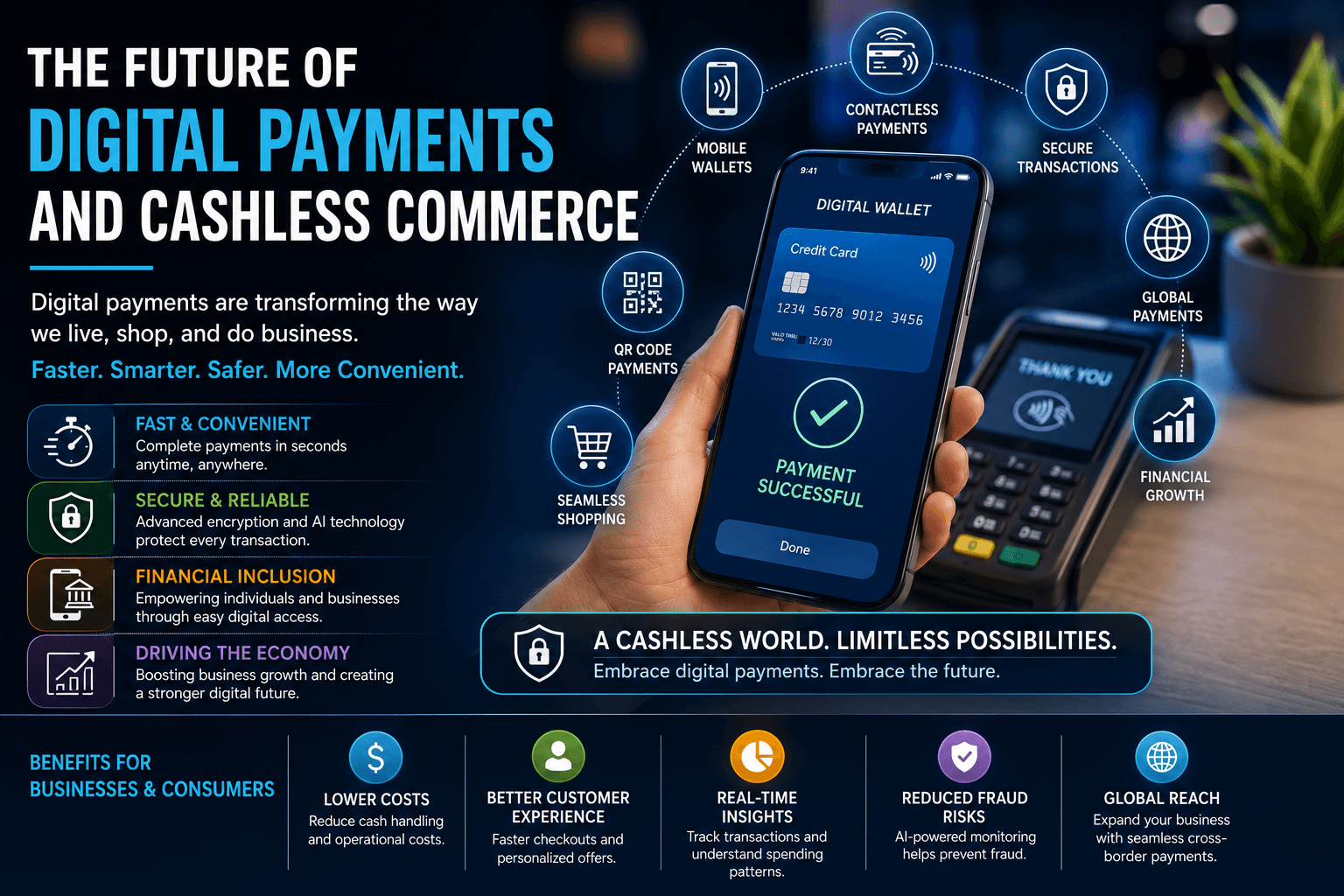
The way people pay for goods and services has changed dramatically over the past decade. Cash is no longer the primary payment method in many parts of the world, as consumers increasingly rely on digital wallets, contactless cards, mobile banking apps, QR code payments, and online payment platforms. In 2026, digital payments continue to reshape global commerce, making transactions faster, more secure, and more convenient than ever before.
Businesses of every size are embracing cashless payment solutions to meet evolving customer expectations and improve operational efficiency. From local retailers to multinational corporations, digital payment technologies are driving innovation while opening new opportunities for economic growth.
The Rapid Growth of Cashless Commerce
Consumer preferences have shifted significantly toward digital transactions. The convenience of paying with a smartphone, smartwatch, or contactless card has accelerated the adoption of cashless commerce worldwide.
Businesses benefit from faster checkout experiences, reduced cash handling, lower operational costs, and improved transaction tracking. Consumers appreciate the speed, security, and flexibility that digital payment methods provide.
As internet access and smartphone adoption continue to expand, digital payments are becoming increasingly accessible across both developed and emerging markets.
Mobile Wallets Become Mainstream
Mobile wallets have become an essential part of daily life for millions of consumers.
Users can securely store payment cards, loyalty programs, digital tickets, and identification documents within a single application. This convenience allows customers to complete purchases with just a tap or scan.
Retailers benefit from faster transactions while creating more personalized shopping experiences through integrated rewards and promotional offers.
Contactless Payments Continue to Expand
Contactless payment technology has become the preferred option for many consumers because it offers both speed and convenience.
Whether using payment cards, smartphones, or wearable devices, customers can complete transactions within seconds.
Restaurants, supermarkets, transportation systems, healthcare providers, and entertainment venues continue expanding support for contactless payment methods to improve customer experiences.
Artificial Intelligence Improves Payment Security
Artificial intelligence is playing an increasingly important role in fraud prevention.
Financial institutions use AI to monitor transaction patterns in real time, identify suspicious behavior, and detect fraudulent activities before financial losses occur.
Machine learning continuously improves fraud detection systems by analyzing millions of transactions and recognizing unusual activity with greater accuracy.
QR Code Payments Gain Popularity
QR code payments continue to grow because they are simple, affordable, and easy to implement.
Businesses only need a printed or digital QR code, allowing customers to scan and complete payments using their smartphones.
This payment method has become particularly valuable for small businesses, restaurants, street vendors, and service providers seeking cost-effective payment solutions.
Cross-Border Digital Payments
Global commerce increasingly depends on efficient international payment systems.
New payment technologies are reducing transaction times, lowering fees, and simplifying cross-border business operations.
Faster international payments support exporters, freelancers, digital service providers, and global e-commerce businesses while improving financial inclusion worldwide.
Digital Payments Fuel E-Commerce Growth
The continued growth of e-commerce relies heavily on secure digital payment systems.
Consumers expect multiple payment options, including:
Credit and debit cards
Mobile wallets
Bank transfers
Buy Now, Pay Later (BNPL)
Digital banking apps
Offering flexible payment choices improves customer satisfaction while reducing cart abandonment during online purchases.
Cybersecurity Remains Essential
As digital payment adoption grows, cybersecurity becomes increasingly important.
Businesses must invest in:
Data encryption
Multi-factor authentication
Secure payment gateways
Fraud monitoring
Regular security updates
Employee awareness training
Protecting financial information strengthens customer trust while reducing business risks.
Financial Inclusion Through Digital Payments
Digital payment technologies are expanding financial access for millions of people who previously had limited access to traditional banking services.
Mobile payment platforms enable individuals and small businesses to send, receive, and manage money using smartphones, supporting entrepreneurship and economic development in many regions.
Greater financial inclusion contributes to stronger local economies and increased participation in digital commerce.
Challenges Ahead
Despite rapid growth, digital payments continue to face several challenges.
These include:
Cybersecurity threats
Privacy concerns
Internet connectivity limitations
Regulatory compliance
Payment fraud
Digital literacy gaps
Businesses must balance innovation with strong security practices to maintain customer confidence.
Preparing for the Future
Organizations should continuously evaluate emerging payment technologies while ensuring secure and seamless customer experiences.
Investing in flexible payment infrastructure, AI-powered fraud detection, and customer education will help businesses remain competitive as digital commerce continues to evolve.
Companies that adapt early will be better positioned to meet changing consumer expectations and expand into new markets.
Conclusion
Digital payments and cashless commerce are transforming the global economy by making transactions faster, safer, and more convenient. Mobile wallets, contactless payments, AI-powered fraud detection, QR code payments, and cross-border payment innovations are reshaping how businesses and consumers exchange value.
As technology continues to advance, organizations that embrace secure, customer-focused payment solutions will strengthen their competitive advantage and unlock new opportunities for sustainable growth in the digital economy.