Artificial intelligence is entering a new era in 2026. Instead of simply answering questions or generating text, modern AI agents can perform tasks, make decisions, use tools, analyze information, and work toward specific goals with increasing autonomy.
From customer service and software development to marketing and business operations, AI agents are changing how organizations work. This transformation is creating exciting opportunities—but also raising important questions about the future of jobs.
What Are AI Agents?
An AI agent is an artificial intelligence system designed to perform tasks and pursue goals with limited human supervision.
Unlike a traditional chatbot that mainly responds to individual prompts, an AI agent can often:
Understand a goal
Break the goal into smaller tasks
Gather and analyze information
Use digital tools and software
Make decisions based on available data
Complete multi-step workflows
Learn from feedback and improve performance
For example, an AI agent might help a business analyze customer emails, identify urgent requests, prepare responses, update records, and notify the appropriate team.
How AI Agents Are Transforming Businesses
1. Automating Repetitive Work
One of the biggest benefits of AI agents is automation.
Businesses spend countless hours on repetitive tasks such as:
Data entry
Scheduling
Email management
Report generation
Customer support
Document processing
AI agents can help handle many of these activities faster, allowing employees to focus on more important work.
2. Improving Customer Service
AI-powered customer service agents are becoming more advanced.
They can help businesses provide:
24/7 customer support
Faster responses
Personalized recommendations
Automated issue resolution
Multilingual assistance
Human employees can then focus on complicated cases that require empathy, creativity, or specialized judgment.
3. Changing Software Development
AI agents are also transforming the technology industry.
Developers can use AI agents to assist with:
Writing code
Finding bugs
Testing software
Reviewing code
Creating documentation
Managing technical workflows
This does not necessarily mean that human programmers will disappear. Instead, developers may increasingly work alongside AI systems.
AI Agents in Marketing
Marketing is another area experiencing major changes.
AI agents can assist with:
Keyword research
Content planning
Social media management
Email campaigns
Customer analysis
Advertising optimization
Businesses can use AI to process large amounts of data and identify patterns much faster than traditional methods.
However, human creativity and strategy remain important. The most successful marketing teams may combine human ideas with AI-powered automation.
How AI Agents Are Changing Jobs
The rise of AI agents is creating both concern and opportunity.
Some repetitive tasks may become increasingly automated. Jobs involving predictable digital activities could change significantly.
At the same time, new opportunities are emerging.
Growing career areas may include:
AI agent development
AI workflow design
AI safety
Data analysis
AI automation consulting
Prompt and instruction design
Human-AI collaboration management
The future may not simply be about humans versus AI. Instead, many professionals may need to learn how to work effectively with intelligent systems.
Skills That Will Become More Important
As AI becomes more capable, several human skills are likely to remain highly valuable.
These include:
Critical thinking
Creativity
Communication
Problem-solving
Leadership
Emotional intelligence
Strategic decision-making
Technical knowledge of AI tools may also become increasingly useful across many industries.
Challenges and Risks of Autonomous AI
Despite its potential, AI agents also create challenges.
Businesses must consider issues such as:
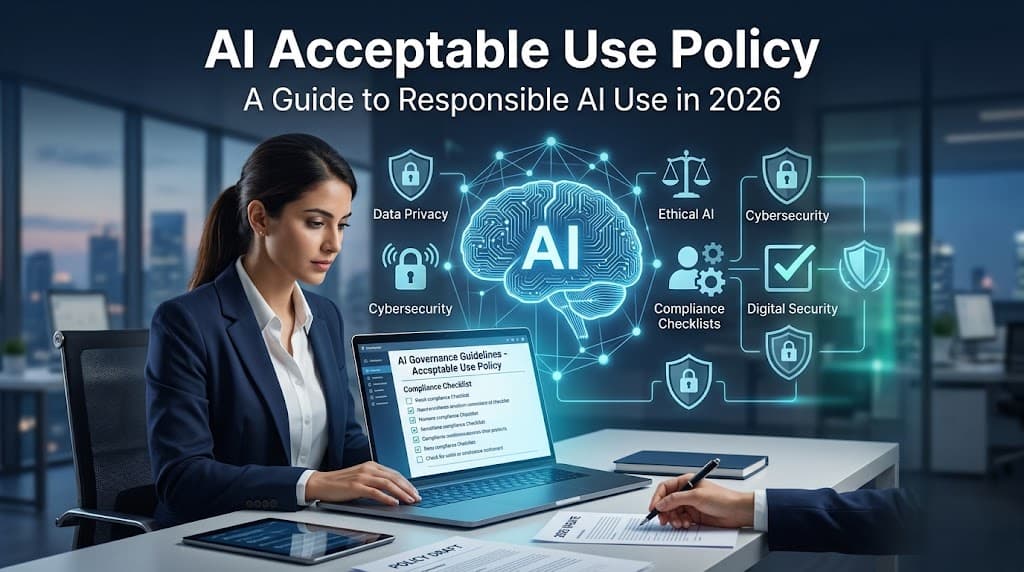
Data Privacy
AI agents may access sensitive business or customer information. Companies need strong systems to protect data.
Incorrect Decisions
AI systems can make mistakes. Human oversight is important, especially in areas involving finance, healthcare, law, and security.
Cybersecurity
More autonomous systems may create new cybersecurity risks. Organizations need to ensure AI agents cannot be easily manipulated or misused.
Job Displacement
Automation may reduce demand for certain tasks. Governments, businesses, and educational institutions will need to help workers develop new skills.
The Future of AI Agents
AI agents are expected to become increasingly capable and integrated into everyday business operations.
In the future, companies may use multiple specialized AI agents working together. One agent could analyze data, another could communicate with customers, and another could manage internal workflows.
Human employees may act as supervisors, strategists, and decision-makers while AI handles large amounts of routine digital work.
Conclusion
AI agents are becoming one of the most important technology trends of 2026. They have the potential to transform businesses, increase productivity, and change the nature of work.
However, successful adoption will require responsible implementation. Businesses must balance automation with human oversight, privacy, security, and ethical decision-making.
The future of work is likely to involve closer collaboration between humans and AI. Those who learn how to understand and use these technologies effectively may be better prepared for the opportunities ahead.
FAQs
1. What is an AI agent?
An AI agent is a system that can perform tasks and pursue goals with some level of autonomy.
2. How are AI agents different from chatbots?
AI agents can often perform multi-step tasks and use tools, while traditional chatbots mainly respond to individual questions.
3. Will AI agents replace human workers?
AI may automate some tasks, but it is also expected to create new roles and change existing jobs.
4. Which industries will use AI agents?
AI agents can be used in technology, healthcare, finance, marketing, customer service, education, and many other industries.
5. What skills are important in the AI era?
Critical thinking, creativity, communication, problem-solving, and AI literacy are becoming increasingly valuable.
6. Can AI agents make decisions on their own?
AI agents can make certain decisions based on their programming, available data, and goals. However, important decisions should still have appropriate human oversight.
7. What tasks can AI agents automate?
AI agents can help automate tasks such as customer support, data analysis, scheduling, report creation, email management, and workflow coordination.
8. Are AI agents expensive for businesses?
The cost depends on the technology, features, and scale of implementation. Some AI tools are affordable for small businesses, while advanced enterprise systems can require larger investments.
9. Can small businesses use AI agents?
Yes. Small businesses can use AI agents for customer support, marketing, administrative tasks, and other everyday business activities.
10. What is an autonomous AI agent?
An autonomous AI agent is designed to perform tasks independently, often with limited human intervention.
11. Are AI agents safe to use?
AI agents can be useful, but businesses should implement security measures, data protection, and human oversight to reduce potential risks.
12. How can AI agents improve productivity?
They can automate repetitive tasks, process information quickly, and help employees focus on more complex and creative work.
13. Will AI agents affect remote work?
Yes. AI agents can automate digital workflows and support communication, collaboration, and task management for remote teams.
14. Can AI agents work together?
Yes. Multiple AI agents can potentially be designed to handle different tasks and collaborate within a larger workflow.
15. What is the difference between AI automation and AI agents?
Traditional AI automation usually follows predefined workflows, while AI agents can potentially adapt their actions based on goals, information, and changing situations.
16. How can businesses start using AI agents?
Businesses can begin by identifying repetitive tasks, selecting suitable AI tools, testing them on a small scale, and monitoring their performance.
17. Do AI agents require human supervision?
Yes, especially when AI systems are used for sensitive, complex, or high-impact decisions.
18. Which jobs are most likely to change because of AI agents?
Jobs involving repetitive digital tasks may experience significant changes, while many roles will evolve to include working alongside AI.
19. Can AI agents help with cybersecurity?
AI agents can assist with monitoring systems, identifying unusual activity, and responding to potential threats. However, they must also be secured against misuse.
20. What is the future of AI agents?
AI agents are expected to become more capable and integrated into business workflows, potentially helping people automate increasingly complex tasks.