AI employees—also called digital workers or AI coworkers—are becoming one of the most important developments in business technology. Unlike traditional software, these systems can understand instructions, analyze information, communicate with people, and complete multi-step tasks.
In 2026, businesses across industries are exploring how AI workers can support employees and automate repetitive workflows. This shift is creating new opportunities for productivity while also raising important questions about jobs, skills, security, and the future of work.
What Are AI Employees?
AI employees are AI-powered systems designed to perform specific business responsibilities. They can work alongside human employees and interact with digital tools such as CRM platforms, spreadsheets, email systems, databases, project-management software, and customer-service platforms.
For example, an AI sales assistant could research potential customers, organize leads, update a CRM, prepare follow-up messages, and create sales summaries.
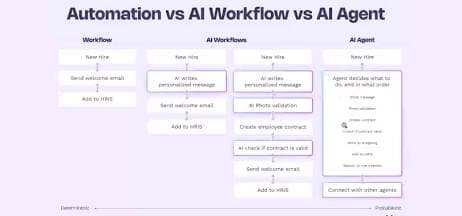
Unlike simple chatbots, advanced AI workers can perform multiple connected tasks toward a specific goal.
Why AI Employees Are Growing in 2026
Businesses are under constant pressure to improve productivity while controlling costs. At the same time, AI technology has become increasingly capable of understanding natural language and working with business software.
This makes AI workers attractive for tasks that are:
Repetitive
Time-consuming
Data-heavy
Rule-based
Available digitally
Performed frequently
Instead of asking employees to spend hours on administrative work, businesses can delegate suitable tasks to AI systems.
Where AI Employees Are Being Used
Customer Support
AI workers can answer frequently asked questions, classify support tickets, retrieve customer information, and assist human representatives.
Marketing
AI can help with content research, campaign analysis, audience segmentation, and marketing reports.
Sales
AI assistants can identify prospects, summarize customer conversations, update CRM records, and support sales teams with research.
Finance
AI systems can assist with document processing, expense categorization, invoice workflows, and financial reporting.
Human Resources
AI can support recruitment administration, employee onboarding, policy questions, and scheduling.
IT
Digital workers can help monitor systems, analyze alerts, troubleshoot common problems, and manage support requests.
AI Employees Won't Simply Replace Everyone
One of the biggest misconceptions about AI workers is that every AI deployment automatically means human employees will disappear.
In reality, many businesses are using AI to augment human workers.
An employee might previously spend six hours completing administrative tasks and two hours on strategic work. With AI assistance, the administrative workload could decrease, allowing more time for analysis, creativity, customer relationships, and decision-making.
However, some roles and tasks will undoubtedly change as AI becomes more capable. Employees will need to adapt by developing skills that complement AI systems.
New Skills for the AI Workplace
The growth of AI employees is increasing demand for skills such as:
AI literacy
Critical thinking
Data analysis
Problem-solving
Communication
AI workflow management
Cybersecurity awareness
Human-AI collaboration
Employees who understand how to effectively supervise and work with AI may have an advantage in the evolving workplace.
The Benefits for Businesses
AI employees can potentially provide several advantages.
24/7 availability: Digital workers can operate outside traditional working hours.
Faster processing: AI can analyze large amounts of information quickly.
Consistent execution: Properly designed workflows can reduce repetitive human errors.
Scalability: Businesses can increase automated capacity as demand grows.
Employee productivity: Workers can spend more time on higher-value activities.
Risks and Challenges
AI employees also introduce new challenges.
Security Risks
AI systems may have access to sensitive company information. Businesses must use strong authentication, access controls, and monitoring.
AI Errors
AI can misunderstand instructions or produce incorrect information. Important decisions should therefore receive appropriate human review.
Privacy
Companies must carefully manage customer and employee data used by AI systems.
Workforce Changes
Some tasks may disappear while new responsibilities emerge. Organizations should invest in employee training and reskilling.
Accountability
Businesses need clear responsibility for decisions made or actions performed by AI systems.
How Companies Can Start Using AI Employees
Businesses should avoid trying to automate everything at once.
A better approach is to start with one or two clearly defined workflows.
For example:
Identify a repetitive process.
Measure how much time employees spend on it.
Determine whether AI is suitable.
Start with limited permissions.
Test the system.
Monitor its performance.
Add human approval where necessary.
Expand gradually after successful results.
This approach allows businesses to learn how AI performs before giving it broader responsibilities.
The Future of Digital Workers
The next stage of workplace AI may involve teams consisting of both humans and specialized AI workers.
A marketing team could have AI systems handling research and analytics. A sales department could use AI for lead qualification and CRM management. An operations team could have digital workers monitoring workflows and identifying potential problems.
Humans would remain responsible for strategy, relationships, judgment, creativity, and accountability.
The result could be a workplace where AI is not simply another software tool but an active participant in business operations.
Conclusion
AI employees are becoming an important part of the digital transformation taking place in 2026. They can automate repetitive processes, support employees, analyze information, and help businesses operate more efficiently.
The most successful organizations will likely be those that treat AI as a workforce technology that requires strategy, training, security, and governance, rather than simply installing an AI tool and expecting immediate results.
The future of work is not necessarily about humans versus AI. It is increasingly about humans working alongside intelligent digital coworkers.
Frequently Asked Questions (FAQs)
1. What are AI employees?
AI employees are intelligent software systems that can perform business tasks, interact with digital tools, analyze information, and support human employees.
2. How are AI employees different from chatbots?
Traditional chatbots mainly answer questions, while advanced AI employees can perform multi-step tasks, use business applications, analyze data, and complete workflows.
3. Will AI employees replace human workers?
AI may automate some tasks and change certain jobs, but many businesses are using AI to assist employees rather than completely replace them.
4. What industries can benefit from AI employees?
Almost any digital-first industry can benefit, including finance, healthcare administration, retail, marketing, education, technology, customer service, and logistics.
5. Can AI employees work 24/7?
Yes. AI systems can generally operate continuously without traditional working-hour limitations, provided the underlying systems remain available.
6. How can AI employees improve productivity?
They can handle repetitive administrative tasks, process information quickly, prepare reports, manage routine requests, and allow employees to focus on more valuable work.
7. Are AI employees expensive for businesses?
Costs vary depending on the AI technology, number of users, integrations, data requirements, and level of customization. Businesses should evaluate the expected productivity gains against implementation costs.
8. Can small businesses use AI employees?
Yes. Small businesses can use AI for tasks such as customer support, appointment scheduling, marketing, lead management, document processing, and administrative work.
9. What are the biggest risks of AI employees?
Major risks include inaccurate outputs, data privacy issues, cybersecurity vulnerabilities, excessive automation, and unclear accountability.
10. Do AI employees need human supervision?
For many important workflows, yes. Human supervision is particularly important when AI handles sensitive information or makes decisions with financial, legal, employment, or customer consequences.
11. Can AI employees use company software?
Yes. Depending on the system and permissions, AI agents can be integrated with CRM platforms, databases, email, spreadsheets, project-management tools, and other business applications.
12. What skills will employees need in an AI-powered workplace?
AI literacy, critical thinking, communication, problem-solving, data analysis, creativity, and the ability to collaborate with AI systems will become increasingly valuable.
13. Can AI employees make business decisions?
AI can assist with analysis and recommendations, but businesses should establish clear limits and require human approval for high-impact decisions.
14. How do companies train AI employees?
Businesses typically configure AI systems using instructions, company knowledge, workflows, approved data sources, tools, and access permissions. Testing and continuous monitoring are also important.
15. What is an AI digital worker?
An AI digital worker is a software-based system designed to perform specific tasks or workflows that might otherwise require human administrative effort.
16. How can companies start using AI employees?
Companies should begin with a repetitive, well-defined, low-risk workflow, test the AI system, monitor its results, and gradually expand its responsibilities.
17. Will AI create new jobs?
AI is likely to create new roles related to AI management, automation, data, cybersecurity, AI governance, and human-AI collaboration while changing existing jobs.
18. Are AI employees secure?
They can be secure when properly designed and managed, but businesses need strong access controls, authentication, monitoring, data protection, and security policies.
19. What is the future of AI employees?
AI employees are likely to become increasingly integrated into everyday business operations, working alongside humans as digital assistants, specialists, and workflow agents.
20. Why are AI employees important in 2026?
AI employees are important because advances in AI agents are making it possible to automate increasingly complex workflows, potentially improving productivity and changing how organizations operate.