Introduction
Artificial intelligence is no longer just another feature added to business software. It is becoming the foundation on which modern digital workplaces are built. Traditional operating systems were designed to help users manage files, run applications, and interact with hardware. However, today's businesses need far more than simple software management. They require intelligent systems capable of understanding context, automating repetitive work, making recommendations, and coordinating multiple AI agents across departments.
This demand has given rise to AI Operating Systems—a new generation of intelligent platforms designed to place artificial intelligence at the center of business operations. Unlike conventional enterprise software, AI operating systems continuously learn from organizational data, understand employee behavior, automate complex workflows, and provide personalized assistance in real time.
From finance and customer service to cybersecurity and software development, AI operating systems are transforming how organizations work. Instead of employees switching between dozens of disconnected applications, AI systems can coordinate tasks, retrieve information, generate reports, schedule meetings, and even complete multi-step business processes automatically.
As organizations continue investing in digital transformation, experts predict that AI operating systems will become the backbone of enterprise technology. Businesses adopting these platforms today are preparing for a future where intelligent automation, autonomous AI agents, and human collaboration work together seamlessly to increase productivity and reduce operational costs.
What Is an AI Operating System?
An AI operating system is an intelligent software platform that integrates artificial intelligence into every aspect of enterprise operations. Rather than simply hosting applications, it acts as a centralized intelligence layer that connects business tools, analyzes information, automates workflows, and assists employees with daily tasks.
Unlike traditional operating systems that respond only to user commands, AI operating systems understand natural language, recognize business context, learn from previous interactions, and proactively recommend solutions before problems occur.
For example, instead of manually opening multiple applications to prepare a weekly sales report, an employee can simply ask the AI operating system to generate the report. The system automatically gathers data from CRM software, analyzes sales trends, creates visual dashboards, and even drafts executive summaries within minutes.
This shift transforms enterprise software from passive tools into active business partners.
How AI Operating Systems Differ From Traditional Software
Traditional business software performs specific tasks based on predefined instructions. Accounting software manages financial records, CRM systems organize customer information, and project management tools track tasks. Each application operates independently, requiring employees to move data manually between systems.
AI operating systems eliminate these silos by connecting applications into one intelligent ecosystem. They understand relationships between data, automate repetitive work, and coordinate activities across departments.
Key differences include:
Natural language interaction instead of complex menus
Continuous learning from business data
Automated workflow orchestration
Predictive decision support
Personalized recommendations
Autonomous execution of repetitive tasks
Rather than replacing existing software, AI operating systems unify and enhance enterprise applications, creating a more connected and intelligent workplace.
Why Businesses Are Adopting AI-Native Platforms
Organizations generate enormous amounts of information every day. Emails, customer interactions, financial records, support tickets, marketing campaigns, and operational data often remain scattered across dozens of disconnected systems.
AI operating systems solve this challenge by creating a unified intelligence layer that connects enterprise data into a single ecosystem.
Businesses are adopting these platforms because they help:
Reduce repetitive manual work
Improve employee productivity
Accelerate decision-making
Enhance customer experiences
Lower operational costs
Increase collaboration across departments
Deliver real-time business insights
Simplify enterprise software management
As competition grows, companies increasingly recognize that intelligent automation is no longer optional but essential for maintaining operational efficiency and long-term growth.
Core Features of AI Operating Systems
Modern AI operating systems include powerful capabilities that extend far beyond traditional enterprise software.
Intelligent Automation
Routine tasks such as scheduling meetings, processing invoices, organizing documents, and generating reports can be completed automatically without human intervention.
Natural Language Interface
Employees communicate with the system using everyday language instead of navigating complicated software menus.
Persistent Memory
AI remembers previous conversations, user preferences, and business context, enabling more accurate and personalized responses.
Autonomous AI Agents
Multiple specialized AI agents work together to complete complex projects involving marketing, finance, HR, customer support, and IT operations.
Enterprise Knowledge Management
AI continuously organizes company knowledge, making information instantly searchable and accessible across departments.
Predictive Analytics
The system analyzes historical data to forecast trends, identify risks, and recommend proactive business strategies.
How AI Operating Systems Improve Productivity
One of the biggest advantages of AI operating systems is their ability to dramatically improve workplace productivity. Instead of spending hours switching between applications, searching for information, or completing repetitive administrative tasks, employees can rely on AI to handle routine work while they focus on strategic initiatives.
For example, a marketing manager can ask the AI operating system to create a campaign report. The system automatically gathers data from analytics platforms, CRM software, email marketing tools, and social media dashboards before generating a comprehensive report with charts, insights, and recommendations.
Similarly, finance teams can automate invoice processing, expense tracking, and financial forecasting, while HR departments can streamline recruitment, employee onboarding, and performance management. Customer support teams benefit from AI-powered ticket prioritization, instant knowledge retrieval, and intelligent response suggestions, enabling faster issue resolution.
By reducing manual work, AI operating systems improve efficiency, minimize human error, and allow employees to dedicate more time to innovation and business growth.
AI Operating Systems and Autonomous AI Agents
The next evolution of enterprise technology involves autonomous AI agents working together under a centralized AI operating system. Rather than using a single AI assistant, organizations will deploy specialized AI agents responsible for different business functions.
A sales AI agent may identify qualified leads and schedule meetings, while a marketing AI agent develops personalized campaigns based on customer behavior. Finance AI agents can monitor budgets and detect unusual transactions, while cybersecurity agents continuously scan networks for potential threats.
The AI operating system coordinates communication between these agents, ensuring they share information, collaborate efficiently, and complete multi-step workflows without constant human supervision. This coordinated approach enables businesses to automate increasingly complex operations while maintaining consistency and accuracy.
Benefits for Small and Large Enterprises
AI operating systems provide value to organizations of every size. Small businesses gain access to enterprise-level automation without hiring large teams, helping them compete more effectively with larger organizations.
Medium-sized businesses can improve collaboration between departments, reduce operational costs, and simplify digital transformation efforts. Large enterprises benefit from centralized AI governance, intelligent workflow management, and scalable automation across global operations.
Regardless of company size, AI operating systems help businesses make faster decisions, improve employee experiences, enhance customer satisfaction, and achieve greater operational efficiency.
Security, Privacy, and Compliance Challenges
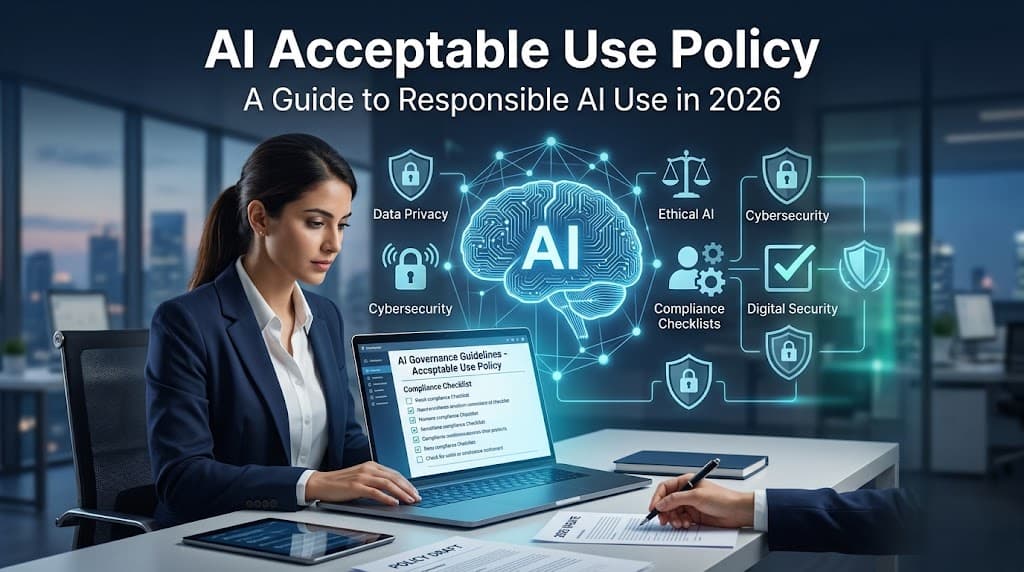
As AI operating systems become deeply integrated into enterprise environments, organizations must prioritize security and responsible AI governance. Since these platforms process sensitive financial records, customer information, and confidential business data, strong cybersecurity measures are essential.
Businesses should implement encryption, multi-factor authentication, role-based access controls, and continuous monitoring to protect enterprise information. Regular security audits and compliance with regulations such as GDPR or other regional privacy laws help ensure responsible data management.
Organizations should also establish transparent AI policies that define how data is collected, stored, and used. Building employee trust through responsible AI practices is essential for successful long-term adoption.
Industries Leading AI Operating System Adoption
Many industries are already embracing AI operating systems to improve efficiency and accelerate innovation.
Healthcare organizations use AI to assist with patient scheduling, medical documentation, clinical decision support, and resource planning.
Financial institutions automate fraud detection, compliance reporting, risk analysis, and customer service operations.
Manufacturing companies optimize supply chains, predictive maintenance, production planning, and quality control using intelligent automation.
Retail businesses personalize customer experiences, manage inventory, forecast demand, and automate marketing campaigns.
Technology companies rely on AI operating systems for software development, infrastructure management, cybersecurity, and product innovation.
As AI capabilities continue to evolve, adoption will expand across education, logistics, government, legal services, and many other industries.
Best Practices for Implementing AI Operating Systems
Successful implementation begins with a clear business strategy rather than adopting AI simply because it is popular. Organizations should identify repetitive workflows, establish measurable goals, and prioritize areas where AI can deliver immediate value.
Businesses should also invest in employee training so teams understand how to collaborate effectively with AI systems. Integrating AI gradually, monitoring performance, and continuously improving workflows will maximize long-term success.
Maintaining high-quality data, enforcing strong governance policies, and selecting scalable AI platforms are equally important for sustainable enterprise transformation.
The Future of AI Operating Systems Beyond 2027
Over the next several years, AI operating systems will become the intelligent foundation of modern enterprises. Future platforms will feature stronger reasoning capabilities, deeper contextual understanding, and seamless collaboration between humans and autonomous AI agents.
Instead of employees managing software applications, AI operating systems will proactively organize work, anticipate business needs, coordinate enterprise processes, and deliver personalized recommendations before users even request assistance.
Organizations that adopt AI-native platforms today will be better positioned to innovate, reduce costs, improve customer experiences, and remain competitive in an increasingly AI-driven economy.
Conclusion
AI operating systems represent one of the most significant technological shifts since the rise of cloud computing. By combining intelligent automation, persistent memory, natural language interaction, and autonomous AI agents into a unified platform, these systems are redefining how businesses operate.
Rather than functioning as simple software, AI operating systems become intelligent business partners that continuously learn, adapt, and optimize enterprise workflows. They reduce repetitive work, improve decision-making, enhance collaboration, and help organizations respond more quickly to changing market conditions.
As AI continues to mature, businesses that embrace AI operating systems will gain a substantial competitive advantage through greater productivity, improved efficiency, and smarter enterprise operations. The future of business software is no longer centered on isolated applications—it is built on intelligent operating systems that empower people and AI to work together seamlessly.