Artificial intelligence has become one of the most valuable investments for modern businesses, enabling automation, better decision-making, personalized customer experiences, and improved operational efficiency. However, as AI adoption accelerates across industries in 2026, organizations are also facing a growing challenge: managing the increasing costs of AI infrastructure, computing power, cloud services, and model deployment.
Training and operating advanced AI models require significant investments in GPUs, cloud resources, data storage, networking, and skilled professionals. Without proper planning, AI initiatives can become expensive and reduce overall profitability. As a result, enterprise AI cost optimization has become a top priority for business leaders seeking to maximize return on investment while maintaining innovation.
Cost optimization is no longer about simply cutting expenses. Instead, it involves building efficient AI systems that deliver maximum business value with minimal waste. Companies that adopt strategic AI cost management practices can scale their AI capabilities more effectively while maintaining long-term financial sustainability.
Understanding Enterprise AI Cost Optimization
Enterprise AI cost optimization refers to the process of reducing unnecessary AI-related expenses while maintaining or improving performance. It focuses on maximizing resource utilization, improving infrastructure efficiency, selecting cost-effective AI models, and continuously monitoring operational costs.
Organizations optimize AI spending by analyzing every stage of the AI lifecycle, from data collection and model training to deployment, monitoring, and maintenance. By identifying inefficiencies and implementing smarter resource management strategies, businesses can achieve better outcomes without sacrificing quality or innovation.
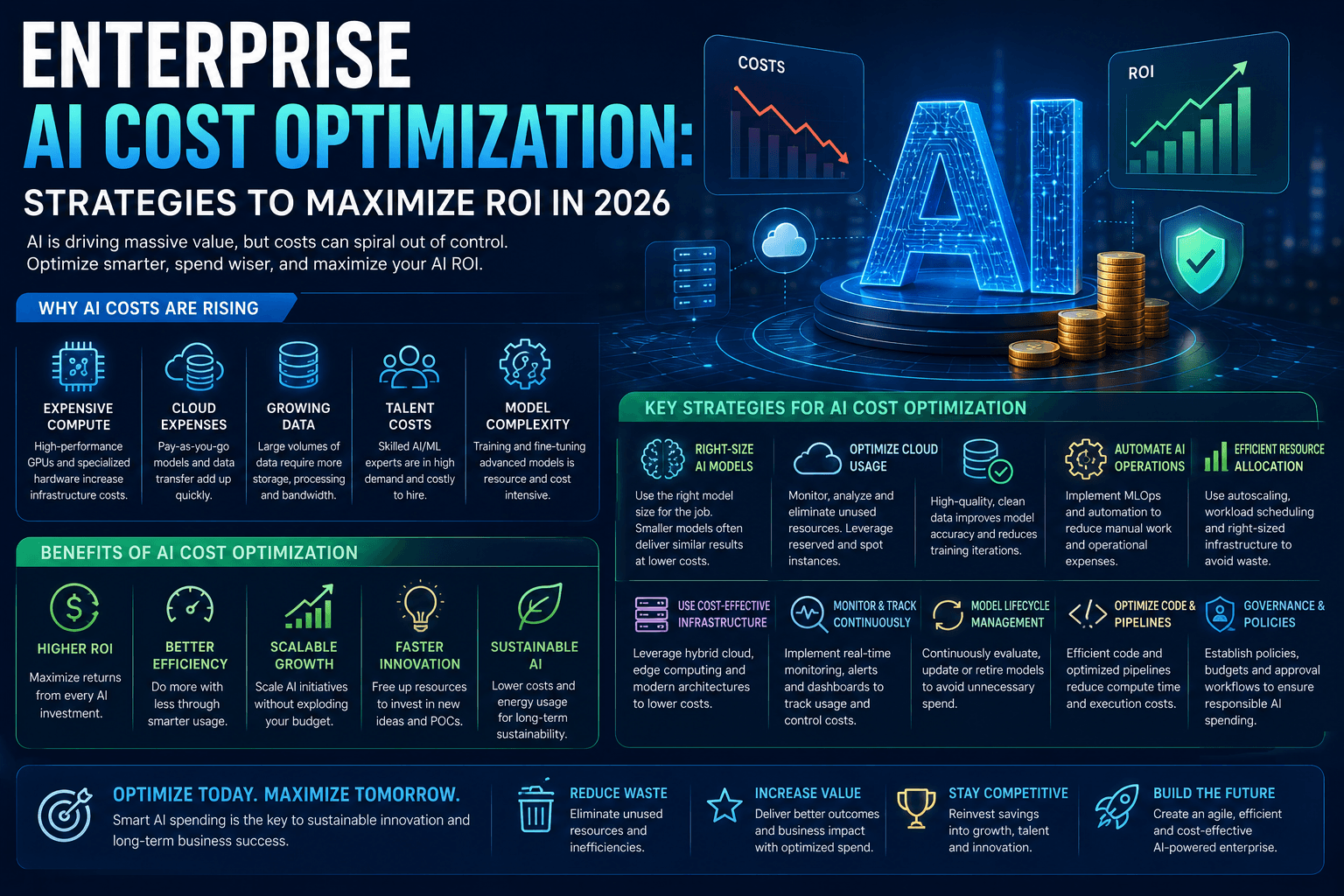
Why AI Costs Are Increasing
Several factors contribute to rising enterprise AI expenses.
Expensive Computing Resources
Large AI models require high-performance GPUs and specialized AI accelerators, which significantly increase infrastructure costs.
Growing Data Volumes
AI systems rely on enormous datasets for training and continuous improvement. Managing and storing this data requires scalable cloud infrastructure and advanced storage solutions.
Cloud Service Costs
Many organizations depend on cloud providers for AI development, resulting in ongoing expenses for computing power, networking, APIs, and storage.
Skilled AI Talent
Hiring experienced AI engineers, data scientists, and machine learning specialists remains one of the largest operational expenses for AI-driven businesses.
Benefits of AI Cost Optimization
Optimizing AI investments provides several important advantages.
Higher Return on Investment
Reducing unnecessary expenses allows organizations to generate greater business value from AI initiatives.
Improved Operational Efficiency
Efficient resource allocation reduces waste while improving AI performance.
Faster Innovation
Lower operating costs free additional resources for research, development, and innovation.
Better Scalability
Cost-efficient AI systems enable organizations to expand projects without significantly increasing expenses.
Sustainable Growth
Organizations can maintain long-term AI adoption without exceeding technology budgets.
Strategies for Optimizing AI Costs
Choose the Right AI Models
Not every application requires massive language models. Smaller, specialized models often deliver similar results at significantly lower costs.
Optimize Cloud Usage
Organizations should monitor cloud spending, eliminate unused resources, and select pricing models that align with actual workloads.
Improve Data Quality
Clean, accurate, and well-organized data reduces unnecessary training cycles and improves model performance.
Automate AI Operations
MLOps platforms automate deployment, monitoring, updates, and maintenance, reducing manual effort and operational expenses.
Efficient Resource Allocation
Dynamic resource allocation ensures computing power is only used when necessary.
AI Infrastructure Optimization
Modern enterprises improve AI efficiency through infrastructure optimization.
Hybrid Cloud
Combining on-premises infrastructure with cloud services provides greater flexibility and reduces costs.
Edge AI
Processing data closer to users minimizes bandwidth requirements and lowers cloud processing expenses.
GPU Utilization
Efficient scheduling ensures GPUs remain fully utilized rather than sitting idle.
Containerization
Containers simplify deployment while reducing infrastructure overhead.
AI Governance and Cost Management
Strong governance improves both financial efficiency and AI reliability.
Organizations should establish policies for:
Resource monitoring
Budget management
Responsible AI usage
Model lifecycle management
Security compliance
Performance tracking
Risk management
Effective governance prevents unnecessary spending while improving operational transparency.
Industry Applications
Healthcare
Hospitals optimize diagnostic AI systems while reducing infrastructure costs.
Financial Services
Banks improve fraud detection using efficient AI models that lower operational expenses.
Manufacturing
Manufacturers reduce equipment downtime through predictive maintenance powered by optimized AI systems.
Retail
Retailers enhance customer personalization while managing cloud infrastructure costs.
Logistics
Transportation companies optimize routing algorithms without increasing computing expenses.
Common Challenges
Despite numerous benefits, organizations face several obstacles.
Rapid Infrastructure Growth
Scaling AI projects can quickly increase computing costs.
Poor Resource Management
Idle computing resources waste significant financial investments.
Legacy Systems
Older IT infrastructure often limits AI efficiency.
Model Complexity
Large AI models require extensive processing power and maintenance.
Security Requirements
Protecting AI systems while maintaining compliance introduces additional operational costs.
Future Trends in AI Cost Optimization
Several innovations will shape enterprise AI cost management.
More energy-efficient AI hardware
Smaller high-performance language models
Automated infrastructure optimization
AI-powered cost monitoring
Serverless AI architectures
Advanced workload scheduling
Green AI initiatives
Intelligent cloud optimization
Edge AI expansion
Autonomous AI resource management
These advancements will help businesses deploy AI more efficiently while controlling operational expenses.
Conclusion
Enterprise AI cost optimization has become essential for organizations seeking to maximize the value of artificial intelligence investments while maintaining financial sustainability. By selecting efficient AI models, optimizing infrastructure, improving governance, and automating operations, businesses can significantly reduce costs without compromising innovation or performance. As AI technologies continue to evolve, organizations that embrace cost-efficient strategies will be better equipped to scale their AI initiatives, improve operational efficiency, increase return on investment, and strengthen their competitive position in the rapidly advancing digital economy.
Enterprise AI cost optimization has become essential for organizations seeking to maximize the value of artificial intelligence investments while maintaining financial sustainability. By selecting efficient AI models, optimizing infrastructure, improving governance, and automating operations, businesses can significantly reduce costs without compromising innovation or performance. As AI technologies continue to evolve, organizations that embrace cost-efficient strategies will be better equipped to scale their AI initiatives, improve operational efficiency, increase return on investment, and strengthen their competitive position in the rapidly advancing digital economy.
Looking ahead, AI cost optimization will play an even greater role as enterprises expand their use of artificial intelligence across every department. Businesses that continuously monitor AI performance, eliminate resource waste, and invest in scalable infrastructure will achieve stronger financial results while maintaining high levels of productivity. Implementing intelligent workload management, energy-efficient computing, and automated cost monitoring solutions will further improve operational efficiency and reduce long-term expenses. Additionally, organizations that balance innovation with responsible spending will be able to deploy AI solutions more confidently and sustainably. By combining strategic planning, continuous optimization, and data-driven decision-making, enterprises can unlock the full potential of AI, enhance customer experiences, accelerate digital transformation, foster long-term business growth, and remain resilient in an increasingly competitive and technology-driven global marketplace.
Furthermore, enterprise AI cost optimization is not a one-time initiative but an ongoing process that requires continuous evaluation, strategic planning, and technological innovation. As AI models become more sophisticated and enterprise workloads continue to grow, organizations must regularly assess their infrastructure, cloud usage, and operational performance to ensure resources are being utilized efficiently. Investing in scalable architectures, intelligent automation, and predictive analytics can help businesses identify cost-saving opportunities before unnecessary expenses arise. Companies should also encourage collaboration between IT teams, data scientists, and business leaders to align AI investments with organizational objectives and measurable business outcomes.
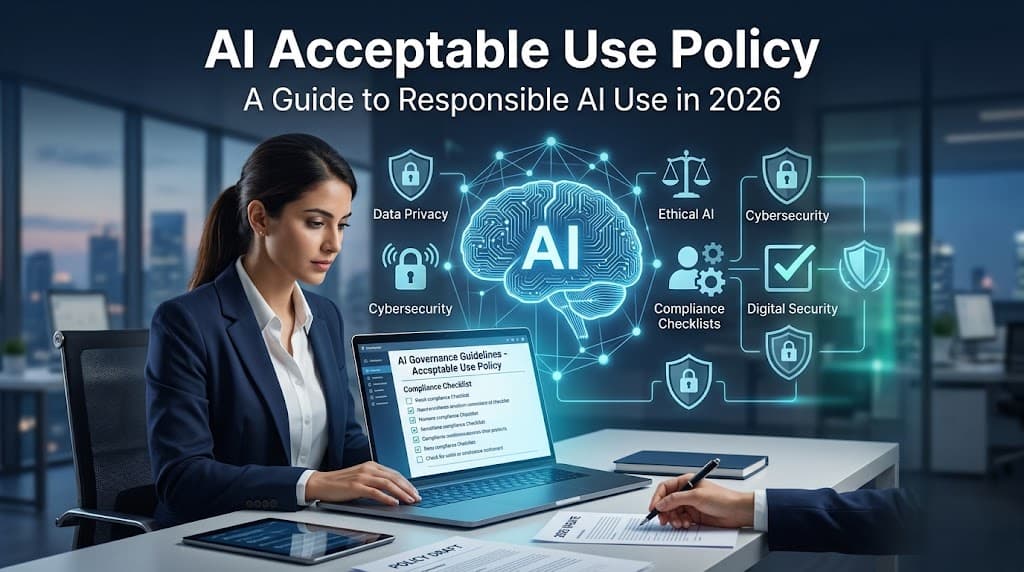
Moreover, adopting responsible AI governance and transparent financial management enables organizations to maintain compliance while improving operational accountability. Businesses that embrace emerging technologies such as edge AI, serverless computing, AI accelerators, and automated resource allocation will gain greater flexibility and significantly lower operational costs. Continuous employee training and upskilling will further enhance AI adoption by ensuring teams can effectively manage advanced AI systems and optimize workflows. Ultimately, organizations that combine innovation, efficiency, and strategic cost management will not only maximize the return on their AI investments but also strengthen resilience, accelerate digital transformation, improve customer satisfaction, drive sustainable business growth, and establish long-term leadership in the increasingly competitive global AI-powered economy.