TFThe Future of Smart Homes in 2026: AI, Automation & Connected Living
Introduction
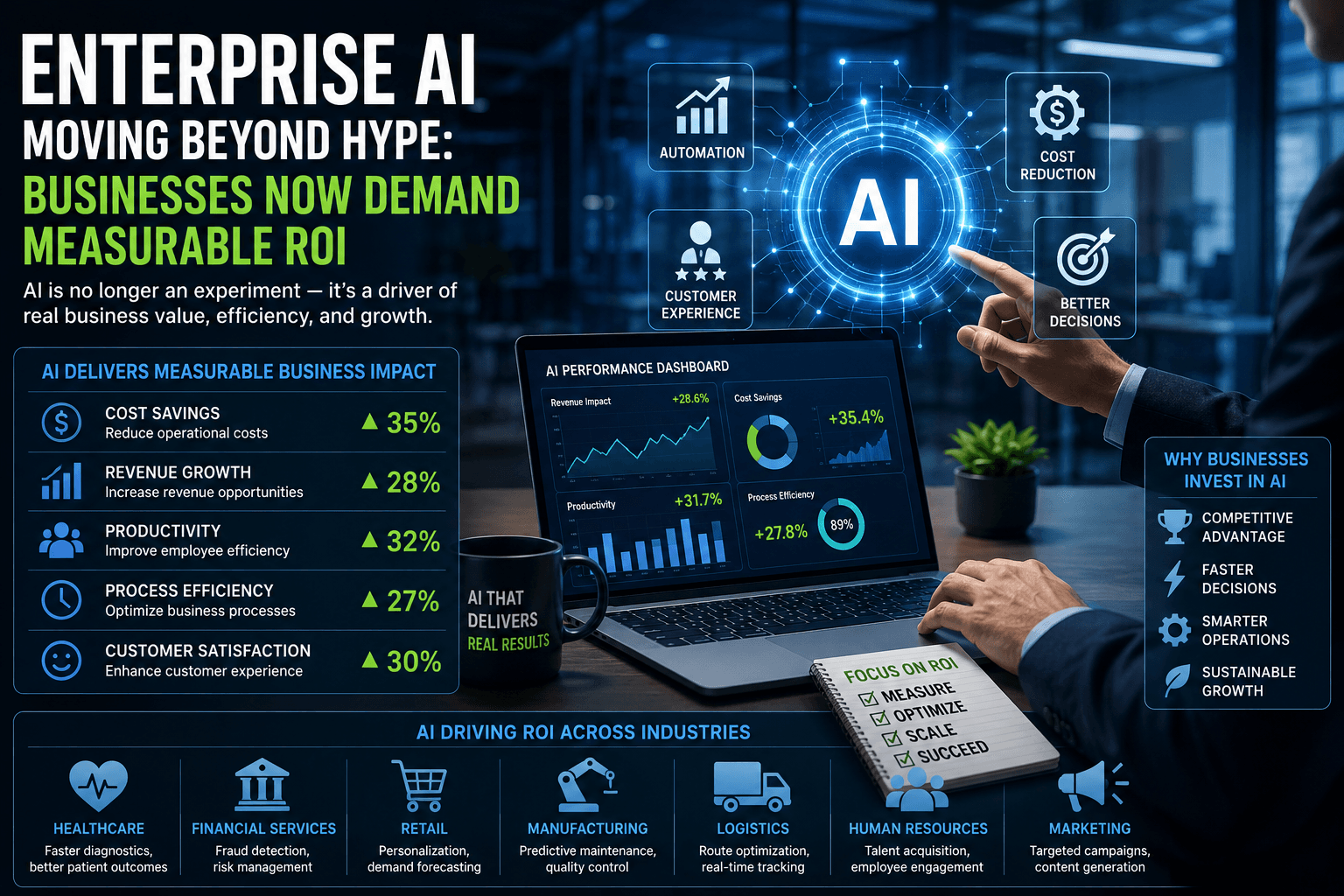
For years, artificial intelligence was surrounded by excitement, ambitious predictions, and experimental projects. Businesses invested heavily in AI to stay ahead of competitors, but many struggled to measure whether those investments generated real business value. In 2026, the conversation has changed dramatically.
Organizations are no longer adopting AI simply because it is the latest technological trend. Instead, executives, investors, and shareholders expect AI initiatives to produce measurable returns on investment (ROI). Every AI deployment is now evaluated based on its ability to reduce costs, increase revenue, improve productivity, or strengthen customer satisfaction.
This shift marks the beginning of a new phase in enterprise AI. Businesses are moving beyond hype and focusing on practical, scalable, and financially beneficial AI solutions that deliver measurable business outcomes.
Why Enterprise AI Is Entering a New Era
Early AI adoption often focused on experimentation. Companies launched pilot projects to explore generative AI, predictive analytics, automation, and machine learning without clear financial objectives.
Today, economic pressures and increased competition have changed priorities. Organizations now require AI projects to support specific business goals, such as:
Lower operational costs
Higher employee productivity
Faster decision-making
Improved customer experiences
Better forecasting
Increased revenue
Enhanced cybersecurity
More efficient supply chains
This results-oriented approach is reshaping enterprise technology strategies worldwide.
Measuring AI Return on Investment
Return on investment has become one of the most important metrics in enterprise AI adoption.
Businesses commonly evaluate AI projects using measurable indicators, including:
Cost savings
Revenue growth
Productivity improvements
Customer retention
Process automation rates
Reduced operational errors
Faster product development
Employee efficiency
Customer satisfaction scores
Profit margin improvements
Organizations unable to demonstrate measurable benefits often reduce or discontinue AI initiatives, while successful projects receive additional investment.
AI Is Transforming Core Business Operations
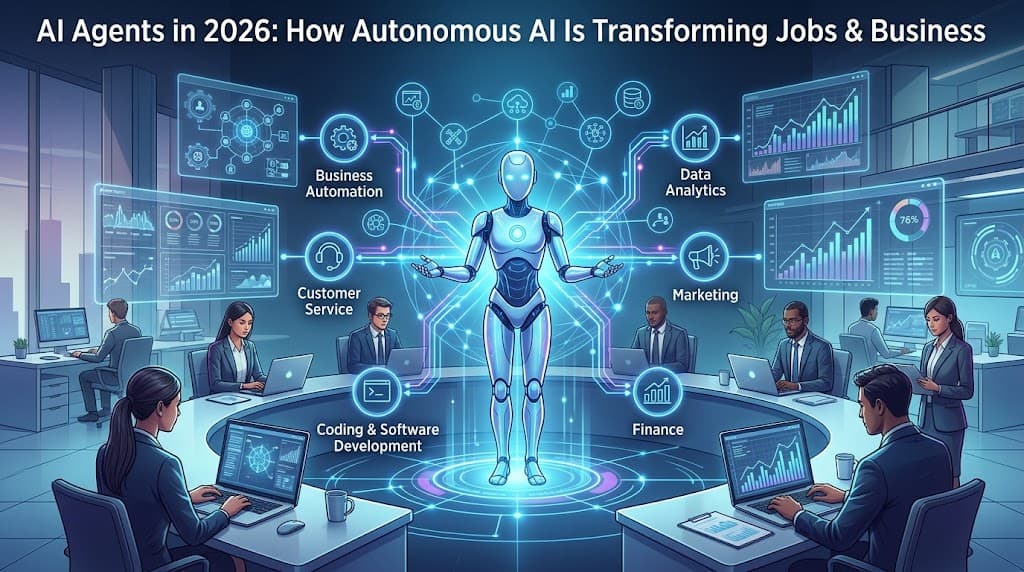
Enterprise AI is no longer limited to research departments. It has become integrated into daily business operations across industries.
Customer Service
AI-powered chatbots and virtual assistants provide faster responses, personalized support, and 24/7 customer service while reducing operational costs.
Finance
Banks and financial institutions use AI for fraud detection, credit analysis, compliance monitoring, and financial forecasting.
Human Resources
AI assists with recruitment, employee onboarding, workforce planning, and talent management by automating repetitive administrative tasks.
Marketing
Businesses use AI to analyze customer behavior, personalize campaigns, generate content, and optimize advertising performance.
Supply Chain Management
AI predicts demand, optimizes inventory, improves logistics, and identifies potential disruptions before they impact operations.
Generative AI Is Delivering Practical Business Value
Generative AI has evolved beyond creating text and images.
Companies now use generative AI to:
Draft business reports
Summarize meetings
Generate software code
Create marketing content
Analyze contracts
Support research
Produce customer documentation
Assist product development
When combined with human oversight, these applications significantly reduce time spent on repetitive knowledge work.
AI Governance Is Becoming Essential
As AI adoption grows, businesses are strengthening governance frameworks to ensure responsible implementation.
Organizations increasingly focus on:
Data privacy
Regulatory compliance
AI transparency
Ethical AI usage
Human oversight
Cybersecurity
Risk management
Model monitoring
Strong governance helps businesses build customer trust while reducing legal and operational risks.
Investors Want Proof, Not Promises
Public companies frequently highlight AI initiatives during earnings reports, but investors now demand evidence that AI investments improve financial performance.
Analysts increasingly ask questions such as:
Has AI reduced operating expenses?
Has productivity improved?
Is revenue growing because of AI?
Are customers spending more?
Has AI increased profit margins?
Companies providing measurable answers often receive stronger market confidence than those relying solely on ambitious AI announcements.
Challenges Businesses Still Face
Despite rapid adoption, enterprise AI implementation remains challenging.
Common obstacles include:
High implementation costs
Integration with legacy systems
Data quality issues
Employee training requirements
Cybersecurity concerns
Regulatory uncertainty
Shortage of AI talent
Measuring long-term ROI
Organizations that successfully address these challenges are better positioned to achieve sustainable growth.
The Future of Enterprise AI
The next phase of enterprise AI will focus less on experimentation and more on optimization. Businesses will increasingly deploy AI solutions that integrate seamlessly into daily workflows while delivering measurable financial value.
Emerging trends include:
AI agents for business automation
Predictive decision-making
Industry-specific AI models
Autonomous business processes
AI-powered cybersecurity
Intelligent financial planning
Personalized customer experiences
Real-time business analytics
As AI technologies mature, companies that consistently measure and improve ROI are expected to gain a lasting competitive advantage.
Conclusion
Enterprise AI has entered a new era where measurable business outcomes matter more than technological hype. Organizations are investing in AI to improve efficiency, reduce costs, increase revenue, and strengthen customer experiences—not simply to keep pace with industry trends.
For investors, executives, and technology leaders, the future belongs to businesses that can demonstrate clear returns from their AI investments. As enterprise AI continues to evolve, measurable ROI will remain the defining benchmark for long-term success.
FAQs: Enterprise AI Is Moving Beyond Hype: Businesses Now Demand Measurable ROI
1. What is Enterprise AI?
Enterprise AI refers to the use of artificial intelligence technologies by organizations to improve business operations, automate workflows, enhance decision-making, and increase productivity across departments.
2. What does AI ROI mean?
AI ROI (Return on Investment) measures the financial and operational value generated from AI initiatives compared to the total cost of implementing and maintaining those solutions.
3. Why are businesses focusing on measurable AI ROI in 2026?
Businesses are prioritizing measurable AI ROI because investors and executives expect AI investments to deliver tangible results such as cost savings, revenue growth, improved efficiency, and higher customer satisfaction.
4. How can companies measure AI ROI?
Organizations measure AI ROI using key performance indicators (KPIs) such as productivity gains, operational cost reductions, revenue increases, process automation rates, customer retention, and employee efficiency.
5. Which industries are benefiting most from Enterprise AI?
Industries including healthcare, financial services, retail, manufacturing, logistics, telecommunications, and professional services are seeing significant benefits from Enterprise AI adoption.
6. How does Enterprise AI improve customer service?
Enterprise AI enables businesses to deploy intelligent chatbots, virtual assistants, personalized recommendations, and predictive customer support, resulting in faster response times and improved customer experiences.
7. What challenges do businesses face when implementing Enterprise AI?
Common challenges include high implementation costs, integration with legacy systems, data privacy concerns, cybersecurity risks, employee training, regulatory compliance, and measuring long-term business value.
8. Why is AI governance important for enterprises?
AI governance helps organizations ensure responsible AI usage by establishing policies for transparency, data protection, ethical decision-making, regulatory compliance, and ongoing model monitoring.
9. How does Generative AI contribute to business ROI?
Generative AI improves ROI by automating content creation, software development, document summarization, customer support, and business reporting, allowing employees to focus on higher-value tasks.
10. What should investors look for in companies adopting Enterprise AI?
Investors should evaluate whether companies have a clear AI strategy, measurable productivity improvements, sustainable revenue growth, responsible AI governance, and a proven ability to generate long-term returns from AI investments.
11. Will Enterprise AI continue to grow beyond 2026?
Yes. Analysts expect Enterprise AI adoption to continue expanding as businesses increasingly rely on AI for automation, predictive analytics, intelligent decision-making, and digital transformation initiatives across all major industries.
12. How does Enterprise AI create a competitive advantage?
Enterprise AI enables businesses to make faster decisions, optimize operations, reduce costs, personalize customer experiences, and innovate more quickly, helping them outperform competitors in rapidly evolving markets.