
Introduction
The global stock market continues to evolve as economic conditions, technological innovation, geopolitical developments, and changing investor behavior reshape financial markets. In 2026, investors face both new opportunities and potential challenges as businesses adapt to digital transformation, central bank policies, and shifting global trade dynamics.
Understanding major stock market trends is essential for making informed investment decisions. While markets naturally experience periods of volatility, recognizing long-term patterns can help investors build resilient portfolios and identify sectors with strong growth potential.
From artificial intelligence and clean energy to healthcare innovation and emerging markets, several themes are influencing investment strategies across the world. Staying informed about these developments can help investors navigate uncertainty while positioning themselves for sustainable long-term growth.
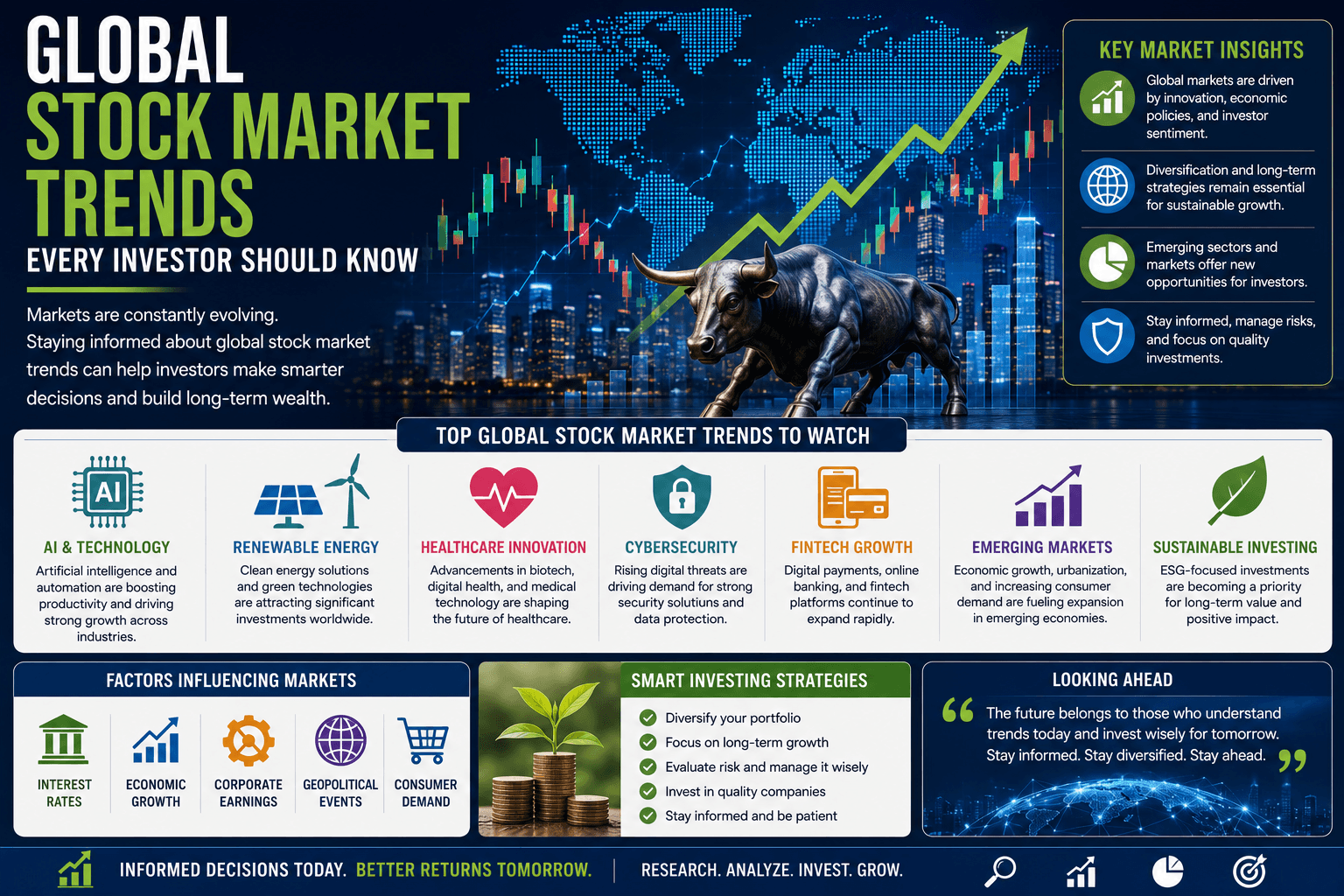
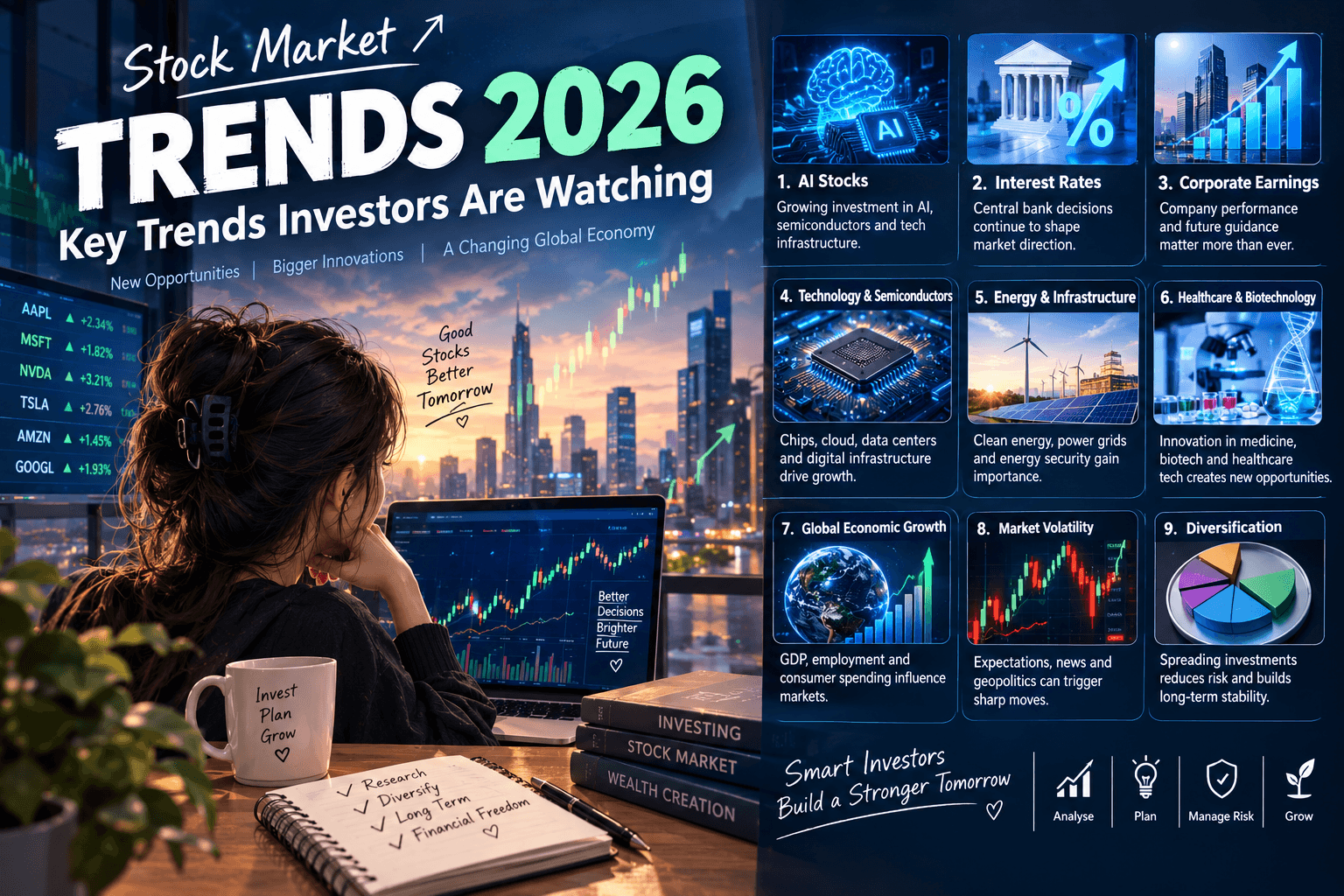
1. Artificial Intelligence Is Driving Market Growth
Artificial intelligence has become one of the most influential forces shaping global equity markets.
Companies developing or adopting AI technologies are experiencing increased investor attention across industries including:
Software
Cloud computing
Healthcare
Manufacturing
Financial services
Retail
AI improves productivity, automates operations, and enhances customer experiences, making technology companies a key focus for long-term investors.
2. Technology Stocks Continue to Lead Innovation
Technology remains one of the strongest-performing sectors in global markets.
Growth areas include:
Cloud computing
Cybersecurity
Semiconductor manufacturing
Enterprise software
Data analytics
Automation
Businesses investing in digital transformation continue creating opportunities for technology providers worldwide.
3. Renewable Energy Gains Momentum
Global efforts to reduce carbon emissions continue supporting investment in renewable energy.
Key sectors include:
Solar energy
Wind power
Battery storage
Electric vehicle infrastructure
Hydrogen technology
Energy efficiency solutions
Government incentives and corporate sustainability initiatives continue driving demand across the clean energy industry.
4. Healthcare Innovation Remains Resilient
Healthcare continues attracting investor interest due to long-term demographic and technological trends.
Promising areas include:
Biotechnology
Medical devices
Digital health
Telemedicine
Artificial intelligence diagnostics
Pharmaceutical innovation
Growing healthcare demand supports continued investment across both developed and emerging markets.
5. Interest Rates Continue Influencing Markets
Central bank decisions remain one of the most important drivers of stock market performance.
Changes in interest rates can influence:
Corporate borrowing costs
Consumer spending
Business investment
Stock valuations
Bond markets
Investors closely monitor monetary policy when evaluating future market conditions.
6. Emerging Markets Offer Long-Term Potential
Many developing economies continue experiencing strong economic expansion supported by:
Urbanization
Population growth
Technology adoption
Infrastructure investment
Rising consumer demand
Although emerging markets may experience greater volatility, they also provide diversification opportunities for long-term investors.
7. Sustainable Investing Continues Growing
Environmental, Social, and Governance (ESG) investing has become increasingly important for institutional and individual investors.
Companies demonstrating strong ESG performance often benefit from:
Improved investor confidence
Better corporate governance
Enhanced brand reputation
Long-term operational resilience
Sustainability is becoming a core consideration in modern investment strategies.
8. Financial Technology Is Reshaping Banking
Digital finance continues transforming traditional financial services.
Growth areas include:
Digital payments
Online banking
Mobile finance
Wealth management platforms
Digital lending
Financial software
Fintech companies continue attracting investment as consumers increasingly adopt digital financial services.
9. Diversification Remains Essential
Experienced investors understand that diversification reduces portfolio risk.
A balanced portfolio may include exposure to:
Technology
Healthcare
Financial services
Consumer goods
Industrial companies
Renewable energy
International markets
Diversification helps reduce the impact of volatility affecting individual sectors.
10. Long-Term Investing Outperforms Short-Term Speculation
Market fluctuations are normal.
Successful investors generally focus on:
Business fundamentals
Revenue growth
Competitive advantages
Financial strength
Long-term industry trends
Rather than reacting to short-term price movements, disciplined investors prioritize sustainable value creation.
Risks Investors Should Monitor
Despite positive opportunities, several risks continue influencing global markets.
These include:
Inflation
Geopolitical tensions
Supply chain disruptions
Regulatory changes
Currency fluctuations
Economic slowdowns
Regular portfolio reviews and sound risk management help investors navigate changing market conditions.
Future Outlook
Global stock markets are expected to remain influenced by innovation, digital transformation, demographic changes, and sustainability initiatives. Artificial intelligence, cloud computing, cybersecurity, healthcare technology, renewable energy, and digital finance are likely to remain among the most closely watched sectors.
While short-term volatility will continue, businesses with strong fundamentals, innovative products, and effective leadership are expected to remain attractive to long-term investors.
Conclusion
The global stock market in 2026 presents a dynamic mix of opportunities and challenges. Technological innovation, sustainability, healthcare advances, and digital finance continue creating new investment possibilities, while economic conditions and monetary policy require careful monitoring.
Investors who maintain diversified portfolios, focus on long-term trends, and base decisions on sound research rather than market speculation are generally better positioned to achieve sustainable financial growth. By understanding these global stock market trends, investors can make informed decisions and adapt confidently to an ever-changing financial landscape.
FAQs
1. What is the outlook for global stock markets?
While short-term fluctuations are expected, long-term market growth is generally supported by innovation, economic expansion, technological advancement, and increasing global investment opportunities.
2. Why should investors follow global stock market trends?
Monitoring market trends helps investors make informed decisions, identify opportunities, manage risks, and build stronger investment portfolios.
3. What factors influence stock market performance?
Interest rates, inflation, corporate earnings, government policies, economic growth, geopolitical events, and investor sentiment all affect stock market performance.
4. How do interest rates impact the stock market?
Higher interest rates can reduce corporate profits and investor spending, while lower rates often encourage business growth and stock market investment.
5. What is market volatility?
Market volatility refers to the rate at which stock prices rise or fall over a specific period due to economic or market events.
6. How does inflation affect stock prices?
High inflation can increase business costs and reduce consumer spending, which may negatively impact company earnings and stock valuations.
7. Is long-term investing better than short-term trading?
Long-term investing generally reduces the impact of short-term market fluctuations and allows investments to grow over time through compounding.
8. What sectors are expected to grow in the future?
Technology, artificial intelligence, renewable energy, healthcare, cybersecurity, cloud computing, and financial technology remain among the fastest-growing sectors.
9. How important is portfolio diversification?
Diversification helps reduce investment risk by spreading investments across different industries, asset classes, and geographic regions.
10. What is a bull market?
A bull market is a prolonged period during which stock prices consistently rise and investor confidence remains strong.
11. What is a bear market?
A bear market occurs when stock prices decline by 20% or more from recent highs, often accompanied by economic uncertainty.
12. How do company earnings affect stock prices?
Strong earnings reports often increase investor confidence and share prices, while disappointing earnings may lead to price declines.
13. What role does artificial intelligence play in investing?
AI helps investors analyse market data, identify trends, automate trading strategies, and improve portfolio management.
14. Are emerging markets good investment opportunities?
Emerging markets may offer higher growth potential but also carry greater economic and political risks than developed markets.
15. How can beginners start investing in the stock market?
Beginners should learn investment basics, define financial goals, diversify their portfolios, and invest consistently for long-term growth.
16. What is dividend investing?
Dividend investing focuses on companies that regularly distribute a portion of their profits to shareholders as dividends.
17. How often should investors review their portfolios?
Most financial experts recommend reviewing investment portfolios every three to six months or after significant market changes.
18. What are the biggest risks in stock market investing?
Market volatility, inflation, interest rate changes, economic recessions, geopolitical events, and company-specific risks are among the most common investment risks.
19. Can global events affect local stock markets?
Yes. International conflicts, trade policies, economic crises, and major political events often influence stock markets worldwide.
20. What are global stock market trends?
Global stock market trends refer to the overall direction and performance of stock markets worldwide, influenced by economic, political, and financial factors. What are global stock market trends?