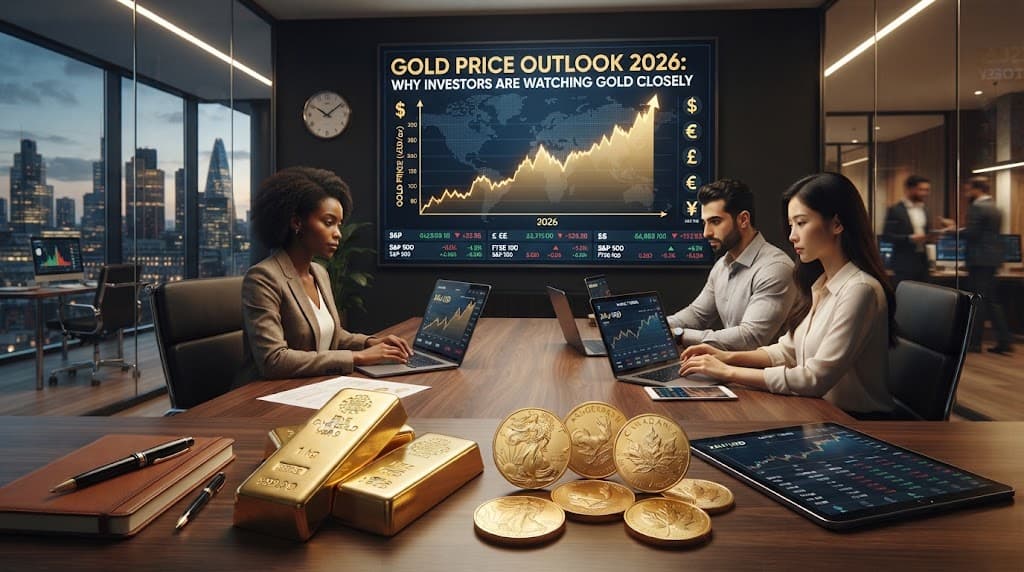
Gold has remained one of the world's most closely watched financial assets. In 2026, investors, central banks, savers, and consumers continue to pay attention to gold because its price can respond to inflation expectations, interest rates, currency movements, geopolitical uncertainty, and changes in investment demand.
While gold is often described as a safe-haven asset, its price does not move in only one direction. Understanding the factors that influence gold can help readers better interpret market developments.
Why Is Gold Important in 2026?
Gold has several roles in the global financial system. It is used in jewelry and industry, held by central banks as part of their reserves, and traded by investors through physical products and financial instruments.
Its limited supply and long history as a store of value also contribute to its appeal.
What Drives the Price of Gold?
Several major factors can influence gold prices:
Interest rates
Inflation expectations
U.S. dollar movements
Central-bank purchases
Investor demand
Geopolitical developments
Global economic conditions
Gold mine production and supply
These factors can interact with one another, making short-term gold-price movements difficult to predict.
Gold and Interest Rates
Interest rates are particularly important for gold investors.
Gold does not pay interest or dividends. When interest rates and bond yields rise, some investors may find interest-bearing assets relatively more attractive.
When rates or real yields decline, the opportunity cost of holding gold can decrease, potentially supporting demand.
However, the relationship isn't perfectly consistent because gold is influenced by many other factors.
How Inflation Can Affect Gold
Gold is frequently viewed as an inflation hedge because its purchasing power has historically behaved differently from cash during some inflationary periods.
However, gold does not automatically rise whenever inflation increases.
Investor expectations, interest rates, currency movements, economic growth, and market sentiment can all influence whether gold prices rise or fall during an inflationary period.
The Role of the U.S. Dollar
Gold is commonly priced internationally in U.S. dollars.
Changes in the value of the dollar can therefore influence gold markets. A stronger dollar can make dollar-denominated gold more expensive for holders of other currencies, while a weaker dollar can have the opposite effect.
The relationship is not absolute, but currency movements remain an important factor for gold investors.
Central Banks and Gold
Central banks are important participants in the global gold market.
Some central banks hold gold as part of their foreign-exchange reserves. Changes in official-sector gold purchases can influence market demand and investor sentiment.
Central-bank activity is therefore one of the areas investors monitor when analyzing the gold market.
Geopolitical Uncertainty and Gold
Periods of geopolitical tension can increase demand for assets that investors perceive as defensive or safe-haven holdings.
Gold can attract attention during periods of uncertainty, although geopolitical events can also produce complicated market reactions.
Gold prices can respond quickly when investors reassess economic and financial risks.
Gold as a Portfolio Diversifier
Some investors include gold as part of a diversified portfolio.
The reasoning is that gold may behave differently from stocks and bonds under certain market conditions.
However, diversification does not eliminate investment risk. Gold can experience substantial price fluctuations and may underperform other assets for extended periods.
Physical Gold vs. Gold Investments
Investors can gain exposure to gold in several ways.
Physical Gold
This includes:
Gold bars
Gold coins
Jewelry
Physical gold requires secure storage and may involve premiums, dealer spreads, insurance, and transaction costs.
Gold ETFs and Similar Products
Exchange-traded products can provide exposure to gold prices without requiring investors to store physical metal themselves.
Fees, structure, and tracking differences should be considered before investing.
Gold-Mining Companies
Another option is investing in companies that produce gold.
Mining stocks are not the same as physical gold. Their performance can also depend on production costs, management, debt, operational risks, and broader stock-market conditions.
Gold Prices and Consumer Jewelry
Gold prices also matter to consumers.
When gold prices rise, jewelry can become more expensive, particularly in markets where gold is widely used for weddings, gifts, and cultural traditions.
Consumers may respond by buying smaller quantities, choosing lower-purity products, or postponing purchases.
Is Gold a Good Inflation Hedge?
Gold can play a role as a long-term store-of-value asset, but calling it a guaranteed inflation hedge would be misleading.
Its performance against inflation varies across different periods.
Investors should consider their investment horizon and broader portfolio rather than relying on gold alone to protect against rising prices.
What Should Gold Investors Watch in 2026?
Anyone following gold prices should monitor:
Global interest-rate expectations
Inflation data
U.S. dollar movements
Central-bank gold purchases
Global economic growth
Geopolitical developments
ETF and investment demand
Gold production and supply
These indicators can provide useful context when interpreting gold-market movements.
Gold in the Global Economy
Gold occupies a unique position because it is simultaneously a commodity, financial asset, reserve asset, and consumer product.
This combination means gold prices can respond to developments across several parts of the global economy.
How Investors Can Approach Gold
Investors considering gold should first understand why they want exposure to it.
Possible objectives include portfolio diversification, long-term wealth preservation, or exposure to precious metals.
Before investing, it is important to consider costs, liquidity, risk tolerance, investment horizon, and the role gold would play within an overall portfolio.
Conclusion
Gold remains an important asset to watch in 2026 because its price is connected to interest rates, inflation expectations, currencies, central-bank activity, investor demand, and global economic conditions.
Rather than assuming gold will always rise during periods of uncertainty, investors can examine the underlying factors driving the market.
Understanding these forces can provide a clearer framework for following gold prices and evaluating the role of precious metals within a diversified financial strategy.
Frequently Asked Questions
1. Why is gold important in 2026?
Gold remains important because it is used as a reserve asset, investment, commodity, and store of value.
2. What affects gold prices?
Interest rates, inflation expectations, the U.S. dollar, central-bank purchases, investor demand, geopolitical events, and supply can all influence gold prices.
3. Does inflation always increase gold prices?
No. Gold can respond differently depending on interest rates, real yields, currency movements, investor expectations, and other economic conditions.
4. How do interest rates affect gold?
Higher interest rates can increase the opportunity cost of holding an asset that does not pay interest, while lower rates can sometimes make gold relatively more attractive.
5. Does the U.S. dollar affect gold prices?
Yes. Because gold is internationally priced in U.S. dollars, currency movements can influence its price and affordability for international buyers.
6. Why do central banks buy gold?
Central banks may hold gold as part of their reserves and as a way of diversifying reserve assets.
7. Is physical gold a good investment?
Physical gold can provide direct ownership of the metal, but investors should consider storage, insurance, premiums, transaction costs, and liquidity.
8. What is a gold ETF?
A gold exchange-traded fund or similar product can provide investors with exposure to gold prices through a financial-market instrument rather than physical ownership.
9. Are gold-mining stocks the same as gold?
No. Mining companies can be affected by gold prices as well as operating costs, debt, production levels, management decisions, and stock-market conditions.
10. Is gold considered a safe-haven asset?
Gold is often viewed as a safe-haven asset, particularly during some periods of financial or geopolitical uncertainty. However, its price can still decline.
11. Can gold prices fall?
Yes. Gold prices can decline when market conditions change, including periods of stronger real yields, changing investor demand, or a stronger U.S. dollar.
12. Does gold pay interest?
Physical gold does not generate interest or dividends.
13. Why do people buy gold jewelry when prices are high?
Gold jewelry can have cultural, personal, and investment value. Demand therefore does not depend solely on investment considerations.
14. What is the difference between gold bars and gold coins?
Both can provide physical gold exposure, but they can differ in premiums, sizes, liquidity, design, and resale conditions.
15. Is gold a good portfolio diversifier?
Gold may provide diversification because its price movements can differ from those of some traditional assets, although diversification does not remove investment risk.
16. What should gold investors watch in 2026?
Interest rates, inflation, real yields, dollar movements, central-bank purchases, geopolitical developments, and investment demand are key areas to monitor.
17. Can geopolitical events affect gold?
Yes. Geopolitical uncertainty can change investor demand for assets perceived as defensive, including gold.
18. Why is gold priced in U.S. dollars?
The international gold market commonly uses U.S. dollars as its pricing currency, making dollar movements an important factor in global gold markets.
19. Is gold suitable for every investor?
No single asset is suitable for everyone. Investors should consider their goals, risk tolerance, time horizon, liquidity needs, and overall financial situation.
20. What is the main risk of investing in gold?
Gold prices can be volatile, and investors may experience losses if the market price falls. Physical gold can also involve storage and transaction costs.