PFPersonal Finance in 2026: Smart Ways to Save Money & Build Wealth
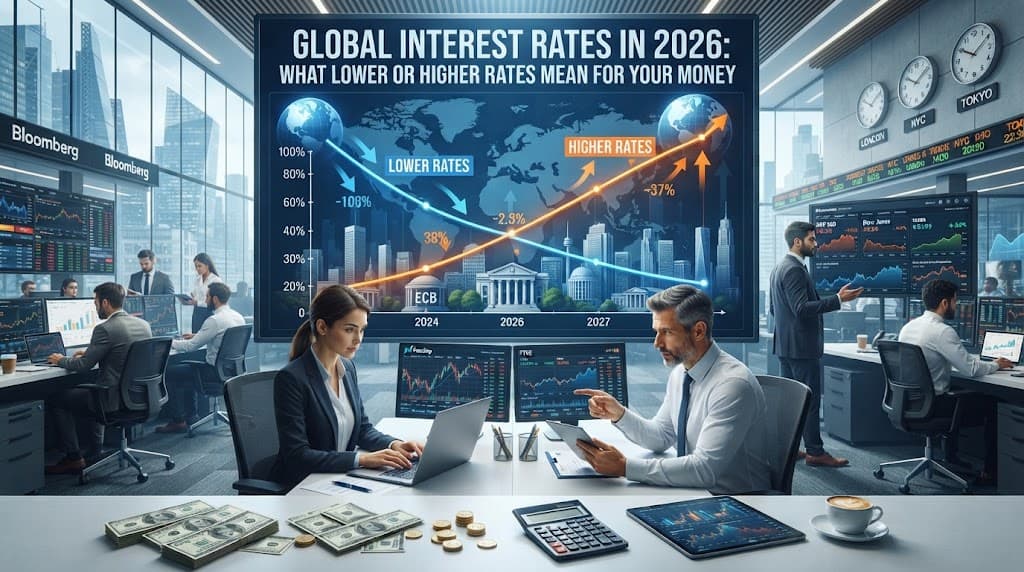
Interest rates remain one of the most important forces shaping the global economy. In 2026, changes in interest-rate policies can affect everything from bank savings and mortgages to business borrowing, currencies, bonds, and stock markets.
For households and investors, understanding how interest rates work can make it easier to understand changes in borrowing costs, savings returns, and investment markets.
What Are Interest Rates?
An interest rate is essentially the cost of borrowing money or the return earned for lending or saving money.
Central banks use policy interest rates as an important tool for influencing economic activity. When rates rise, borrowing generally becomes more expensive. When rates fall, borrowing can become cheaper, although the actual rates offered by banks and lenders depend on many factors.
Why Are Interest Rates Important in 2026?
Interest-rate decisions can influence several areas of the economy at the same time.
They can affect:
Mortgage and housing costs
Personal and business loans
Savings-account returns
Bond prices and yields
Currency values
Stock-market valuations
Consumer spending
Business investment
Inflation
Because these effects are interconnected, even a small change in monetary policy can receive significant attention from financial markets.
What Happens When Interest Rates Fall?
Lower interest rates can reduce borrowing costs for consumers and businesses.
Potential effects include:
Cheaper Borrowing
Loans with variable or newly negotiated interest rates may become less expensive, depending on the lender and market conditions.
More Consumer Spending
Lower borrowing costs can encourage households to spend or make large purchases.
Greater Business Investment
Companies may find financing expansion, equipment purchases, or new projects more affordable.
Pressure on Savings Returns
When market interest rates decline, newly issued savings products and deposits may offer lower returns.
What Happens When Interest Rates Rise?
Higher rates can have the opposite effect.
Borrowing becomes more expensive, which can reduce demand for loans and discourage some consumer and business spending.
At the same time, savers may benefit from higher yields on certain deposits and fixed-income products.
How Interest Rates Affect Stock Markets
Interest rates can influence stock valuations because investors compare potential returns across different assets.
When rates rise, bonds and other interest-bearing investments may become relatively more attractive. Higher borrowing costs can also increase expenses for companies.
However, the relationship isn't automatic. Stock-market performance depends on earnings, economic growth, inflation expectations, investor sentiment, and many other factors.
How Interest Rates Affect Bonds
Bond prices and market interest rates generally move in opposite directions.
When market rates rise, existing bonds with lower fixed coupon rates can become less attractive, causing their market prices to fall.
When market rates decline, existing bonds with higher fixed coupon rates can become more attractive, potentially supporting their market prices.
Interest Rates and Inflation
Central banks often use interest rates as part of their efforts to maintain price stability.
Higher interest rates can reduce demand by making borrowing more expensive. Lower demand can, over time, reduce inflationary pressure.
However, inflation can also be influenced by factors such as energy prices, food costs, supply disruptions, wages, exchange rates, and geopolitical developments.
What Lower Rates Could Mean for Households
If rates decline, households may experience different effects depending on their financial situation.
Borrowers with variable-rate debt could potentially see lower interest costs, while people relying heavily on interest income from savings may receive lower returns.
The impact therefore differs between borrowers and savers.
What Higher Rates Could Mean for Households
Higher rates can increase financing costs, particularly for variable-rate loans.
On the other hand, savers may receive better returns on some deposits and fixed-income investments.
The overall effect depends on how much a household owes, how much it has saved, and what types of financial products it uses.
How Businesses Respond to Interest-Rate Changes
Companies constantly consider financing costs when making investment decisions.
Higher rates can make expansion projects more expensive to finance. Businesses with significant debt may also face higher interest expenses.
Lower rates can reduce financing costs and potentially make investment projects more attractive.
What Should Investors Watch in 2026?
Investors following interest rates should pay attention to:
Central-bank policy announcements
Inflation data
Employment reports
Economic-growth figures
Bond-market yields
Currency movements
Consumer spending
Corporate earnings
Looking at several indicators together can provide more context than focusing on a single interest-rate announcement.
How Interest Rates Can Affect Currencies
Interest-rate differences between countries can influence currency markets.
If investors expect one country's assets to offer relatively higher interest rates, demand for that country's currency can sometimes increase. However, currency movements are also affected by economic growth, trade, political developments, capital flows, and market expectations.
Smart Financial Planning in a Changing Rate Environment
Rather than trying to predict every central-bank decision, households can focus on managing their own financial position.
Useful steps may include:
Reviewing high-interest debt.
Maintaining an emergency fund.
Comparing savings rates.
Understanding whether loans have fixed or variable rates.
Diversifying investments according to personal circumstances.
Reviewing long-term financial goals regularly.
Conclusion
Interest rates are a major driver of financial conditions in 2026. Changes in monetary policy can influence borrowing, savings, investments, currencies, businesses, and consumer spending.
The effects aren't identical for everyone. Borrowers, savers, investors, homeowners, and businesses can experience the same rate change in very different ways.
Understanding these relationships can help people make more informed financial decisions while avoiding decisions based solely on short-term market movements.
Frequently Asked Questions
1. What are interest rates?
Interest rates represent the cost of borrowing money or the return earned from lending or saving money.
2. Why do central banks change interest rates?
Central banks adjust policy rates to influence economic conditions, particularly inflation, employment, and overall demand.
3. What happens when interest rates fall?
Lower rates can reduce borrowing costs and potentially encourage spending and investment, while returns on some savings products may decline.
4. What happens when interest rates rise?
Higher rates can increase borrowing costs and potentially reduce demand, while some savings and fixed-income products may offer higher yields.
5. How do interest rates affect mortgages?
Higher rates can increase payments on variable-rate mortgages and can make new borrowing more expensive. The exact effect depends on the mortgage structure.
6. Do lower interest rates always help the stock market?
Not necessarily. Stock prices are influenced by many factors, including company earnings, economic growth, inflation, and investor expectations.
7. How do interest rates affect bonds?
Rising market rates generally put downward pressure on the prices of existing fixed-rate bonds, while falling rates can support their prices.
8. Can interest rates affect inflation?
Yes. Higher rates can reduce borrowing and spending, which may help reduce inflationary pressure over time.
9. Do higher interest rates benefit savers?
They can. Some savings accounts and fixed-income products may offer higher returns when market interest rates increase.
10. Why are investors watching interest rates in 2026?
Interest rates influence borrowing costs, corporate finances, bond yields, currencies, and asset valuations, making them important for financial markets.
11. How do interest rates affect businesses?
Higher rates can increase financing costs, while lower rates can make borrowing for expansion and investment less expensive.
12. Can interest rates affect currency values?
Yes. Interest-rate expectations can influence international capital flows and currency demand, although currencies are affected by many other factors as well.
13. What is a central-bank policy rate?
It is a benchmark interest rate set by a central bank that helps influence broader financial conditions and market interest rates.
14. How do interest rates affect consumer spending?
Higher borrowing costs can discourage some spending, while lower borrowing costs can make financing purchases more affordable.
15. Should investors change their portfolio whenever rates change?
Not necessarily. Investment decisions should consider individual goals, risk tolerance, time horizon, and overall financial circumstances rather than one economic indicator.
16. Are interest rates the same in every country?
No. Each country's central bank sets monetary policy according to its own economic conditions and objectives.
17. What financial data should people watch in 2026?
Inflation, employment, economic growth, central-bank announcements, bond yields, and consumer spending are among the key indicators.
18. Can interest rates affect housing markets?
Yes. Mortgage affordability and financing costs can influence housing demand, although property markets also depend on supply, income, demographics, and local conditions.
19. How can borrowers prepare for changing interest rates?
Borrowers can review their loan terms, understand whether their rate is fixed or variable, compare refinancing options where appropriate, and maintain manageable debt levels.
20. What is the biggest lesson about interest rates?
Interest-rate changes affect different people differently. Understanding your own exposure to borrowing, saving, and investing is more useful than assuming every rate change has the same effect on everyone.