GSGlobal Stock Market Outlook 2026: Key Trends, Risks & What Investors Should Watch
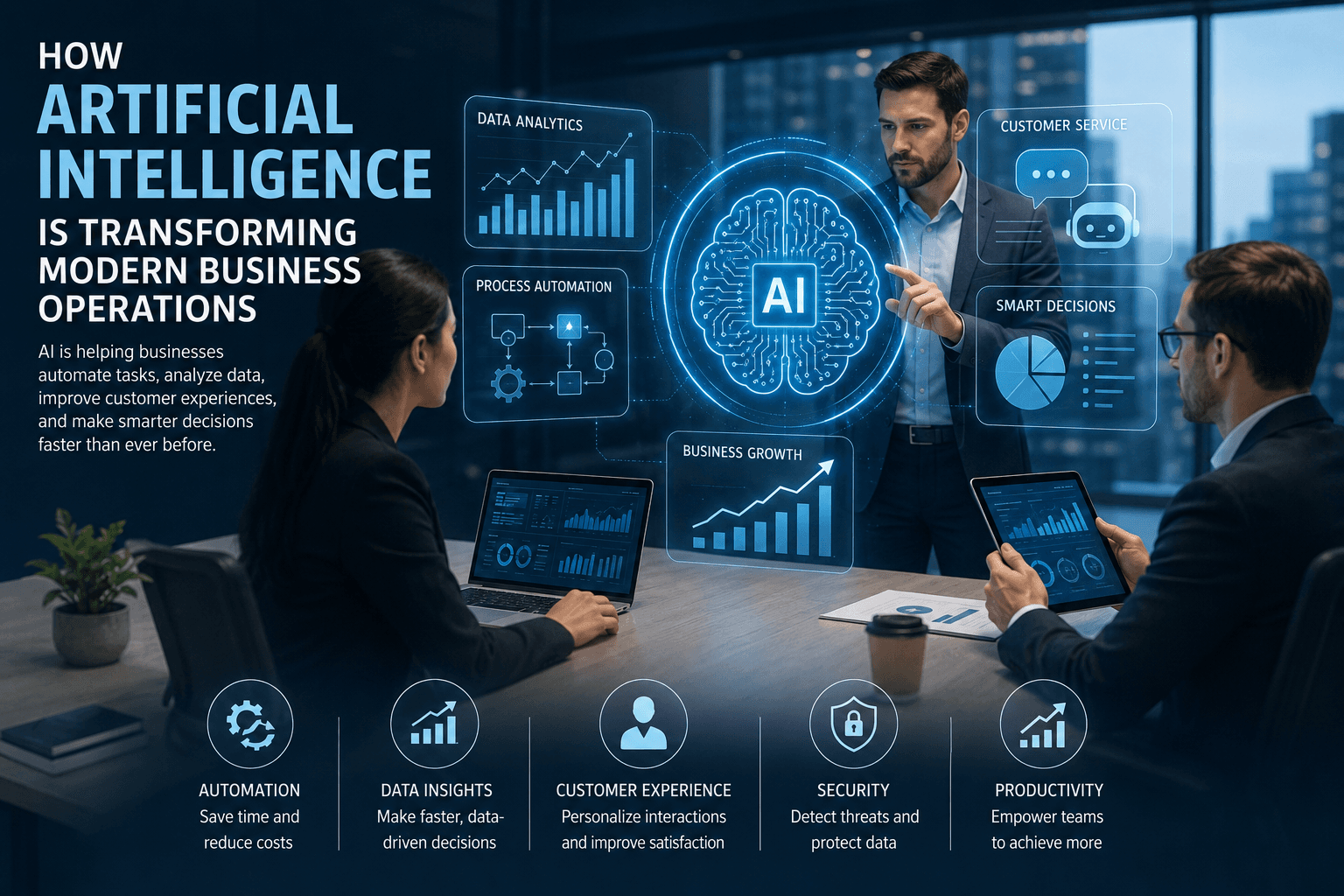
Artificial intelligence (AI) has become one of the most influential technologies shaping the modern business world. Once considered a futuristic concept, AI is now an essential part of daily operations across industries. From automating repetitive tasks to providing real-time business insights, artificial intelligence helps organisations increase efficiency, improve customer experiences, and make smarter decisions.
Businesses of every size—from startups to multinational corporations—are investing in AI to remain competitive. As technology continues to evolve, companies that embrace AI are discovering new opportunities for growth, innovation, and long-term success.
What Is Artificial Intelligence?
Artificial intelligence refers to computer systems capable of performing tasks that typically require human intelligence. These tasks include learning from data, recognising patterns, understanding language, making predictions, and solving problems.
Modern AI technologies include:
Machine learning
Natural language processing (NLP)
Computer vision
Predictive analytics
Generative AI
Robotic process automation (RPA)
Together, these technologies help businesses automate workflows while enhancing productivity and decision-making.
Why Businesses Are Investing in AI
The increasing availability of cloud computing, big data, and affordable AI tools has made artificial intelligence accessible to organisations of all sizes.
Businesses invest in AI because it can:
Reduce operational costs
Improve employee productivity
Deliver personalised customer experiences
Analyse large amounts of data quickly
Increase operational efficiency
Minimise human error
Support better strategic planning
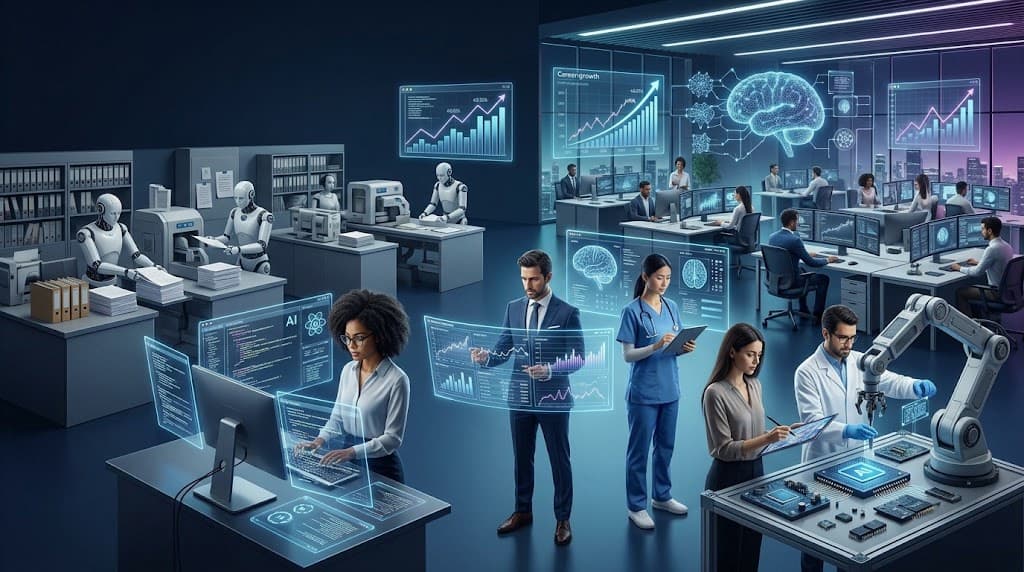
Rather than replacing employees, AI often complements human expertise by handling repetitive tasks and allowing teams to focus on creative and strategic work.
AI Improves Business Decision-Making
One of AI's greatest strengths is its ability to analyse enormous volumes of information within seconds.
Traditional business reporting often relies on historical data. AI goes further by identifying trends, predicting future outcomes, and recommending actions before problems arise.
Businesses use AI for:
Sales forecasting
Inventory planning
Financial analysis
Customer behaviour prediction
Market trend identification
Risk assessment
Executives can make faster and more informed decisions based on accurate, real-time insights instead of assumptions.
Automating Routine Business Processes
Automation has become one of the most valuable applications of artificial intelligence.
Many organisations spend thousands of hours every year on repetitive administrative tasks. AI-powered automation reduces manual effort while improving consistency.
Common automated tasks include:
Invoice processing
Payroll management
Email responses
Data entry
Appointment scheduling
Document classification
Compliance monitoring
This allows employees to dedicate more time to innovation, customer engagement, and business development.
Transforming Customer Service
Customer expectations continue to rise, and businesses must provide fast, accurate support across multiple channels.
AI-powered customer service tools now include:
Intelligent chatbots
Virtual assistants
Voice AI
Automated ticket routing
Sentiment analysis
These technologies answer customer questions 24/7, reduce waiting times, and improve overall satisfaction.
Human agents remain essential for complex situations, but AI helps resolve routine enquiries quickly and efficiently.
Personalising Customer Experiences
Consumers increasingly expect personalised interactions from businesses.
Artificial intelligence analyses browsing history, purchasing behaviour, demographics, and customer preferences to recommend products, services, and content tailored to individual users.
Examples include:
Personalised product recommendations
Targeted email campaigns
Dynamic website content
Custom pricing strategies
Individual marketing offers
Personalisation increases customer engagement, loyalty, and conversion rates while strengthening long-term relationships.
AI in Marketing
Marketing has become significantly more data-driven with artificial intelligence.
AI tools help marketers:
Identify target audiences
Generate marketing content
Optimise advertising campaigns
Predict customer behaviour
Analyse campaign performance
Improve SEO strategies
Businesses can now create highly targeted campaigns while reducing marketing costs and improving return on investment.
AI also enables continuous optimisation by learning which messages perform best across different customer segments.
Smarter Financial Management
Finance departments increasingly rely on AI for faster and more accurate analysis.
AI assists with:
Fraud detection
Budget forecasting
Expense management
Cash flow prediction
Financial reporting
Credit risk analysis
Financial institutions use machine learning to identify suspicious transactions within milliseconds, improving security while reducing fraud losses.
Strengthening Cybersecurity
Cyber threats continue to evolve, making traditional security systems insufficient for many organisations.
AI strengthens cybersecurity by:
Detecting unusual network activity
Identifying malware
Preventing phishing attacks
Monitoring user behaviour
Responding to threats automatically
Rather than waiting for security teams to discover attacks manually, AI continuously monitors systems and alerts organisations in real time.
Improving Human Resources
Human resource departments are also benefiting from AI technologies.
AI supports HR by:
Screening job applications
Matching candidates with roles
Scheduling interviews
Analysing employee engagement
Predicting staff turnover
Supporting workforce planning
These capabilities reduce administrative workloads while helping organisations recruit and retain top talent more effectively.
AI in Supply Chain Management
Supply chains have become increasingly complex due to global markets and changing customer demand.
Artificial intelligence helps businesses:
Forecast demand
Optimise inventory
Improve logistics
Reduce delivery delays
Monitor suppliers
Predict equipment failures
With predictive analytics, businesses can respond more quickly to disruptions while reducing operational costs.
Challenges of AI Adoption
Although AI offers significant benefits, successful implementation requires careful planning.
Common challenges include:
Data privacy concerns
High implementation costs
Employee training requirements
Integration with existing systems
Ethical considerations
AI bias
Regulatory compliance
Businesses should develop clear AI governance policies and ensure transparency when deploying AI systems.
Best Practices for Implementing AI
To maximise success, organisations should:
Define clear business objectives.
Start with small AI projects.
Ensure high-quality data.
Train employees effectively.
Measure performance regularly.
Protect customer data.
Monitor AI outcomes continuously.
Update AI models as business needs evolve.
Successful AI implementation is an ongoing process rather than a one-time project.
The Future of AI in Business
Artificial intelligence will continue transforming industries over the coming years.
Emerging trends include:
Autonomous business workflows
AI-powered business assistants
Advanced predictive analytics
Hyper-personalised customer experiences
Industry-specific AI platforms
Responsible AI governance
Collaborative human-AI workplaces
Businesses that embrace innovation while maintaining ethical standards will be better positioned for sustainable growth.
Conclusion
Artificial intelligence is no longer a luxury reserved for large enterprises. It has become a practical business tool that improves efficiency, supports smarter decision-making, enhances customer experiences, and drives innovation across every industry.
While challenges such as privacy, governance, and workforce adaptation remain important, the long-term benefits of AI far outweigh the obstacles when implemented responsibly.
As technology continues to advance, organisations that integrate AI into their operations will be better equipped to compete in an increasingly digital economy. The future of business belongs to companies that combine human creativity with intelligent technology to deliver greater value for customers, employees, and stakeholders.
FAQs
1. What is artificial intelligence in business?
Artificial intelligence in business refers to using AI technologies to automate tasks, analyse data, improve decision-making, and enhance customer experiences.
2. How does AI improve business operations?
AI improves operations by automating repetitive tasks, providing predictive insights, reducing errors, and increasing efficiency.
3. Which industries use AI the most?
Healthcare, finance, retail, manufacturing, logistics, marketing, and customer service are among the leading adopters of AI.
4. Can small businesses benefit from AI?
Yes. Affordable cloud-based AI tools enable small businesses to improve productivity, customer service, and marketing without large investments.
5. Will AI replace human workers?
AI is more likely to automate repetitive tasks while allowing employees to focus on creative, strategic, and relationship-based work.
6. What are the biggest benefits of artificial intelligence for businesses?
Artificial intelligence helps businesses increase productivity, reduce operational costs, improve customer service, automate repetitive tasks, and make data-driven decisions faster and more accurately.
7. Is artificial intelligence expensive to implement?
The cost of AI implementation depends on the business's size and requirements. Many cloud-based AI tools offer affordable subscription plans, making AI accessible even for small and medium-sized businesses.
8. How does AI improve customer experience?
AI enhances customer experience by providing personalised recommendations, offering 24/7 chatbot support, analysing customer feedback, and delivering faster, more accurate responses to enquiries.
9. What challenges should businesses consider before adopting AI?
Businesses should consider data privacy, cybersecurity, employee training, integration with existing systems, implementation costs, and ethical AI practices before deploying AI solutions.
10. What is the future of artificial intelligence in business?
The future of AI includes more intelligent automation, predictive analytics, autonomous workflows, AI-powered assistants, personalised customer experiences, and stronger collaboration between humans and AI to improve business performance.Here are 5 additional SEO-friendly FAQs for your article:
6. What are the biggest benefits of artificial intelligence for businesses?
Artificial intelligence helps businesses increase productivity, reduce operational costs, improve customer service, automate repetitive tasks, and make data-driven decisions faster and more accurately.
7. Is artificial intelligence expensive to implement?
The cost of AI implementation depends on the business's size and requirements. Many cloud-based AI tools offer affordable subscription plans, making AI accessible even for small and medium-sized businesses.
8. How does AI improve customer experience?
AI enhances customer experience by providing personalised recommendations, offering 24/7 chatbot support, analysing customer feedback, and delivering faster, more accurate responses to enquiries.
9. What challenges should businesses consider before adopting AI?
Businesses should consider data privacy, cybersecurity, employee training, integration with existing systems, implementation costs, and ethical AI practices before deploying AI solutions.
10. What is the future of artificial intelligence in business?
The future of AI includes more intelligent automation, predictive analytics, autonomous workflows, AI-powered assistants, personalised customer experiences, and stronger collaboration between humans and AI to improve business performance.