GSGlobal Stock Market Outlook 2026: Key Trends, Risks & What Investors Should Watch
Introduction
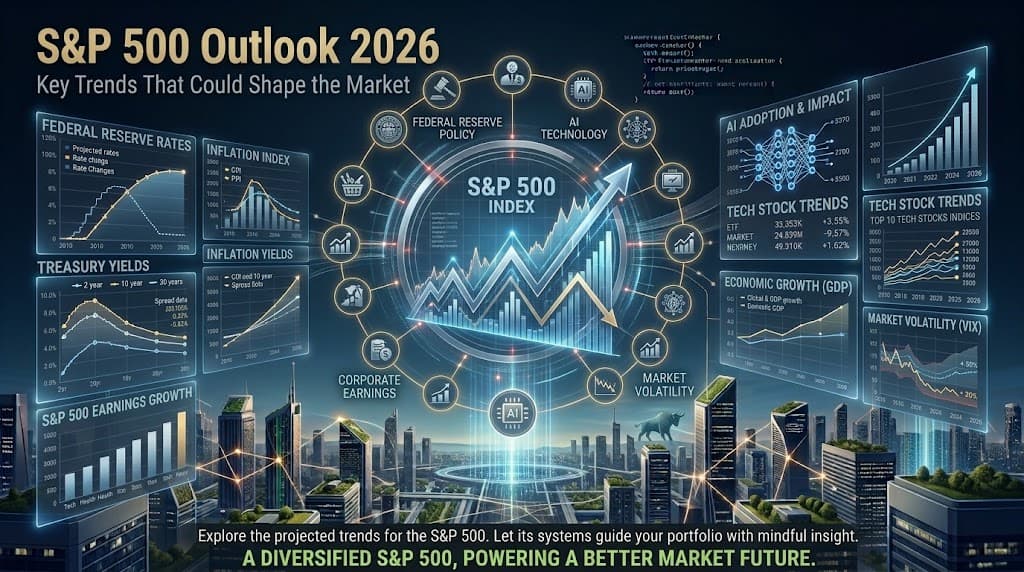
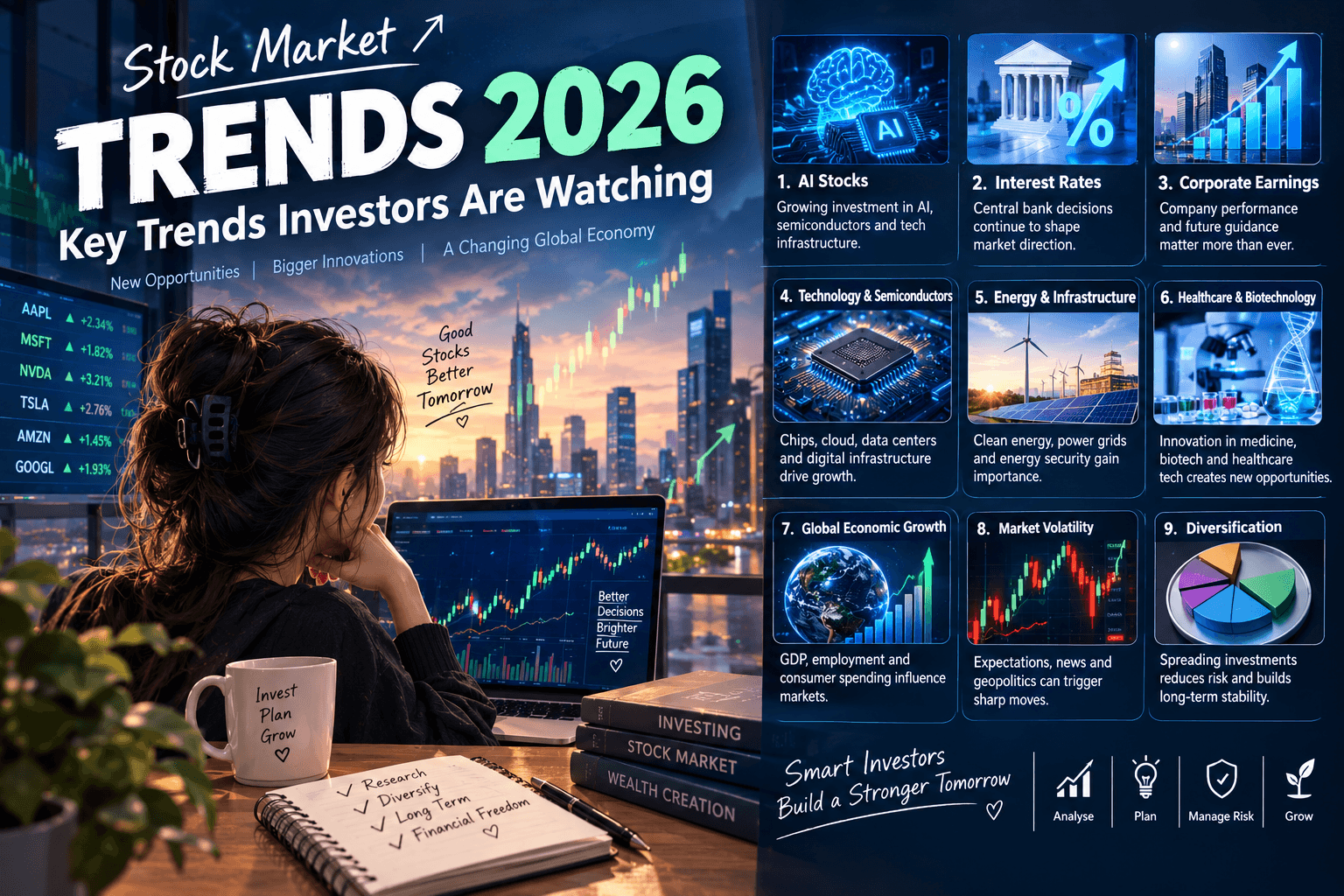
The stock market in 2026 is being shaped by several major forces, including artificial intelligence, interest rates, corporate earnings, economic growth, technology investment, and changing investor expectations.
Companies connected to AI and digital infrastructure continue to attract attention, while investors are also watching traditional sectors such as healthcare, energy, financial services, and consumer businesses.
Understanding these trends can help readers better understand what is influencing markets and why stock prices can change rapidly.
1. Artificial Intelligence and Technology Stocks
AI remains one of the major themes influencing the technology sector.
Companies involved in semiconductors, cloud computing, data centers, software, cybersecurity, and AI infrastructure are receiving attention because businesses continue investing in AI capabilities.
The broader question for investors is how quickly AI-related spending translates into sustainable revenue and profits.
2. Interest Rates and Monetary Policy
Interest rates remain an important factor for financial markets.
Changes in borrowing costs can affect:
Corporate investment
Consumer spending
Housing activity
Bank earnings
Bond yields
Stock valuations
Growth-oriented companies can be particularly sensitive to changes in interest-rate expectations because their valuations often depend heavily on future earnings.
3. Corporate Earnings
Stock prices ultimately depend heavily on expectations surrounding company performance.
Investors are watching quarterly revenue, profit margins, cash flow, guidance, and future growth.
A company can report strong results but still experience a stock-price decline if investors expected even stronger performance.
4. Semiconductor and AI Infrastructure Demand
The expansion of AI requires substantial computing infrastructure.
This has increased attention on areas such as:
Advanced chips
Data centers
Networking equipment
Cloud infrastructure
Semiconductor manufacturing
Power and cooling systems
The growth of AI therefore extends beyond software companies and into the broader technology supply chain.
5. Market Volatility
Stock markets can move sharply when investors react to economic data, company earnings, geopolitical developments, or changes in monetary policy.
Volatility does not necessarily mean that the underlying businesses have changed dramatically. Sometimes prices move because expectations have changed.
Investors therefore often distinguish between short-term market movements and long-term business fundamentals.
6. Energy and Infrastructure
Energy markets continue to influence companies and economies around the world.
Traditional energy companies remain important, while renewable energy, electricity infrastructure, energy storage, and grid modernization are also receiving attention.
The growing electricity requirements of data centers and AI infrastructure make energy availability an increasingly relevant issue for technology investment.
7. Financial Sector Developments
Banks, insurers, payment companies, and financial technology businesses remain important parts of global equity markets.
Investors monitor interest rates, loan growth, credit quality, consumer activity, and regulatory developments when assessing financial companies.
Digital banking and AI-powered financial services are also changing how financial institutions operate.
8. Healthcare and Biotechnology
Healthcare remains another major investment sector.
Pharmaceutical companies, medical-device manufacturers, biotechnology firms, and healthcare technology companies are developing new treatments and technologies.
However, healthcare stocks can be affected by clinical-trial results, regulatory decisions, patent changes, and research costs.
9. Global Economic Growth
The stock market does not operate independently from the wider economy.
Investors monitor indicators such as:
Inflation
Employment
Consumer spending
Manufacturing
Economic growth
Business investment
Stronger economic activity can support corporate revenue, while weaker growth can create challenges for businesses in economically sensitive industries.
10. Diversification Remains Important
A major theme for investors is diversification.
Holding investments across different companies, industries, geographic markets, and asset classes can reduce dependence on the performance of one particular area.
Diversification does not eliminate investment risk, but it can help manage concentration risk.
What Investors Are Watching in 2026
Several indicators can provide useful information about market conditions:
Earnings Reports
Quarterly results can reveal whether companies are meeting revenue and profit expectations.
Inflation Data
Inflation can influence monetary policy and consumer purchasing power.
Interest-Rate Decisions
Central-bank decisions can affect borrowing costs and financial-market valuations.
Economic Data
Employment, consumer spending, manufacturing, and GDP-related data can provide insight into economic conditions.
Company Guidance
Management forecasts can influence how investors view a company's future performance.
Long-Term vs. Short-Term Investing
Investors approach the market in different ways.
Short-term traders may focus on price movements, market news, technical patterns, and catalysts.
Long-term investors may focus more heavily on business quality, earnings growth, competitive advantages, valuation, and long-term industry trends.
Neither approach guarantees positive returns, and all stock-market investing involves risk.
Risks Investors Should Consider
Market Risk
Stock prices can decline because of economic, political, financial, or company-specific events.
Valuation Risk
A strong company can still have an expensive stock price. Future returns depend partly on the price paid for an investment.
Economic Risk
Recessions or weaker economic growth can reduce business activity and corporate earnings.
Sector Concentration
Investing heavily in one industry can increase exposure to sector-specific problems.
Emotional Decisions
Fear and excitement can influence investors to make decisions based on short-term market movements rather than their investment plans.
Conclusion
The stock market in 2026 is being influenced by AI investment, interest rates, corporate earnings, economic growth, energy demand, healthcare innovation, and developments across the financial sector.
Investors are watching both established industries and emerging technologies as businesses adapt to a rapidly changing economy.
For anyone researching the market, understanding company fundamentals, economic conditions, valuations, diversification, and risk can provide a more complete picture than focusing on individual daily price movements.
FAQs
1. What are the biggest stock-market trends in 2026?
Major themes include AI, technology infrastructure, interest rates, corporate earnings, energy demand, healthcare innovation, and economic growth.
2. Why are AI stocks attracting attention?
AI investment is increasing demand for chips, cloud infrastructure, software, data centers, and related technologies.
3. How do interest rates affect stocks?
Interest rates can influence borrowing costs, consumer spending, corporate investment, and the valuation investors place on future earnings.
4. Why are earnings important?
Corporate earnings provide information about a company's financial performance and can influence investor expectations.
5. What is market volatility?
Market volatility refers to the size and frequency of price movements in financial markets.
6. Are technology stocks risky?
Technology stocks can experience significant price movements and may face competition, valuation concerns, regulatory changes, and rapidly changing technology.
7. What are investors watching besides technology?
Investors are also monitoring financial services, healthcare, energy, consumer companies, industrial businesses, and infrastructure.
8. Why are semiconductor stocks important?
Semiconductors are essential components of computers, smartphones, data centers, AI systems, vehicles, and many other technologies.
9. How does AI affect the stock market?
AI can affect markets through increased corporate investment, productivity expectations, demand for computing infrastructure, and changing business models.
10. What economic indicators affect stocks?
Inflation, employment, consumer spending, economic growth, manufacturing activity, and interest rates can all influence market expectations.
11. What is diversification?
Diversification means spreading investments across different assets, companies, sectors, or markets rather than concentrating in one area.
12. Does diversification eliminate risk?
No. Diversification can reduce concentration risk, but investments can still lose value.
13. What is valuation?
Valuation refers to how the market price of a company compares with measures such as earnings, cash flow, sales, or other financial fundamentals.
14. Why can a stock fall after good earnings?
The results may have been weaker than investors expected, or management's future guidance may have disappointed the market.
15. What is a bull market?
A bull market generally refers to a sustained period of rising market prices.
16. What is a bear market?
A bear market generally describes a significant and sustained decline in market prices.
17. Should investors focus on daily stock movements?
Long-term investors often consider broader business fundamentals rather than relying solely on daily price movements.
18. How does inflation affect stocks?
Inflation can influence consumer purchasing power, business costs, interest rates, and corporate profit expectations.
19. Why is energy important for AI?
AI data centers require substantial electricity and supporting infrastructure, making energy availability relevant to the expansion of AI computing.
20. What should investors research before buying a stock?
They can examine the company's financial statements, business model, competitive position, valuation, risks, industry conditions, and long-term growth prospects.