Introduction
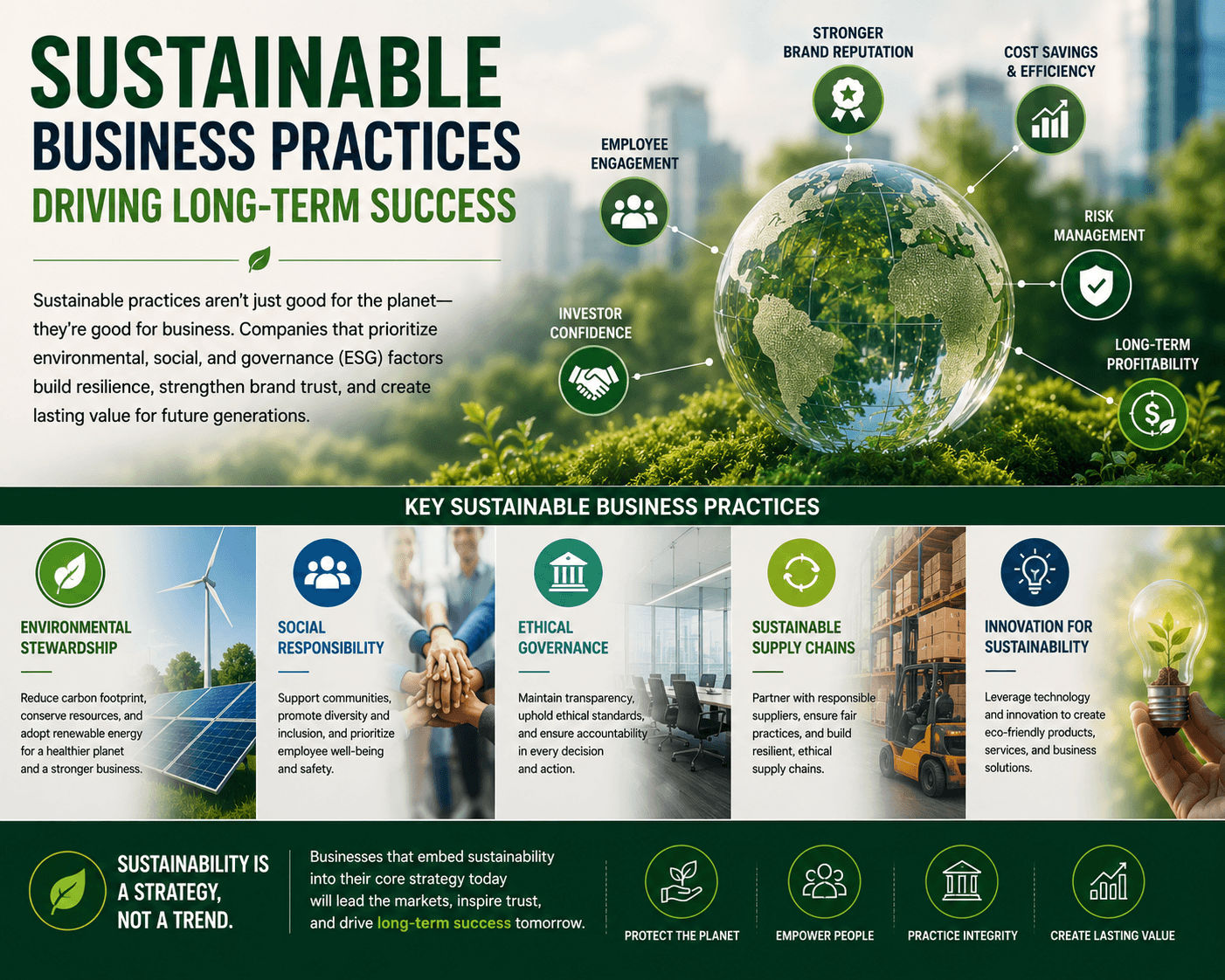
Sustainability has evolved from a corporate social responsibility initiative into a fundamental business strategy. In 2026, organizations across industries are recognizing that long-term success depends not only on financial performance but also on how responsibly they manage environmental, social, and economic resources. Businesses that embrace sustainability are reducing operational costs, strengthening brand reputation, improving resilience, and creating long-term value for customers, investors, and employees.
Governments are introducing stricter environmental regulations, consumers are demanding greater transparency, and investors are placing increased emphasis on Environmental, Social, and Governance (ESG) performance. These changes have transformed sustainability from a voluntary initiative into a competitive necessity.
Companies that integrate sustainable practices into their operations are better positioned to navigate future challenges while contributing to a healthier planet. This article explores the most important sustainable business practices driving success in 2026 and how organizations can benefit from adopting them.
Why Sustainability Is a Business Priority
Modern businesses face increasing pressure to operate responsibly while maintaining profitability.
Several factors are driving sustainability initiatives, including:
Climate change and environmental concerns
Rising energy and resource costs
Growing consumer demand for ethical brands
Investor focus on ESG performance
Government regulations and reporting requirements
Organizations that proactively address these issues are more likely to build customer trust, attract investment, and remain competitive in evolving global markets.
Renewable Energy and Energy Efficiency
Reducing energy consumption is one of the most effective ways businesses can lower costs while minimizing environmental impact.
Many companies are investing in:
Solar power systems
Wind energy
Energy-efficient manufacturing equipment
Smart building technologies
Intelligent energy management systems
These investments reduce dependence on fossil fuels while helping organizations achieve carbon reduction goals.
Businesses that improve energy efficiency often benefit from lower utility expenses, improved operational performance, and stronger environmental compliance.
Circular Economy and Waste Reduction
Traditional business models based on "take, make, and dispose" are gradually being replaced by circular economy strategies that maximize resource efficiency.
Common circular economy practices include:
Recycling manufacturing materials
Reusing packaging
Repairing and refurbishing products
Designing products with longer life cycles
Converting industrial waste into reusable resources
Reducing waste lowers operating costs while creating new business opportunities through recycled materials and sustainable product development.
Sustainable Supply Chain Management
Supply chains play a significant role in determining a company's environmental impact.
Businesses are making supply chains more sustainable by:
Partnering with environmentally responsible suppliers
Optimizing transportation and logistics
Reducing carbon emissions
Improving supply chain transparency
Monitoring sustainability performance using digital technologies
Sustainable supply chain management not only protects the environment but also strengthens resilience against disruptions and regulatory risks.
Green Technology and Innovation
Technology has become one of the biggest drivers of sustainable business transformation.
Organizations are adopting green innovations such as:
AI-powered energy optimization
Smart manufacturing systems
Electric transportation solutions
Carbon capture technologies
Automated resource management
These technologies improve efficiency while reducing emissions, waste, and operating expenses.
Businesses that invest in green innovation often gain a competitive advantage by improving productivity while meeting sustainability goals.
ESG Integration Strengthens Business Performance
Environmental, Social, and Governance (ESG) principles have become central to modern business strategy.
ESG focuses on:
Environmental
Carbon emissions
Resource conservation
Pollution reduction
Renewable energy adoption
Social
Employee well-being
Diversity and inclusion
Community engagement
Ethical labor practices
Governance
Corporate transparency
Ethical leadership
Risk management
Regulatory compliance
Strong ESG performance attracts investors, improves stakeholder confidence, and supports long-term financial stability.
Sustainable Product Design
Sustainability begins long before products reach customers.
Modern businesses increasingly focus on:
Using recyclable materials
Reducing packaging waste
Designing energy-efficient products
Extending product durability
Improving product repairability
Consumers are more likely to support brands that offer environmentally responsible products without sacrificing quality or performance.
Sustainable product innovation also helps businesses meet evolving environmental regulations.
Water Conservation and Resource Management
Water scarcity has become an important business concern in many regions.
Organizations are implementing conservation strategies such as:
Water recycling systems
Efficient manufacturing processes
Smart water monitoring technologies
Leak detection systems
Sustainable agricultural irrigation
Responsible water management reduces costs while ensuring long-term operational stability in water-sensitive industries.
Employee Engagement in Sustainability
Successful sustainability initiatives require active participation from employees.
Companies encourage sustainable workplace practices through:
Remote and hybrid work options
Energy-efficient office policies
Recycling programs
Employee sustainability training
Green transportation incentives
When employees actively support environmental initiatives, organizations create stronger workplace cultures while reinforcing long-term sustainability goals.
Regulatory Compliance and Environmental Standards
Governments worldwide continue introducing stricter environmental regulations.
Businesses must increasingly comply with:
Carbon emission reporting
ESG disclosure requirements
Plastic reduction initiatives
Renewable energy targets
Sustainable sourcing regulations
Organizations that prepare early for changing regulations reduce compliance risks while strengthening their competitive position.
Digital reporting systems and automation tools simplify sustainability reporting and improve regulatory accuracy.
Consumer Demand for Sustainable Brands
Modern consumers are increasingly choosing businesses that align with their environmental and ethical values.
Customers often prefer brands that demonstrate:
Sustainable manufacturing
Ethical sourcing
Eco-friendly packaging
Transparent supply chains
Carbon reduction initiatives
Businesses that communicate their sustainability efforts effectively often enjoy stronger customer loyalty, increased brand trust, and improved market differentiation.
Financial Benefits of Sustainability
Although sustainability initiatives may require initial investment, they often generate significant long-term financial returns.
Key business benefits include:
Lower energy costs
Reduced operational waste
Improved resource efficiency
Stronger investor confidence
Better risk management
Increased customer retention
Higher brand value
Greater operational resilience
Sustainability is increasingly recognized as a strategic investment that supports long-term profitability rather than simply an environmental responsibility.
Future Trends in Sustainable Business
As sustainability continues to evolve, businesses are expected to adopt even more advanced practices.
Emerging trends include:
AI-driven sustainability analytics
Smart energy grids
Carbon-neutral manufacturing
Green hydrogen adoption
Sustainable finance and ESG investing
Digital carbon footprint tracking
Circular supply chain ecosystems
Organizations that embrace these innovations will be better prepared to meet future market demands while contributing to global environmental goals.
Conclusion
Sustainable business practices have become a defining characteristic of successful organizations in 2026. Companies that integrate environmental responsibility, social impact, and strong governance into their operations are better positioned for long-term growth, resilience, and profitability.
From renewable energy adoption and circular economy strategies to sustainable supply chain management, green technology, and ESG integration, businesses are discovering that sustainability delivers measurable financial and operational benefits. At the same time, these initiatives help organizations meet growing customer expectations, attract investors, comply with regulations, and reduce environmental impact.
As global markets continue to evolve, sustainability will remain a key competitive advantage. Businesses that invest in responsible practices today will be better equipped to navigate future challenges, build stronger stakeholder relationships, and achieve lasting success in an increasingly environmentally conscious world.
Frequently Asked Questions (FAQs)
1. What are sustainable business practices?
Sustainable business practices are strategies that help companies reduce their environmental impact, use resources responsibly, support social well-being, and maintain long-term economic growth while remaining profitable.
2. Why is sustainability important for businesses in 2026?
Sustainability helps businesses lower operational costs, improve brand reputation, attract environmentally conscious customers, meet regulatory requirements, strengthen ESG performance, and build long-term resilience against environmental and economic risks.
3. What is ESG in business?
ESG stands for Environmental, Social, and Governance. It is a framework used to evaluate how responsibly a company manages environmental impact, employee and community relationships, ethical governance, and long-term sustainability.
4. How does renewable energy support sustainable business?
Renewable energy sources such as solar and wind power reduce carbon emissions, lower long-term energy costs, improve energy independence, and help businesses achieve sustainability and carbon neutrality goals.
5. What is a circular economy?
A circular economy focuses on minimizing waste by reusing, recycling, repairing, and refurbishing products and materials. This approach extends product life cycles, conserves resources, and reduces environmental impact.
6. How can businesses create a sustainable supply chain?
Businesses can build sustainable supply chains by working with ethical suppliers, reducing transportation emissions, improving supply chain transparency, optimizing logistics, using digital monitoring tools, and sourcing materials responsibly.
7. What are the financial benefits of sustainability?
Sustainability can reduce energy and resource costs, improve operational efficiency, enhance customer loyalty, attract investors, minimize regulatory risks, strengthen brand reputation, and support long-term business profitability.
8. What is the future of sustainable business?
The future of sustainable business includes greater adoption of AI-powered sustainability solutions, renewable energy, carbon-neutral operations, circular economy models, green technologies, and stronger ESG reporting as companies continue prioritizing responsible and resilient growth.