Introduction
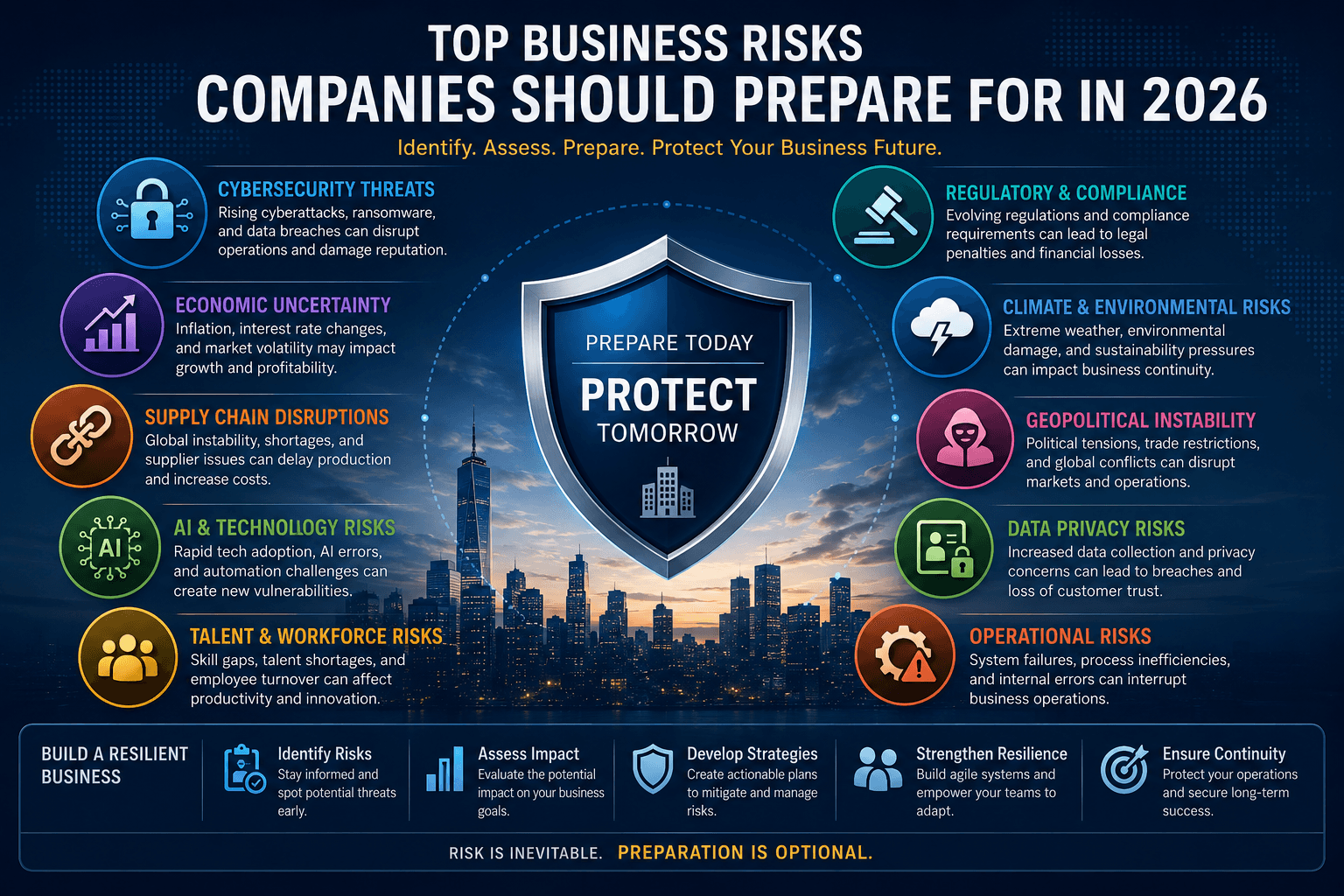
The global business environment is becoming increasingly complex. Rapid technological advancements, economic uncertainty, geopolitical tensions, and evolving customer expectations are creating new challenges for organizations of every size. In 2026, businesses must proactively identify potential risks and develop strategies to remain resilient in an unpredictable marketplace.
Companies that anticipate these risks and prepare accordingly will be better positioned to protect their operations, maintain profitability, and seize new opportunities. Here are the top business risks every organization should monitor this year.
1. Economic Uncertainty
Global economic conditions remain unpredictable due to inflation, fluctuating interest rates, and changing consumer spending patterns.
Potential impacts include:
Reduced customer demand
Higher operating costs
Lower profit margins
Delayed business investments
Increased financing expenses
Businesses should strengthen cash flow management and maintain financial flexibility to navigate economic fluctuations.
2. Cybersecurity Threats
Cyberattacks continue to grow in frequency and sophistication. Ransomware, phishing attacks, and data breaches can cause significant financial losses and reputational damage.
Companies should invest in:
Multi-factor authentication
Employee cybersecurity training
Data encryption
Regular security audits
Incident response plans
Strong cybersecurity has become a critical business priority.
3. Artificial Intelligence Risks
While AI creates enormous opportunities, it also introduces new risks.
Organizations must address:
AI-generated misinformation
Data privacy concerns
Algorithm bias
Regulatory compliance
Overreliance on automation
Responsible AI governance is essential to ensure ethical and secure implementation.
4. Supply Chain Disruptions
Global supply chains remain vulnerable to geopolitical conflicts, natural disasters, transportation delays, and raw material shortages.
Businesses can reduce risk by:
Diversifying suppliers
Building inventory buffers
Improving supply chain visibility
Investing in digital logistics tools
A resilient supply chain helps maintain operational continuity.
5. Talent Shortages
Many industries continue to face difficulties attracting and retaining skilled professionals.
Key challenges include:
Competition for digital talent
Skills gaps
Employee burnout
High turnover rates
Rising labor costs
Organizations that invest in employee development and workplace flexibility are better positioned to retain top talent.
6. Regulatory Changes
Governments continue introducing new regulations covering data protection, sustainability, artificial intelligence, taxation, and financial reporting.
Businesses must stay informed and ensure compliance to avoid legal penalties and operational disruptions.
7. Climate and Environmental Risks
Extreme weather events and environmental regulations increasingly affect business operations.
Potential risks include:
Supply chain interruptions
Rising insurance costs
Infrastructure damage
Energy price volatility
Sustainability compliance requirements
Climate resilience should become part of long-term business planning.
8. Inflation and Rising Costs
Higher prices for raw materials, transportation, labor, and energy continue affecting profitability.
Companies should focus on:
Cost optimization
Process automation
Strategic sourcing
Operational efficiency
Value-based pricing
Managing costs effectively helps maintain competitive performance.
9. Reputation and Brand Risk
Social media enables news and customer feedback to spread rapidly.
Businesses face reputational risks from:
Poor customer experiences
Data breaches
Product quality issues
Ethical concerns
Negative online reviews
Transparent communication and excellent customer service are essential for protecting brand reputation.
10. Rapid Technological Change
Technology evolves faster than ever, making it difficult for organizations to stay competitive.
Businesses that fail to adopt innovations such as artificial intelligence, automation, cloud computing, and advanced analytics risk falling behind competitors.
Continuous investment in digital transformation is increasingly necessary.
Strategies to Reduce Business Risk
Organizations can strengthen resilience by:
Building strong cash reserves
Diversifying revenue streams
Investing in cybersecurity
Monitoring emerging regulations
Developing business continuity plans
Training employees regularly
Embracing digital transformation
Conducting regular risk assessments
Conclusion
Business risks in 2026 are more interconnected than ever before. Economic uncertainty, cybersecurity threats, AI challenges, supply chain disruptions, regulatory changes, and climate-related risks all require proactive planning.
Organizations that build resilience through strategic planning, technology investment, strong governance, and continuous innovation will be better prepared to overcome uncertainty and achieve sustainable long-term growth. In today's rapidly changing business environment, effective risk management is no longer optional—it is a key driver of competitive success.
FAQs frequently asked questions:
1. What are the biggest business risks companies will face in 2026?
The biggest business risks in 2026 include cybersecurity attacks, AI-related challenges, economic uncertainty, supply chain disruptions, changing regulations, talent shortages, climate-related risks, geopolitical tensions, data privacy concerns, and rapid technological disruption. Businesses that proactively identify and manage these risks are more likely to remain competitive and resilient.
2. Why is cybersecurity considered the top business risk in 2026?
Cyberattacks are becoming more sophisticated, targeting organizations of all sizes. Ransomware, phishing, insider threats, and AI-powered attacks can disrupt operations, compromise sensitive data, and damage customer trust. Investing in strong cybersecurity defenses and employee awareness is essential.
3. How does artificial intelligence create new business risks?
AI offers tremendous opportunities, but it also introduces risks such as inaccurate outputs, biased decision-making, security vulnerabilities, intellectual property concerns, and regulatory compliance issues. Companies need clear AI governance policies and human oversight to use AI responsibly.
4. Why is economic uncertainty still a major concern for businesses?
Inflation, changing interest rates, fluctuating consumer demand, and global financial instability can affect revenue, investment decisions, and operating costs. Businesses should maintain financial flexibility and prepare contingency plans for different economic scenarios.
5. How can supply chain disruptions impact business operations?
Supply chain disruptions can delay production, increase costs, reduce inventory availability, and affect customer satisfaction. Companies can reduce these risks by diversifying suppliers, improving inventory management, and increasing supply chain visibility.
6. Why are regulatory changes becoming more challenging?
Governments continue introducing new regulations covering AI, data privacy, cybersecurity, environmental standards, and consumer protection. Businesses must monitor legal developments and maintain compliance to avoid penalties and reputational damage.
7. What role does climate change play in business risk management?
Climate-related events such as floods, droughts, wildfires, and extreme weather can damage infrastructure, interrupt supply chains, and increase insurance costs. Companies should integrate climate resilience into their long-term business strategies.
8. How do talent shortages affect business growth?
A shortage of skilled professionals can slow innovation, reduce productivity, and increase hiring costs. Businesses should invest in employee training, workforce development, and retention strategies to remain competitive.
9. Why is data privacy a growing concern in 2026?
Organizations collect more customer and business data than ever before. Protecting this information is essential to maintain customer trust, comply with privacy regulations, and prevent costly data breaches.
10. How can companies prepare for rapid technological change?
Businesses should continuously evaluate emerging technologies, modernize legacy systems, encourage innovation, and invest in employee upskilling to adapt quickly to technological advancements.
11. What is enterprise risk management (ERM)?
Enterprise Risk Management is a structured approach to identifying, assessing, prioritizing, and managing risks across all areas of an organization. ERM helps businesses make informed decisions while protecting long-term value.
12. Why is business continuity planning important?
Business continuity planning ensures organizations can continue operating during unexpected events such as cyberattacks, natural disasters, system failures, or supply chain disruptions. A well-designed continuity plan minimizes downtime and financial losses.
13. How do geopolitical tensions affect businesses?
Trade restrictions, sanctions, political instability, and international conflicts can disrupt global supply chains, increase operational costs, and create uncertainty for multinational organizations. Diversification and scenario planning help reduce these risks.
14. What operational risks should businesses monitor?
Operational risks include equipment failures, human errors, process inefficiencies, technology outages, fraud, and third-party service interruptions. Regular audits and process improvements help reduce operational vulnerabilities.
15. Why is ESG becoming part of business risk management?
Environmental, Social, and Governance (ESG) expectations continue to grow among investors, customers, and regulators. Companies that ignore sustainability or ethical business practices may face financial, legal, and reputational risks.
16. How can digital transformation reduce business risks?
Digital transformation improves operational efficiency, enhances data visibility, strengthens cybersecurity, and enables faster decision-making. However, organizations must carefully manage implementation risks and employee adoption.
17. What role does risk culture play within an organization?
A strong risk-aware culture encourages employees to identify, report, and address potential issues before they become major problems. Leadership commitment, clear communication, and ongoing training are essential for building this culture.
18. How should businesses prioritize multiple risks?
Companies should evaluate each risk based on its likelihood, potential financial impact, operational consequences, and strategic importance. Risk assessments and regular reviews help organizations allocate resources effectively.
19. What technologies help improve business risk management?
Artificial intelligence, predictive analytics, cloud computing, cybersecurity platforms, automation tools, and real-time monitoring systems help organizations identify emerging threats and respond more effectively to potential risks.
20. Why should companies prepare for business risks before they occur?
Proactive risk management reduces financial losses, protects brand reputation, ensures regulatory compliance, improves operational resilience, and enables organizations to respond quickly to unexpected challenges. Companies that prepare in advance are better positioned to maintain customer trust and achieve sustainable long-term growth.