
BABest AI Apps in 2026: 15 Smart Tools Everyone Should Try
Introduction
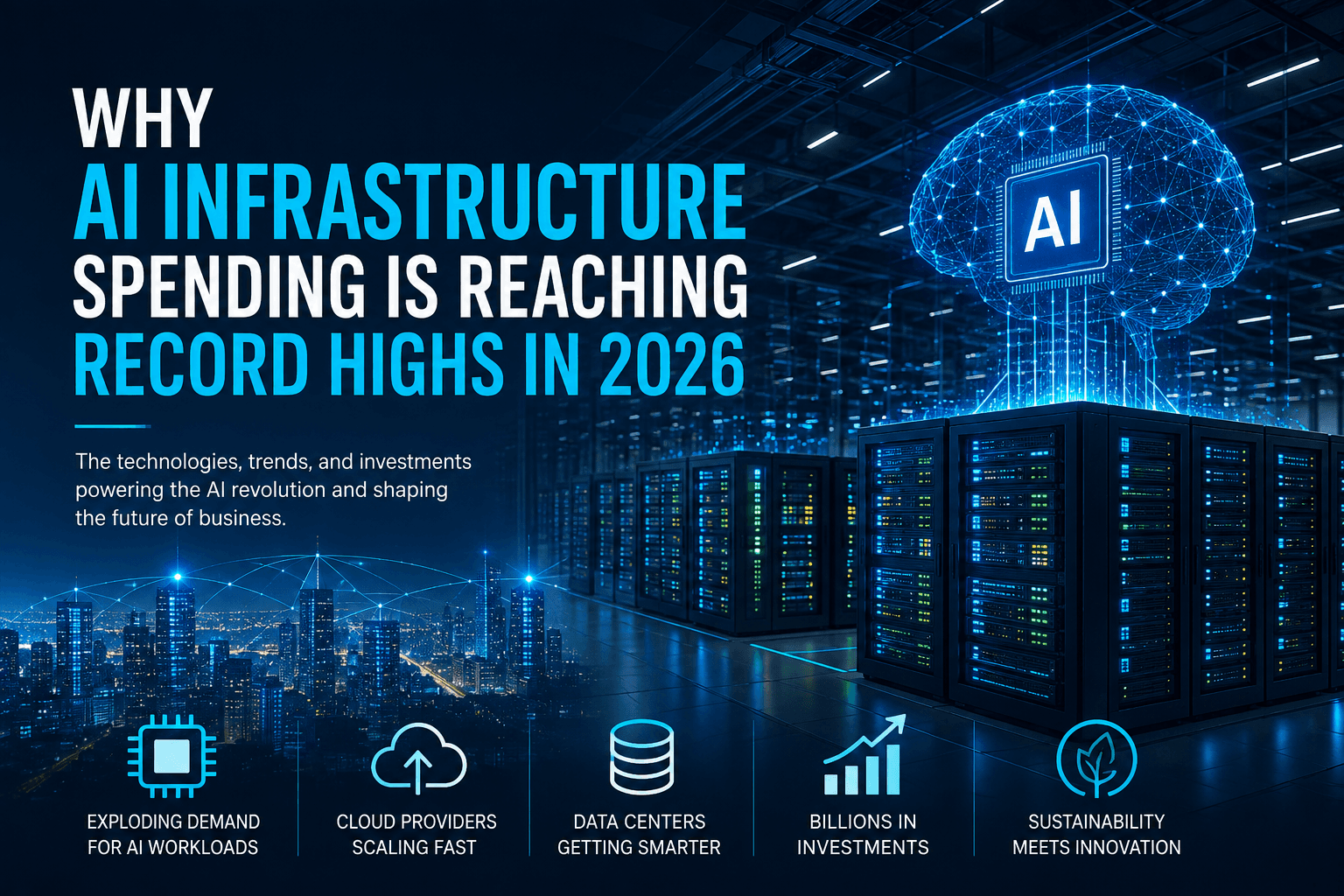
Artificial intelligence has moved far beyond being an experimental technology. In 2026, it has become a core driver of business innovation, productivity, and competitive advantage. Organizations across industries are integrating AI into customer service, manufacturing, healthcare, finance, logistics, cybersecurity, and software development. As AI adoption accelerates, companies are making unprecedented investments in the infrastructure required to support advanced AI systems.
AI infrastructure includes high-performance computing hardware, cloud platforms, specialized AI chips, networking equipment, storage systems, power management, and data centers. Without these foundational technologies, businesses cannot efficiently train or deploy modern AI models.
The rapid growth of generative AI, autonomous AI agents, and enterprise automation has created an enormous demand for computing resources. Technology companies, cloud providers, and governments are investing billions of dollars to build larger, faster, and more energy-efficient AI infrastructure. These investments are shaping the future of digital transformation and creating new opportunities for businesses worldwide.
AI Adoption Is Growing Across Every Industry
Only a few years ago, AI implementation was limited to large technology companies. Today, businesses of all sizes are using AI to improve operations and customer experiences.
Organizations now rely on AI to:
Automate repetitive workflows
Analyze large datasets
Improve cybersecurity
Personalize customer interactions
Forecast market demand
Enhance supply chain management
Generate marketing content
Assist software development
As more businesses integrate AI into daily operations, demand for powerful computing infrastructure continues to increase.
Generative AI Requires Massive Computing Power
Large language models, image generators, coding assistants, and AI-powered search platforms require extraordinary computational resources.
Training a modern AI model involves processing trillions of data points across thousands of graphics processing units (GPUs). Even after training, serving millions of users simultaneously requires powerful servers, high-speed networking, and scalable cloud infrastructure.
Because of this, cloud providers and enterprise technology companies are expanding their data center capacity at an unprecedented pace.
AI Chips Are Becoming the New Strategic Asset
One of the biggest reasons behind record infrastructure spending is the growing demand for specialized AI processors.
Unlike traditional CPUs, AI accelerators are designed specifically for machine learning workloads. They process enormous amounts of mathematical calculations much faster while improving efficiency.
Major technology companies are investing heavily in:
Advanced AI GPUs
AI accelerators
Custom enterprise AI chips
High-bandwidth memory
AI networking technologies
This competition has transformed semiconductor manufacturing into one of the fastest-growing industries in the global technology sector.
Cloud Providers Continue Expanding Their AI Capacity
Cloud computing remains the backbone of enterprise AI adoption.
Instead of building expensive on-premises infrastructure, many organizations rent AI computing resources from cloud providers.
Cloud platforms now offer:
AI model training
Machine learning services
GPU clusters
AI development environments
Enterprise data storage
AI security tools
Because enterprise demand continues growing rapidly, cloud providers are investing billions of dollars in new AI-ready data centers across multiple regions.
AI Data Centers Are Becoming More Advanced
Traditional data centers were primarily designed for websites and business applications.
Modern AI workloads require significantly more power, cooling, networking bandwidth, and storage.
Today's AI facilities include:
Liquid cooling systems
High-speed optical networking
AI-optimized server racks
Energy-efficient power systems
Massive GPU clusters
These improvements allow businesses to process complex AI workloads more efficiently while reducing operational costs.
AI Is Fueling the Next Wave of Enterprise Automation
Artificial intelligence is transforming how organizations operate by automating repetitive tasks and enabling faster, data-driven decision-making. AI-powered assistants, intelligent document processing, predictive analytics, and autonomous business agents are helping companies improve productivity while reducing operational costs.
As businesses deploy more AI applications across departments, they require scalable infrastructure capable of handling millions of AI requests every day. This growing demand is one of the key reasons organizations continue increasing investments in AI-ready computing environments.
Sustainability Is Becoming a Priority
The rapid expansion of AI infrastructure has also increased electricity consumption and cooling requirements. To address these challenges, technology companies are investing in sustainable solutions that reduce environmental impact while supporting growing AI workloads.
Many new AI facilities now incorporate:
Renewable energy sources such as solar and wind power
Advanced liquid cooling technologies
Energy-efficient processors
Intelligent power management systems
Water-saving cooling solutions
Sustainability is no longer just an environmental initiative—it is becoming an essential business strategy that helps reduce operating costs and meet regulatory expectations.
Governments Are Investing in National AI Infrastructure
Governments worldwide recognize artificial intelligence as a strategic technology for economic growth, innovation, and national security. As a result, many countries are investing in domestic AI infrastructure to strengthen research capabilities and reduce dependence on foreign technology.
These investments include:
National AI research centers
Public cloud infrastructure
Supercomputing facilities
Semiconductor manufacturing initiatives
AI education and workforce development
Public-private partnerships are also accelerating the development of advanced AI ecosystems that benefit businesses, universities, and startups.
Challenges That Come With Rapid AI Infrastructure Growth
Although AI infrastructure spending is creating enormous opportunities, businesses also face several challenges.
These include:
High hardware acquisition costs
Shortages of AI chips and specialized components
Rising energy consumption
Cybersecurity risks targeting AI systems
Increasing demand for skilled AI professionals
Regulatory and data privacy requirements
Organizations that address these challenges through strategic planning and responsible AI governance will be better positioned for long-term success.
What Businesses Should Do Now
Businesses looking to remain competitive should begin preparing for the next phase of AI adoption by investing wisely in scalable infrastructure. Key priorities include:
Developing a long-term AI strategy
Choosing scalable cloud or hybrid infrastructure
Strengthening cybersecurity measures
Training employees in AI skills
Monitoring infrastructure performance and costs
Implementing responsible AI governance policies
A proactive approach allows organizations to adopt new AI technologies efficiently while minimizing operational risks.
Future Outlook
AI infrastructure spending is expected to remain one of the fastest-growing areas of global technology investment throughout the rest of the decade. Continued advances in AI chips, cloud computing, networking, and energy-efficient data centers will make artificial intelligence more accessible to businesses of every size.
Organizations that invest in strong AI foundations today will be better equipped to innovate, improve customer experiences, optimize operations, and compete in an increasingly digital economy.
Conclusion
The record-breaking investment in AI infrastructure during 2026 reflects the growing importance of artificial intelligence across every major industry. From advanced data centers and specialized AI chips to cloud platforms and sustainable computing, infrastructure has become the foundation of modern digital transformation.
Businesses are no longer asking whether they should adopt AI—they are deciding how quickly they can scale it. Those that build resilient, secure, and efficient AI infrastructure today will gain a significant competitive advantage, unlock new revenue opportunities, and drive innovation for years to come.
Frequently Asked Questions (FAQs)
1. What is AI infrastructure?
AI infrastructure refers to the hardware, software, networking, cloud services, storage, and data centers that support the development, training, and deployment of artificial intelligence applications.
2. Why is AI infrastructure spending increasing in 2026?
Businesses are investing more because AI adoption is growing rapidly across industries, requiring powerful computing resources, advanced AI chips, and scalable cloud platforms.
3. What role do AI data centers play?
AI data centers provide the computing power, storage, networking, and cooling systems needed to train and run large AI models efficiently.
4. How does cloud computing support AI infrastructure?
Cloud computing enables businesses to access AI processing power, machine learning tools, GPU clusters, and scalable storage without investing in expensive on-premises hardware.
5. Why are AI chips important for artificial intelligence?
AI chips are optimized for machine learning workloads, allowing faster processing, better energy efficiency, and improved performance compared to traditional processors.
6. Which industries are investing the most in AI infrastructure?
Technology, healthcare, finance, manufacturing, retail, logistics, telecommunications, and cybersecurity are among the leading industries investing heavily in AI infrastructure.
7. What are the biggest challenges of AI infrastructure?
Common challenges include high implementation costs, energy consumption, cybersecurity risks, AI chip shortages, regulatory compliance, and the need for skilled professionals.
8. How does AI infrastructure improve business operations?
It enables faster data analysis, workflow automation, predictive insights, enhanced customer experiences, improved decision-making, and increased operational efficiency.
9. Is sustainable AI infrastructure becoming more important?
Yes. Many organizations are adopting renewable energy, energy-efficient hardware, and advanced cooling technologies to reduce operational costs and environmental impact.
10. What is the future of AI infrastructure?
AI infrastructure is expected to continue expanding through advancements in AI chips, cloud computing, edge computing, high-speed networking, and sustainable data centers, making AI more accessible to businesses worldwide.