
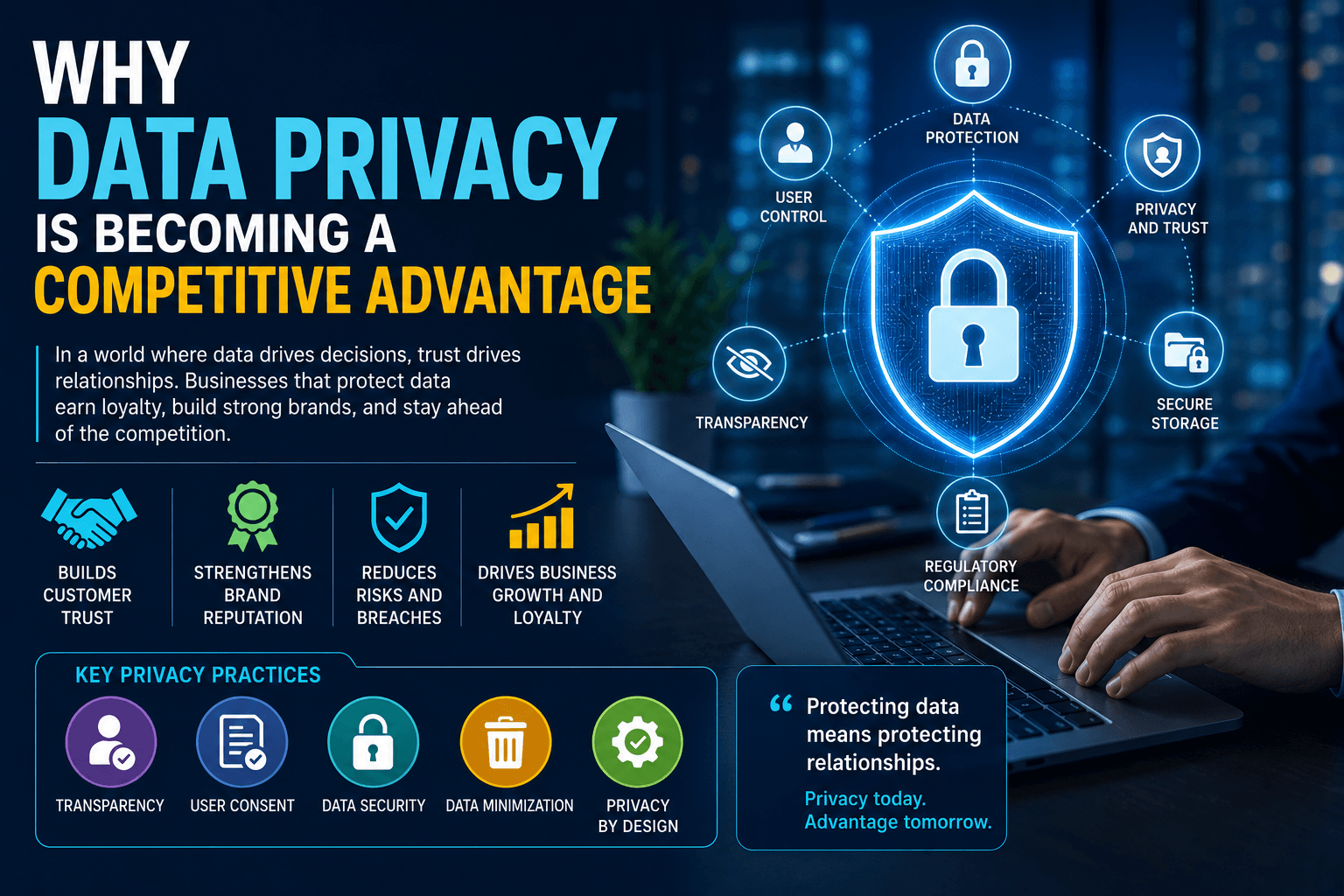

In today's digital economy, data has become one of the world's most valuable business assets. Companies collect customer information to improve products, personalize experiences, optimize marketing campaigns, and make smarter business decisions. However, as organizations gather increasing amounts of personal data, customers are becoming more concerned about how that information is collected, stored, and used.
In 2026, data privacy is no longer viewed as simply a legal obligation or compliance requirement. It has become a competitive advantage that influences customer trust, brand reputation, and long-term business success. Organizations that prioritize transparency and responsible data management are strengthening customer relationships while distinguishing themselves in increasingly competitive markets.
The Growing Importance of Data Privacy
Consumers interact with businesses through websites, mobile applications, online stores, digital payment platforms, and connected devices every day. These interactions generate enormous volumes of personal information, including names, email addresses, payment details, browsing habits, purchase history, and location data.
As cyber threats become more sophisticated and public awareness grows, customers expect businesses to protect this information. They want to know:
What data is being collected
Why it is being collected
How it will be used
Who can access it
How long it will be stored
How it will be protected
Companies that provide clear answers to these questions build stronger customer confidence.
Customer Trust Drives Business Growth
Trust has become one of the most valuable assets for modern businesses. Customers are increasingly choosing brands that demonstrate honesty, transparency, and accountability when handling personal information.
When organizations clearly communicate their privacy practices and give users greater control over their data, customers are more likely to:
Complete online purchases
Create user accounts
Subscribe to newsletters
Share feedback
Participate in loyalty programs
Recommend the brand to others
Strong customer trust often leads to higher retention rates, increased lifetime value, and stronger brand loyalty.
Privacy Regulations Continue to Evolve
Governments around the world continue introducing and updating privacy regulations designed to protect consumers.
Although compliance requirements vary between countries, many regulations emphasize common principles such as:
User consent
Data minimization
Transparency
Secure storage
Individual privacy rights
Timely breach notifications
Businesses that build privacy into their operations from the beginning are better prepared to adapt as regulatory requirements continue to evolve.
Data Privacy Supports Brand Reputation
A company's reputation can be damaged quickly if customer data is exposed through a security incident or misused without proper authorization.
Negative publicity surrounding privacy failures often results in:
Lost customer confidence
Reduced sales
Regulatory investigations
Financial penalties
Increased legal costs
Long-term reputational damage
In contrast, organizations known for protecting customer information often strengthen their market position and attract privacy-conscious consumers.
Privacy by Design
Leading organizations are adopting a "privacy by design" approach that integrates data protection into every stage of product development rather than treating it as an afterthought.
This includes:
Collecting only necessary information
Encrypting sensitive data
Limiting employee access
Regular security testing
Secure software development
Automatic data deletion policies
Embedding privacy into business processes reduces risk while improving operational resilience.
Cybersecurity and Privacy Work Together
Although cybersecurity and data privacy are different concepts, they are closely connected.
Cybersecurity focuses on protecting systems from attacks, while privacy governs how personal information is collected and used responsibly.
Businesses invest in technologies such as:
Multi-factor authentication
Encryption
Secure cloud infrastructure
Threat monitoring
Access controls
Regular software updates
Together, these measures help protect customer information while supporting regulatory compliance.
Competitive Differentiation
Products and pricing can often be copied by competitors. Customer trust cannot.
Organizations that openly demonstrate strong privacy practices differentiate themselves by showing respect for customer rights and digital security.
Many businesses now highlight privacy as part of their brand messaging, emphasizing secure transactions, responsible data handling, and transparent communication.
For many consumers, this reassurance influences purchasing decisions just as much as price or product features.
Privacy in Artificial Intelligence
Artificial intelligence relies heavily on data to generate insights and automate business processes.
As AI adoption accelerates, organizations must ensure that customer information is collected and processed responsibly.
Responsible AI practices include:
Using high-quality data
Reducing bias
Protecting sensitive information
Providing transparency
Maintaining human oversight
Complying with applicable regulations
Businesses that combine AI innovation with strong privacy protections build greater confidence among customers and stakeholders.
Employee Awareness Matters
Technology alone cannot guarantee data privacy.
Employees play an essential role in protecting sensitive information through responsible daily practices.
Organizations increasingly invest in training programs covering:
Password security
Phishing awareness
Secure document handling
Responsible data sharing
Privacy regulations
Incident reporting procedures
A well-informed workforce significantly reduces the likelihood of human error contributing to privacy incidents.
Building Long-Term Customer Relationships
Customers are more likely to remain loyal to businesses that consistently demonstrate responsible data practices.
Transparency strengthens relationships by giving customers confidence that their personal information will not be misused or shared without permission.
Businesses that provide clear privacy settings, simple consent options, and responsive customer support often experience stronger engagement and higher retention.
Trust developed through responsible privacy practices creates long-term competitive value.
Preparing for the Future
Digital transformation will continue generating larger volumes of customer data across every industry.
Organizations should prepare by:
Reviewing privacy policies regularly
Strengthening cybersecurity measures
Conducting routine risk assessments
Improving employee training
Implementing privacy-first technologies
Monitoring regulatory developments
Proactive planning helps businesses remain resilient while adapting to future technological and legal changes.
Conclusion
Data privacy has evolved from a compliance requirement into a strategic business advantage. In 2026, organizations that protect customer information, communicate transparently, and invest in secure technologies are earning greater trust, strengthening brand reputation, and improving long-term business performance.
As digital innovation accelerates, customers will continue rewarding businesses that respect their privacy. Companies that embrace responsible data management today will be better positioned to compete, innovate, and build lasting relationships in tomorrow's digital economy.