
PFPersonal Finance in 2026: Smart Ways to Save Money & Build Wealth
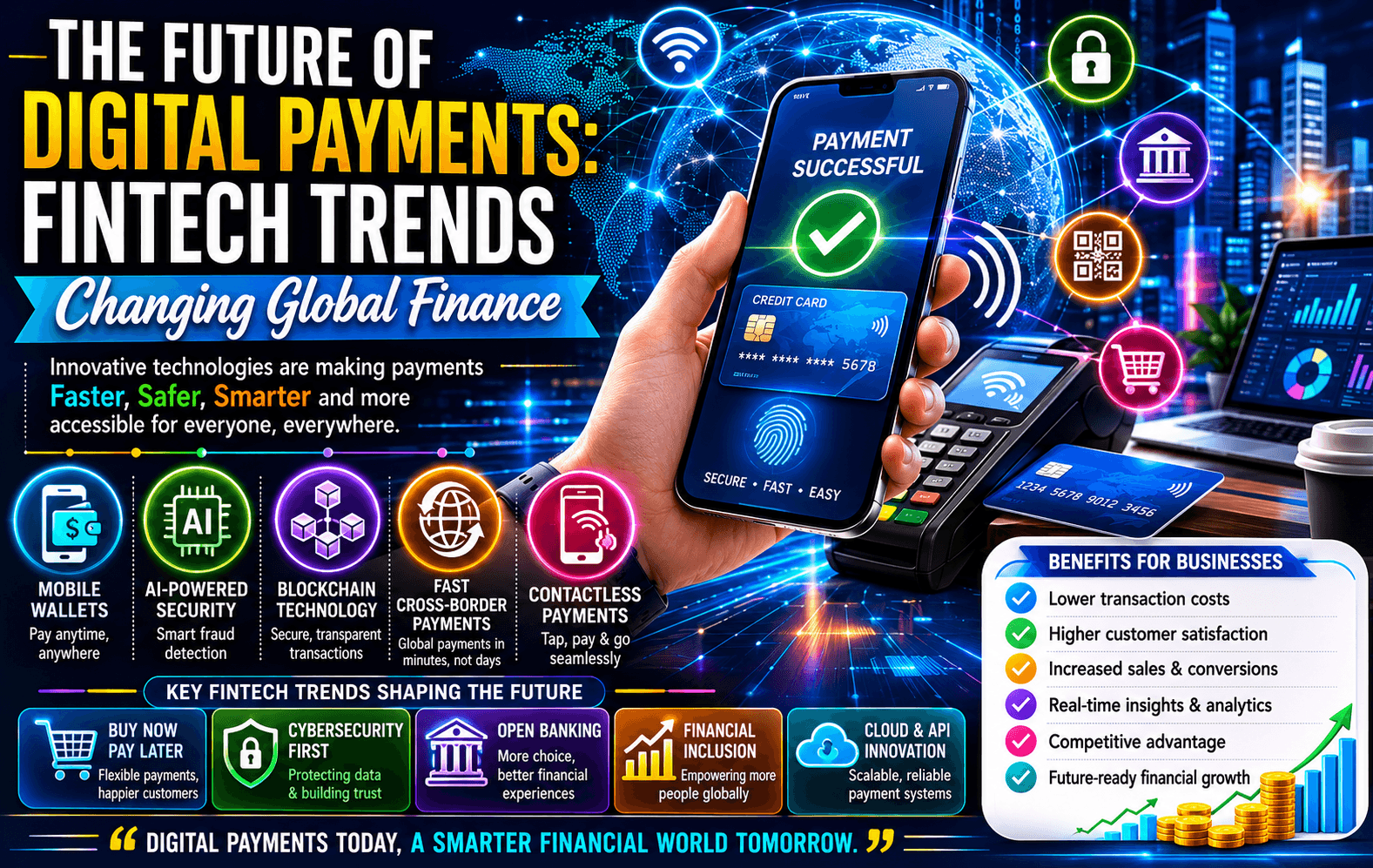
The financial services industry is undergoing one of the most significant transformations in its history. Digital payments, powered by financial technology (FinTech), are changing how consumers, businesses, and governments exchange money. From mobile wallets and contactless payments to artificial intelligence and blockchain technology, innovation is creating faster, safer, and more convenient payment experiences worldwide.
In 2026, digital payments have become an essential part of everyday life. Consumers expect instant transactions, businesses seek lower processing costs, and financial institutions are investing heavily in advanced technologies to remain competitive. As digital commerce continues to grow, FinTech is reshaping the future of global finance.
The Rise of Cashless Transactions
Cash is steadily being replaced by digital payment methods. Consumers increasingly prefer using smartphones, contactless cards, QR codes, and online banking platforms for daily purchases.
Several factors are accelerating this shift:
Growing e-commerce adoption
Improved internet connectivity
Smartphone penetration
Faster payment networks
Increased consumer convenience
Businesses that offer multiple digital payment options are better positioned to attract modern customers and improve the overall shopping experience.
Mobile Wallets Continue to Expand
Digital wallets have become one of the fastest-growing payment solutions worldwide.
Consumers can securely store payment cards, loyalty programs, and digital tickets on their smartphones, making transactions faster and more convenient.
Benefits include:
Instant payments
Contactless checkout
Improved security
Reduced fraud
Easy international transactions
Better customer convenience
Mobile wallets are increasingly replacing physical wallets for millions of consumers.
Artificial Intelligence Is Transforming Payments
Artificial Intelligence has become one of the most valuable technologies in financial services.
AI helps payment providers:
Detect fraud in real time
Analyze transaction patterns
Improve customer service
Automate compliance checks
Personalize financial recommendations
Speed up payment approvals
Machine learning continuously improves payment security by identifying unusual activity before fraudulent transactions occur.
Contactless Payments Become the Standard
Consumers now expect fast, touch-free payment experiences.
Retailers, restaurants, transportation providers, and service businesses continue expanding contactless payment acceptance through cards, smartphones, smartwatches, and wearable devices.
These payment methods reduce checkout times while improving convenience for both customers and merchants.
Blockchain Is Improving Financial Transactions
Blockchain technology continues gaining attention for its ability to improve payment transparency, efficiency, and security.
Financial institutions are exploring blockchain to:
Speed up cross-border payments
Reduce transaction costs
Improve record accuracy
Increase transparency
Strengthen security
Although widespread adoption continues to evolve, blockchain remains one of the most promising technologies for the future of digital finance.
Cross-Border Payments Are Becoming Faster
International payments have traditionally been expensive and slow.
Modern FinTech companies are using cloud computing, AI, and advanced payment networks to reduce transfer times from several days to just minutes in many cases.
Businesses operating internationally benefit from:
Lower transaction fees
Faster settlements
Improved currency conversion
Better customer satisfaction
This creates new opportunities for global trade and digital commerce.
Buy Now, Pay Later (BNPL) Continues to Grow
Flexible payment options remain popular among consumers.
Buy Now, Pay Later services allow customers to spread payments over time while giving merchants immediate payment.
Businesses benefit through:
Higher conversion rates
Increased average order values
Improved customer satisfaction
Greater purchasing flexibility
As regulations evolve, responsible lending practices will become increasingly important.
Cybersecurity Remains a Top Priority
As digital payments grow, cyber threats continue to evolve.
Financial institutions are investing heavily in:
Multi-factor authentication
Biometric verification
AI-powered fraud detection
End-to-end encryption
Secure payment gateways
Real-time monitoring
Strong cybersecurity builds customer trust while protecting sensitive financial information.
Open Banking Encourages Innovation
Open banking allows customers to securely share financial information with authorized third-party providers.
This enables innovative financial services including:
Budget management tools
Personalized financial advice
Faster loan approvals
Integrated payment solutions
Improved financial planning
Open banking encourages greater competition while giving consumers more control over their financial data.
Embedded Finance Is Reshaping Commerce
Financial services are increasingly integrated directly into non-financial platforms.
Consumers can now access:
Instant financing
Insurance
Digital wallets
Payment processing
Business lending
without leaving the websites or apps they already use.
Embedded finance simplifies transactions while creating new revenue opportunities for businesses.
Digital Payments Support Financial Inclusion
One of the greatest advantages of FinTech is expanding access to financial services.
Millions of individuals and small businesses who previously lacked access to traditional banking can now participate in the digital economy using mobile payment platforms.
This supports entrepreneurship, economic development, and financial inclusion worldwide.
Challenges Facing the Industry
Despite rapid innovation, several challenges remain.
These include:
Increasing cybercrime
Data privacy concerns
Regulatory compliance
Digital identity verification
Fraud prevention
Infrastructure investment
Financial institutions must continue balancing innovation with strong security and consumer protection.
Preparing for the Future
Businesses should prepare for continued payment innovation by:
Offering multiple digital payment methods
Investing in cybersecurity
Using AI for fraud detection
Supporting mobile commerce
Monitoring regulatory changes
Improving customer payment experiences
Organizations that embrace digital payment innovation will be better positioned for long-term growth.
Conclusion
Digital payments are transforming global finance at an unprecedented pace. Artificial Intelligence, mobile wallets, blockchain, cloud computing, open banking, and embedded finance are redefining how money moves across the world.
Consumers increasingly expect secure, fast, and seamless payment experiences, while businesses benefit from improved efficiency, reduced costs, and access to new markets.
As FinTech continues to evolve, digital payments will remain one of the strongest drivers of financial innovation, economic growth, and global commerce. Organizations that invest in modern payment technologies today will be well-positioned to thrive in the increasingly digital economy of tomorrow.
FAQs
1. What are digital payments?
Digital payments are electronic transactions made through online platforms, mobile devices, digital wallets, bank transfers, or payment cards without using physical cash.
2. Why are digital payments becoming more popular?
They offer faster transactions, greater convenience, improved security, lower processing costs, and seamless online and mobile shopping experiences.
3. What are the biggest FinTech trends shaping global finance?
Key trends include AI-powered payments, digital wallets, open banking, embedded finance, blockchain technology, real-time payments, and Central Bank Digital Currencies (CBDCs).
4. What is a digital wallet?
A digital wallet is a mobile or online application that securely stores payment information, allowing users to make quick and secure electronic payments.
5. How does artificial intelligence improve digital payments?
AI helps detect fraud, automate payment processing, personalise financial services, assess credit risk, and improve customer support through intelligent automation.
6. What is embedded finance?
Embedded finance integrates financial services such as payments, lending, insurance, or banking directly into non-financial platforms and applications.
7. What is open banking?
Open banking enables secure sharing of financial data between banks and authorised third-party providers using APIs to deliver innovative financial services.
8. What are real-time payments?
Real-time payments allow money to be transferred instantly between financial institutions, providing immediate settlement and confirmation.
9. What role does blockchain play in digital payments?
Blockchain provides secure, transparent, and decentralised transaction processing, helping reduce fraud and improve cross-border payment efficiency.
10. What are Central Bank Digital Currencies (CBDCs)?
CBDCs are digital versions of national currencies issued and regulated by central banks to support secure digital transactions.
11. What is Buy Now, Pay Later (BNPL)?
BNPL is a payment option that allows consumers to purchase products immediately and pay in instalments over time.
12. How are digital payments improving e-commerce?
They provide faster checkouts, multiple payment options, enhanced security, lower cart abandonment, and improved customer experiences.
13. Are digital payments secure?
Most digital payment platforms use encryption, tokenisation, multi-factor authentication (MFA), and AI-based fraud detection to enhance transaction security.
14. What challenges do digital payment systems face?
Challenges include cybersecurity threats, data privacy concerns, regulatory compliance, fraud prevention, interoperability, and digital accessibility.
15. How are businesses benefiting from digital payments?
Businesses enjoy faster cash flow, lower operational costs, automated accounting, improved customer satisfaction, and access to global markets.
16. What is the future of contactless payments?
Contactless payments are expected to grow through smartphones, wearable devices, biometric authentication, and NFC-enabled payment technologies.
17. How do cross-border digital payments work?
Cross-border payment systems enable secure international money transfers using banking networks, payment gateways, fintech platforms, or blockchain technology.
18. What industries benefit most from FinTech innovations?
Banking, retail, healthcare, insurance, e-commerce, travel, logistics, education, and financial services all benefit significantly from FinTech solutions.
19. Will digital payments replace cash completely?
While digital payments continue to grow rapidly, cash is likely to remain in use in many regions, resulting in a hybrid payment ecosystem.
20. What is the future of digital payments?
The future includes AI-powered financial services, instant global payments, programmable money, biometric authentication, blockchain integration, and increasingly secure, cashless payment ecosystems.