
PFPersonal Finance in 2026: Smart Ways to Save Money & Build Wealth
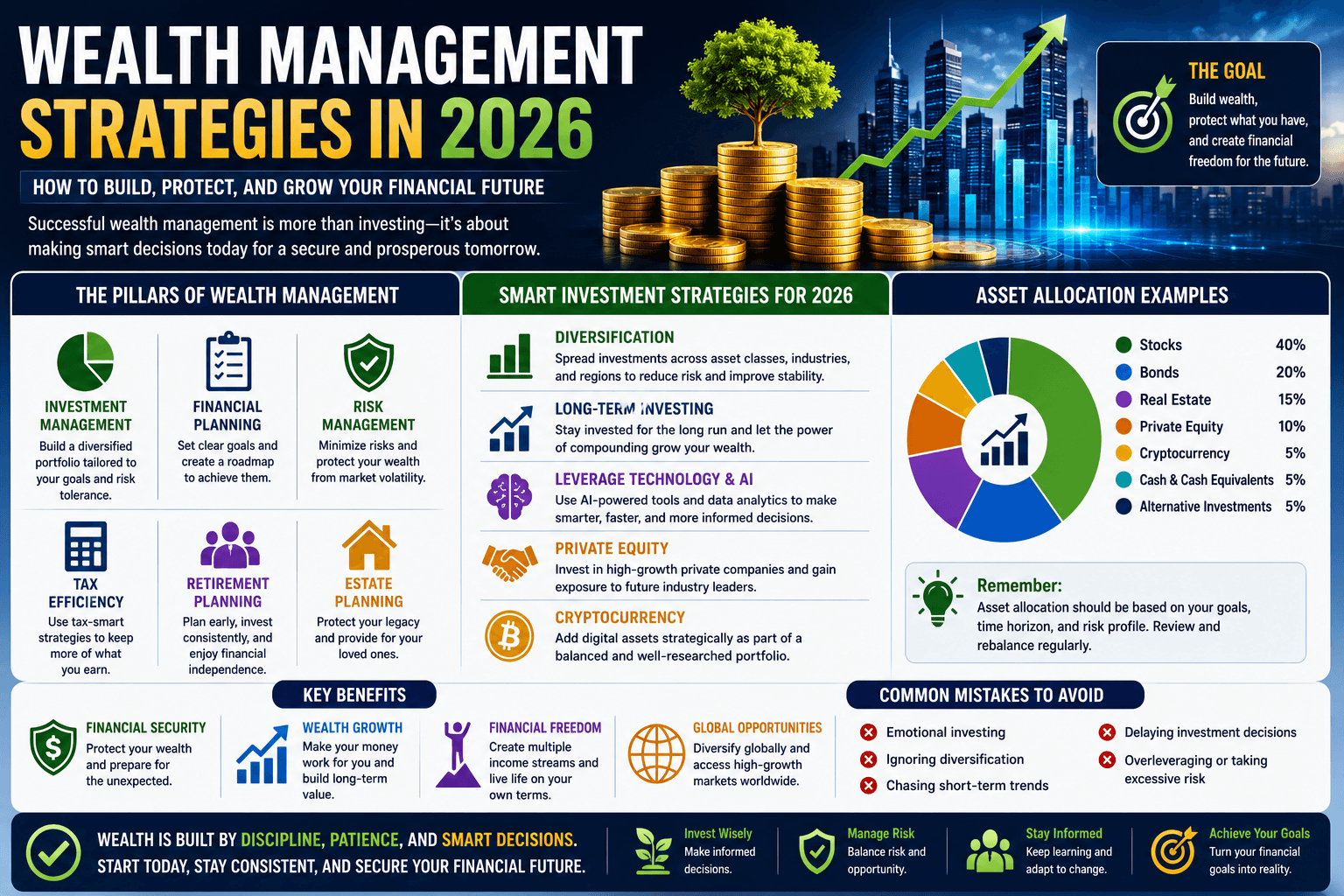
Wealth management has become more important than ever as investors navigate changing financial markets, technological innovation, and economic uncertainty. In 2026, building wealth is no longer simply about saving money—it requires strategic investing, effective risk management, tax awareness, and long-term financial planning.
Whether you are beginning your investment journey or managing an established portfolio, a well-designed wealth management strategy can help preserve assets while creating opportunities for future growth.
This guide explores modern wealth management strategies and the investment principles helping individuals and businesses achieve long-term financial success.
What Is Wealth Management?
Wealth management is a comprehensive approach to managing financial resources.
It combines multiple financial services, including:
Investment management
Financial planning
Portfolio diversification
Retirement planning
Tax efficiency
Estate planning
Risk management
The objective is not only to grow wealth but also to protect it across changing economic conditions.
Why Wealth Management Matters
Financial markets have become increasingly complex.
Investors face challenges including:
Inflation
Interest rate changes
Market volatility
Global economic uncertainty
Technological disruption
A structured wealth management strategy helps investors make disciplined decisions rather than reacting emotionally to short-term market movements.
Diversification Remains the Foundation
Diversification continues to be one of the most effective investment strategies.
Instead of concentrating investments in one company or sector, investors spread assets across multiple investment types.
A diversified portfolio may include:
Stocks
ETFs
Bonds
Real Estate
Private Equity
Infrastructure
Cryptocurrency
Cash Reserves
Diversification reduces portfolio risk while improving long-term stability.
Long-Term Investing Creates Sustainable Wealth
Many successful investors focus on long-term investing rather than attempting to predict short-term market movements.
Holding quality investments over many years allows portfolios to benefit from:
Compound growth
Dividend reinvestment
Business expansion
Market appreciation
Patience remains one of the greatest advantages available to investors.
Artificial Intelligence Changes Wealth Management
Artificial intelligence is transforming financial planning.
AI-powered investment platforms help investors:
Analyze portfolios
Monitor market risks
Improve asset allocation
Identify investment opportunities
Personalize financial strategies
Financial institutions increasingly combine AI with human expertise to improve investment outcomes.
Private Equity Offers Alternative Growth
Private equity has become an increasingly important component of diversified portfolios.
Investment firms continue supporting businesses operating in:
Artificial Intelligence
Healthcare
Financial Technology
Enterprise Software
Renewable Energy
Cybersecurity
Although private equity often involves longer investment periods, it offers exposure to companies before they become publicly traded.
Cryptocurrency as Part of a Balanced Portfolio
Digital assets continue attracting investor interest.
Rather than replacing traditional investments, many wealth managers consider cryptocurrency a complementary asset within diversified portfolios.
Popular digital assets include:
Bitcoin
Ethereum
Blockchain infrastructure
Digital payment technologies
Because cryptocurrency remains volatile, investors generally limit exposure according to individual risk tolerance.
Retirement Planning Should Begin Early
Retirement planning remains an essential part of wealth management.
Starting early allows investments more time to grow through compounding.
Important retirement planning principles include:
Investing consistently
Maintaining diversification
Reviewing financial goals
Adjusting portfolios as circumstances change
Time often has a greater impact than investment size alone.
Managing Risk Effectively
Successful wealth management focuses on balancing risk and opportunity.
Common risk management strategies include:
Diversification
Emergency savings
Regular portfolio reviews
Avoiding excessive borrowing
Maintaining realistic expectations
Managing downside risk is often just as important as seeking investment returns.
Passive Income Supports Financial Freedom
Many investors seek passive income as part of long-term wealth creation.
Popular passive income sources include:
Dividend-paying stocks
Rental property
Real Estate Investment Trusts (REITs)
Bond interest
Business ownership
Multiple income streams can improve financial security.
Global Investment Opportunities
Investors increasingly diversify internationally.
Global exposure provides access to:
Developed markets
Emerging economies
International technology companies
Healthcare innovation
Infrastructure development
International diversification helps reduce dependence on a single country's economy.
Common Wealth Management Mistakes
Many investors reduce long-term returns by making avoidable mistakes.
Examples include:
Emotional investing
Ignoring diversification
Following market hype
Delaying investment decisions
Neglecting financial planning
Discipline and consistency often outperform impulsive decision-making.
Future Wealth Management Trends
Several trends continue shaping the future of investing:
Artificial Intelligence
Financial Technology
Digital Assets
Sustainable Investing
Alternative Investments
Personalized Financial Advice
Blockchain Technology
Technology will continue making professional-quality financial tools more accessible to investors worldwide.
Conclusion
Wealth management in 2026 is about much more than choosing investments. It involves creating a disciplined financial strategy that balances growth, income, and risk while adapting to changing market conditions.
Diversification, long-term investing, artificial intelligence, private equity, global investing, and careful financial planning continue forming the foundation of successful wealth management.
Investors who remain informed, review their portfolios regularly, and maintain a long-term perspective are better positioned to build, protect, and grow wealth in an increasingly dynamic global economy.