Introduction
Artificial intelligence has moved beyond being just a productivity tool. In 2026, organizations are increasingly adopting AI digital employees—intelligent software agents capable of performing complex business tasks with minimal human supervision. These AI-powered workers are no longer limited to answering customer queries or generating content. They can analyze data, prepare reports, manage workflows, schedule meetings, monitor systems, assist with coding, and even collaborate with human teams.
The rapid advancement of large language models, autonomous AI agents, and enterprise automation platforms has enabled businesses to rethink how work gets done. Instead of hiring additional employees for repetitive administrative tasks, companies are deploying AI digital employees that operate around the clock without fatigue. These virtual workers can complete tasks faster, improve operational efficiency, and allow human employees to focus on strategic decision-making and innovation.
As businesses continue their digital transformation journey, AI digital employees are becoming an essential component of modern enterprise software. Companies that embrace this technology are gaining a competitive advantage through increased productivity, lower operational costs, and faster decision-making. However, the adoption of AI workers also raises important questions about governance, security, ethics, and workforce transformation.
This article explores how AI digital employees are changing business operations, the benefits they provide, the challenges organizations face, and why they are expected to become a standard part of enterprise technology over the coming years.
What Are AI Digital Employees?
AI digital employees are autonomous software systems that use artificial intelligence to perform tasks traditionally completed by human workers. Unlike conventional automation software that follows predefined rules, AI employees can understand language, analyze context, make recommendations, and execute multi-step workflows.
These digital workers combine several AI technologies, including:
Large Language Models (LLMs)
Machine Learning
Natural Language Processing
Computer Vision
Workflow Automation
Enterprise Data Integration
Predictive Analytics
Instead of waiting for manual instructions, AI digital employees can interpret objectives, gather information, complete assignments, and provide results with minimal human involvement.
For example, an AI finance assistant can review invoices, identify anomalies, generate monthly financial summaries, and notify managers about unusual spending patterns. Similarly, an AI customer support employee can resolve inquiries, update CRM records, escalate complex cases, and generate follow-up emails automatically.
Why Businesses Are Investing in AI Digital Employees
The growing demand for AI digital employees is driven by several business challenges, including labor shortages, rising operational costs, increasing customer expectations, and the need for faster decision-making.
Organizations recognize that repetitive administrative work consumes valuable employee time. AI employees can handle routine responsibilities while human teams focus on creative problem-solving and relationship building.
Key reasons businesses are investing in AI workers include:
Increased Productivity
AI employees operate continuously without breaks, enabling organizations to process more work in less time. Tasks that previously required hours can now be completed in minutes.
Lower Operational Costs
Businesses can reduce expenses associated with repetitive manual work by automating routine processes. While AI does not replace every employee, it significantly reduces the need for repetitive administrative tasks.
Faster Decision Making
AI systems analyze massive datasets within seconds, providing actionable insights that help managers make informed decisions quickly.
Improved Customer Experience
AI-powered customer service employees provide instant responses, personalized recommendations, and consistent support across multiple communication channels.
Scalability
Unlike human teams, AI employees can easily scale to manage increasing workloads without significant recruitment or training costs.
Common Roles for AI Digital Employees
One of the biggest misconceptions is that AI employees perform only customer support tasks. In reality, modern AI workers are being deployed across nearly every department within an organization.
Customer Service
AI agents answer customer questions, resolve common issues, create support tickets, and provide personalized assistance around the clock.
Human Resources
HR teams use AI employees to screen resumes, schedule interviews, answer employee questions, generate onboarding documents, and manage internal knowledge bases.
Finance
AI finance assistants automate invoice processing, expense analysis, budgeting reports, compliance monitoring, fraud detection, and financial forecasting.
Marketing
Marketing departments rely on AI employees to create content, analyze campaign performance, optimize advertisements, manage social media, and identify customer trends.
Sales
AI sales assistants qualify leads, draft proposals, prepare presentations, schedule meetings, update CRM systems, and recommend personalized outreach strategies.
IT Operations
Technology teams deploy AI employees to monitor infrastructure, identify system failures, automate incident response, manage software updates, and improve cybersecurity monitoring.
How AI Digital Employees Work
Modern AI employees function through a combination of advanced language models, enterprise integrations, and workflow automation.
The typical workflow includes:
Understanding the Request
The AI interprets natural language instructions from employees or customers.
Gathering Information
It securely retrieves information from enterprise systems such as CRM platforms, ERP software, cloud storage, databases, and communication tools.
Processing Data
Using advanced reasoning capabilities, the AI analyzes information, identifies relevant patterns, and determines the appropriate course of action.
Executing Tasks
Instead of simply providing recommendations, AI employees can perform actions such as sending emails, updating databases, generating reports, scheduling meetings, or initiating business workflows.
Continuous Learning
Many enterprise AI platforms continuously improve through feedback, allowing digital employees to become more accurate and efficient over time.
The Benefits of AI Digital Employees for Enterprises
Organizations adopting AI employees report improvements across multiple business areas.
Some of the most significant benefits include:
Reduced manual workload
Higher employee satisfaction
Faster response times
Improved data accuracy
Better decision-making
Increased operational efficiency
Lower business costs
Enhanced customer experiences
Greater business scalability
Continuous 24/7 operations
These advantages explain why analysts predict AI digital employees will become a standard feature in enterprise software over the next few years.
Challenges of Implementing AI Digital Employees
Despite their impressive capabilities, AI digital employees are not without challenges. Organizations must approach adoption strategically to ensure these systems deliver long-term value while minimizing risks.
Data Security and Privacy
AI employees often require access to sensitive business information, including financial records, customer data, employee details, and proprietary documents. Without proper safeguards, organizations risk exposing confidential information. Businesses should implement strong encryption, role-based access controls, regular security audits, and compliance with regulations such as GDPR and other regional privacy laws.
Accuracy and Reliability
AI can occasionally generate incorrect information or misunderstand complex business requests. Human oversight remains essential, particularly for legal, financial, and strategic decisions. Many organizations adopt a "human-in-the-loop" approach, where AI completes tasks but employees review critical outputs before implementation.
Employee Adoption
Some employees may worry that AI will replace their jobs. Successful organizations address these concerns by positioning AI as a productivity partner rather than a replacement. Training programs and transparent communication help employees understand how AI can eliminate repetitive work and allow them to focus on higher-value responsibilities.
Integration Challenges
Many businesses operate with multiple software platforms that were not originally designed to work together. Integrating AI employees with ERP systems, CRM platforms, HR software, accounting tools, and collaboration platforms requires careful planning and technical expertise.
AI Governance Becomes Essential
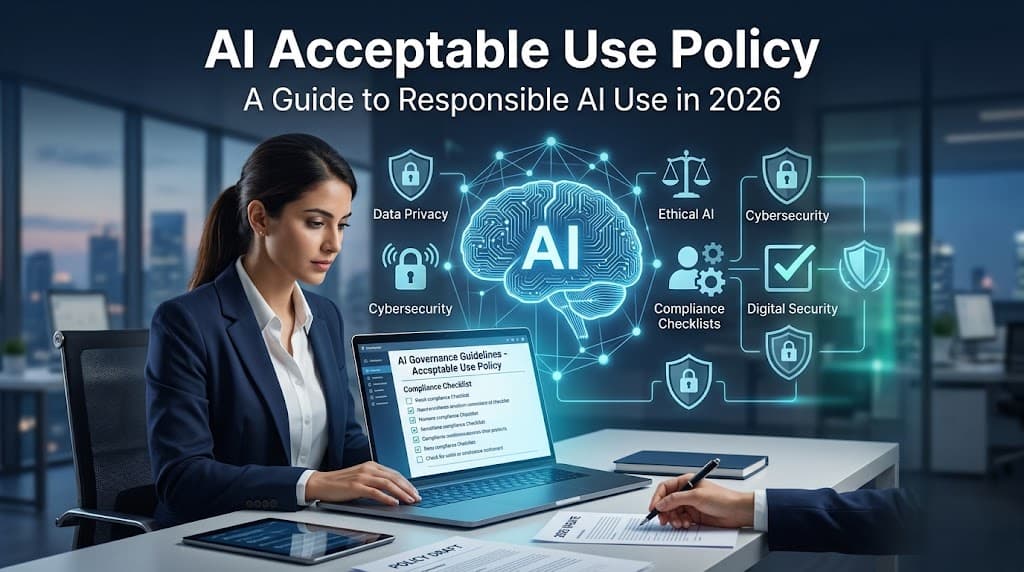
As AI digital employees gain greater autonomy, governance becomes a critical business priority.
Organizations need clear policies regarding:
Data access permissions
AI decision transparency
Human approval requirements
Compliance monitoring
Bias detection
Performance measurement
Risk management
Audit logging
Modern enterprise AI platforms increasingly include governance dashboards that allow administrators to monitor AI activities, review completed tasks, and ensure compliance with company policies.
Strong governance not only reduces operational risk but also builds trust among employees, customers, and stakeholders.
Industries Leading AI Employee Adoption
AI digital employees are rapidly transforming multiple industries, each with unique use cases.
Healthcare
Healthcare organizations use AI employees to schedule appointments, summarize patient records, assist with medical documentation, and streamline administrative operations. This allows healthcare professionals to spend more time delivering patient care.
Financial Services
Banks and financial institutions deploy AI employees for fraud detection, transaction monitoring, customer support, compliance reporting, and investment research. AI enables faster analysis while improving operational accuracy.
Retail and E-commerce
Retail businesses use AI workers to manage inventory, personalize customer recommendations, forecast demand, automate order tracking, and enhance customer service across digital channels.
Manufacturing
Manufacturers rely on AI employees to monitor production systems, predict equipment maintenance needs, optimize supply chains, and improve quality control processes.
Technology Companies
Software organizations employ AI digital workers to assist with coding, documentation, testing, debugging, customer onboarding, and technical support, accelerating product development cycles.
The Future of AI Digital Employees
The next generation of AI digital employees will become even more autonomous and collaborative.
Future developments are expected to include:
Multi-Agent Collaboration
Instead of relying on a single AI assistant, businesses will deploy teams of specialized AI employees. For example, a sales AI could work alongside marketing, finance, and customer support AI agents to complete complex business workflows from start to finish.
Personalized AI Employees
AI systems will adapt to each employee's working style, learning communication preferences, recurring tasks, and decision-making patterns. This personalization will make AI assistance more effective and natural.
Deeper Enterprise Integration
Future AI employees will seamlessly connect with nearly every business application, allowing organizations to automate end-to-end processes without switching between multiple tools.
Stronger Security
Advancements in AI security will include better identity verification, encrypted AI workflows, continuous monitoring, and real-time threat detection to protect sensitive enterprise data.
Strategic Decision Support
Rather than simply completing tasks, AI digital employees will increasingly provide predictive insights, identify business opportunities, and recommend strategic actions based on real-time data analysis.
Preparing Your Business for AI Digital Employees
Organizations planning to adopt AI digital employees should begin with a clear strategy rather than attempting to automate everything at once.
Best practices include:
Identify repetitive, time-consuming tasks suitable for automation.
Start with small pilot projects before expanding AI adoption.
Train employees to collaborate effectively with AI tools.
Establish governance policies and security standards.
Continuously measure AI performance and business outcomes.
Update workflows based on employee feedback and changing business needs.
A phased implementation approach helps businesses maximize value while minimizing operational disruption.
Conclusion
AI digital employees are rapidly becoming a core component of modern enterprise operations. Unlike traditional automation tools, these intelligent systems can understand context, make informed decisions, collaborate with human teams, and execute complex workflows with remarkable speed and efficiency.
Businesses across industries are already experiencing the benefits of AI-powered workers through increased productivity, reduced operational costs, faster decision-making, and improved customer experiences. As AI technology continues to mature, digital employees will evolve from simple assistants into trusted collaborators capable of managing increasingly sophisticated business processes.
However, successful adoption requires more than deploying advanced technology. Organizations must invest in governance, security, employee training, and responsible AI practices to ensure these systems operate safely and ethically. Human oversight will remain essential for critical decisions, while AI handles repetitive and data-intensive tasks.
Companies that embrace AI digital employees today will be better positioned to compete in an increasingly digital economy. By combining human creativity with AI-driven efficiency, businesses can unlock new levels of innovation, agility, and long-term growth. The future of work is not about replacing people—it is about empowering them with intelligent digital teammates that help organizations operate smarter, faster, and more effectively.
Frequently Asked Questions (FAQs)
1. What is an AI digital employee?
An AI digital employee is an autonomous software system that performs business tasks such as customer support, data analysis, reporting, scheduling, and workflow automation using artificial intelligence.
2. Will AI digital employees replace human workers?
In most cases, AI is designed to augment human capabilities by automating repetitive tasks, allowing employees to focus on strategic, creative, and relationship-driven work.
3. Which industries benefit most from AI digital employees?
Healthcare, finance, retail, manufacturing, technology, logistics, and professional services are among the industries seeing significant benefits from AI-powered digital workers.
4. Are AI digital employees secure?
They can be secure when organizations implement strong cybersecurity measures, access controls, encryption, governance policies, and regular monitoring.
5. Why are AI digital employees important for the future of business?
They improve productivity, reduce costs, enable faster decision-making, provide 24/7 operational support, and help businesses scale efficiently while enhancing overall competitiveness.