
PFPersonal Finance in 2026: Smart Ways to Save Money & Build Wealth
Introduction
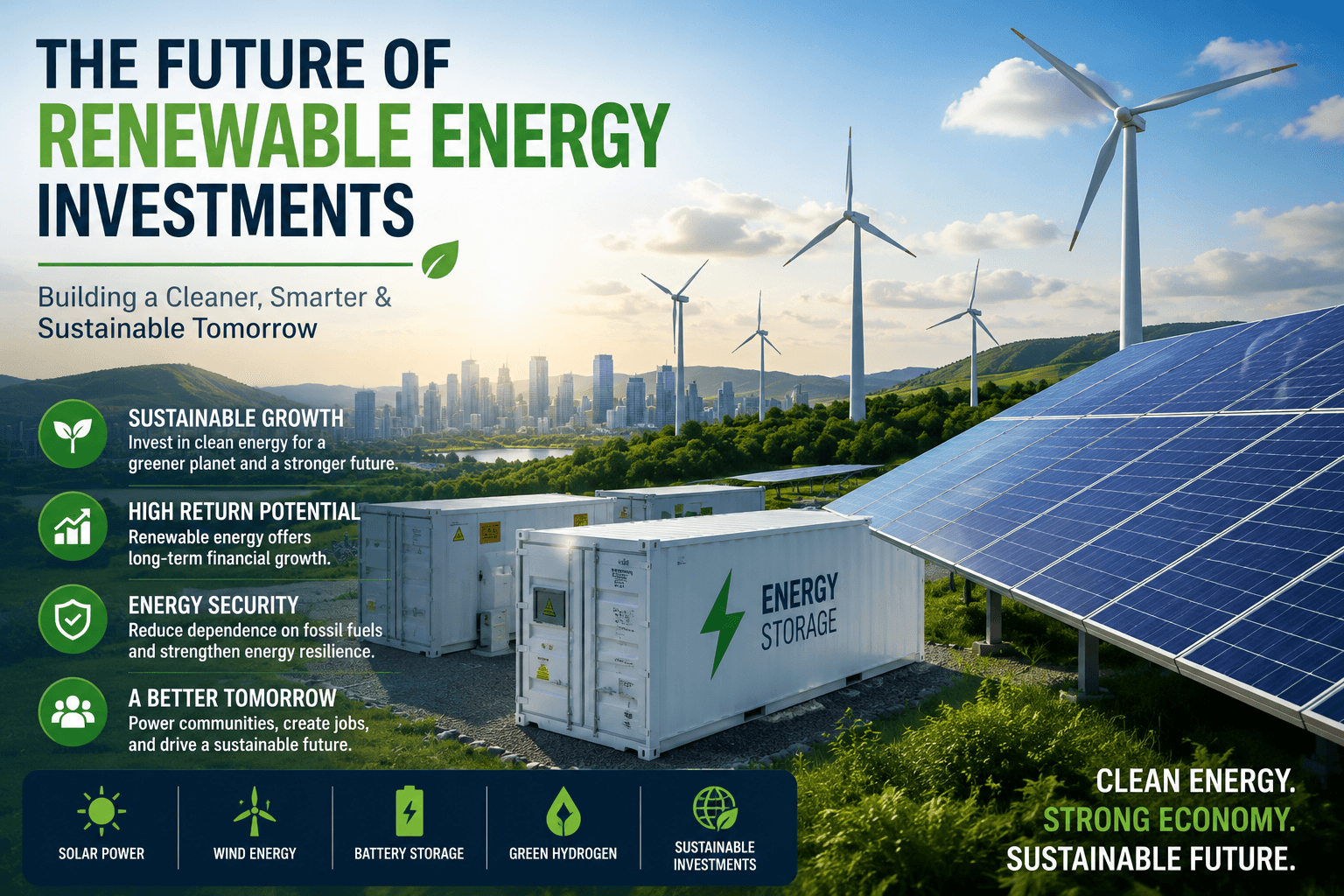
Renewable energy has become one of the world's fastest-growing investment sectors. As governments, businesses, and consumers prioritize sustainability, investment in clean energy technologies continues to accelerate. Solar power, wind energy, battery storage, hydrogen, and smart grid infrastructure are reshaping the global energy landscape while creating significant economic opportunities.
In 2026, renewable energy is no longer viewed solely as an environmental initiative—it is a major driver of economic growth, innovation, job creation, and long-term financial returns. Investors worldwide are increasingly recognizing clean energy as a strategic asset for the future.
The Growing Demand for Clean Energy
Global demand for renewable energy continues to rise due to several key factors:
Climate change initiatives
Government incentives
Rising energy demand
Declining technology costs
Corporate sustainability goals
Countries are investing heavily in renewable infrastructure to reduce carbon emissions, improve energy security, and decrease dependence on fossil fuels.
Solar Energy Leads the Transition
Solar power remains one of the fastest-growing renewable energy sectors.
Advancements in photovoltaic technology have improved efficiency while reducing installation costs. Businesses, homeowners, and governments are expanding solar projects because they offer:
Lower electricity costs
Reduced carbon emissions
Energy independence
Long-term savings
Scalable installations
Large-scale solar farms and rooftop solar systems continue to attract strong investor interest worldwide.
Wind Energy Continues to Expand
Wind power remains a major contributor to clean electricity generation.
Both onshore and offshore wind projects are receiving increased investment due to improved turbine technology and stronger government support.
Benefits include:
Reliable renewable electricity
Low operating costs
Reduced greenhouse gas emissions
Long-term energy production
Job creation in manufacturing and maintenance
Offshore wind projects are expected to become an even larger part of the global energy mix in the coming years.
Battery Storage Is Transforming Energy Markets
Energy storage has become essential for renewable energy growth.
Modern battery systems help:
Store excess renewable electricity
Improve grid reliability
Reduce power outages
Balance energy supply and demand
Support electric vehicle charging infrastructure
As battery technology improves, investment opportunities continue expanding across the energy sector.
Green Hydrogen Gains Momentum
Green hydrogen is emerging as a promising clean fuel for industries that are difficult to electrify.
Potential applications include:
Heavy manufacturing
Steel production
Aviation
Shipping
Long-distance transportation
Governments and private investors are funding hydrogen projects to accelerate the transition toward low-carbon economies.
Corporate Investment in Renewable Energy
Businesses increasingly invest in renewable energy to reduce operating costs and meet sustainability commitments.
Many organizations are adopting:
Corporate solar installations
Wind power purchase agreements
Energy-efficient facilities
Smart energy management systems
Carbon reduction strategies
These investments improve long-term profitability while strengthening brand reputation among environmentally conscious customers and investors.
Emerging Investment Opportunities
Renewable energy creates opportunities across multiple industries, including:
Solar panel manufacturing
Wind turbine production
Battery technology
Electric vehicle infrastructure
Smart grid solutions
Energy management software
Renewable energy construction
Recycling of clean energy components
Diversified investment across these sectors can help reduce risk while supporting long-term growth.
Challenges Facing Renewable Energy Investments
Despite strong momentum, investors should consider several challenges:
Supply chain disruptions
High initial infrastructure costs
Regulatory changes
Grid modernization requirements
Critical mineral availability
Weather-related variability
Careful planning and diversified investment strategies can help manage these risks.
The Role of Artificial Intelligence
Artificial intelligence is improving renewable energy operations by:
Predicting energy demand
Optimizing power generation
Monitoring equipment performance
Improving battery efficiency
Supporting predictive maintenance
AI enables energy providers to operate more efficiently while reducing costs and improving reliability.
Outlook for the Future
The renewable energy sector is expected to remain one of the world's most attractive investment markets over the next decade.
Key trends likely to shape the future include:
Expansion of utility-scale solar projects
Growth in offshore wind farms
Increased battery storage deployment
Wider adoption of green hydrogen
Smarter electricity grids
Greater integration of AI and automation
Rising private and institutional investment
These developments are expected to accelerate the global transition toward cleaner and more sustainable energy systems.
Conclusion
Renewable energy investments are transforming the global economy by driving innovation, improving energy security, creating jobs, and supporting sustainable economic growth. As technology continues to advance and demand for clean energy increases, investment opportunities across the renewable sector are expected to expand significantly.
Businesses and investors that embrace renewable energy today will be well-positioned to benefit from one of the most important economic transformations of the 21st century.
FAQs
1. What are renewable energy investments?
Renewable energy investments involve funding projects, companies, and technologies that generate clean energy from sources such as solar, wind, hydropower, geothermal, and biomass.
2. Why are renewable energy investments growing?
Growing demand for clean energy, government incentives, technological improvements, and corporate sustainability goals are driving increased investment in renewable energy worldwide.
3. Which renewable energy sectors are attracting the most investment?
Solar power, wind energy, battery storage, green hydrogen, electric vehicle charging infrastructure, and smart grid technologies are among the fastest-growing investment sectors.
4. How do government policies influence renewable energy investments?
Tax credits, grants, renewable energy targets, and supportive regulations encourage businesses and investors to finance clean energy projects.
5. Is renewable energy a good long-term investment?
Many investors view renewable energy as a long-term growth opportunity because of increasing global energy demand, climate commitments, and ongoing innovation.
6. What role does battery storage play in renewable energy?
Battery storage helps balance electricity supply and demand by storing excess energy generated from renewable sources and delivering it when needed.
7. How are businesses benefiting from renewable energy investments?
Business can reduce energy costs, improve sustainability, strengthen their brand reputation, and meet environmental regulations through renewable energy adoption.
8. What risks should investors consider?
Potential risks include policy changes, market competition, project delays, supply chain disruptions, and fluctuations in technology costs.
9. How is AI supporting renewable energy investments?
AI improves energy forecasting, optimizes power generation, predicts equipment maintenance needs, and helps investors analyze market opportunities more effectively.
10. What is the future outlook for renewable energy investments?
Renewable energy investment is expected to continue growing as countries pursue net-zero goals, companies expand clean energy projects, and technological advances make renewable power more efficient and cost-effective.
11. Which countries are leading renewable energy investments?
Countries such as China, the United States, Germany, India, the United Kingdom, and several European nations continue investing heavily in renewable energy projects, including solar farms, offshore wind, battery storage, and green hydrogen infrastructure to support long-term energy security and sustainability.
12. How does renewable energy investment support economic growth?
Investments in renewable energy create new jobs, stimulate infrastructure development, encourage technological innovation, attract private capital, reduce energy import dependence, and contribute to long-term economic resilience while supporting environmental goals.
13. What is green hydrogen, and why is it attracting investors?
Green hydrogen is produced using renewable electricity to split water into hydrogen and oxygen without carbon emissions. It is gaining attention because it can help decarbonize industries such as steel, shipping, aviation, and heavy manufacturing where direct electrification is challenging.
14. How are battery storage technologies improving renewable energy projects?
Battery storage systems allow renewable energy generated during peak production to be stored and used later, improving grid stability, reducing energy waste, supporting backup power, and increasing the reliability of solar and wind power.
15. What role do ESG investments play in renewable energy?
Environmental, Social, and Governance (ESG) investing encourages investors to support companies with strong sustainability practices. Renewable energy companies often benefit from ESG-focused investment strategies due to their contribution to reducing carbon emissions and promoting responsible business operations.
16. How can businesses benefit from investing in renewable energy projects?
Businesses can lower long-term electricity costs, reduce exposure to energy price volatility, improve sustainability performance, strengthen their corporate reputation, meet regulatory requirements, and attract environmentally conscious customers and investors.
17. What challenges could affect renewable energy investment growth?
Potential challenges include changing government policies, permitting delays, supply chain disruptions, raw material shortages, grid infrastructure limitations, financing costs, and fluctuations in global energy markets.
18. How is digital technology supporting renewable energy investments?
Advanced technologies such as artificial intelligence, Internet of Things (IoT) sensors, smart grids, cloud computing, and predictive analytics help optimize energy production, monitor equipment performance, improve maintenance scheduling, and maximize investment returns.
19. Why are institutional investors increasing their renewable energy portfolios?
Institutional investors are attracted to renewable energy because of long-term growth potential, stable infrastructure returns, increasing global demand for clean energy, supportive government policies, and growing commitments to environmental sustainability.
20. What is the long-term outlook for renewable energy investments?
The long-term outlook remains highly positive as countries pursue net-zero emissions, corporations expand clean energy initiatives, technological innovation continues to lower renewable energy costs, and global demand for sustainable power solutions increases. Renewable energy is expected to remain one of the fastest-growing investment sectors throughout the coming decade.